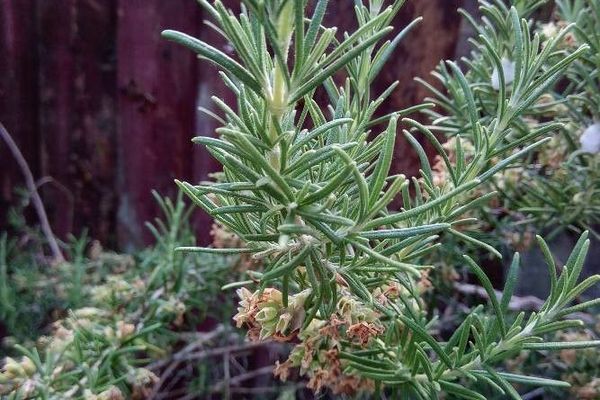
Опис
Prefers a hot sunny position and a slightly alkaline light dry soil[11, 14, 27, 37]. Dislikes very heavy soils. Intolerant of excessive winter wet. Likes a stony calcareous soil. Plants are smaller when grown on chalky soils, but are more fragrant. Fairly tolerant of maritime exposure[49, 75] and very tolerant of salt spray. Succeeds in a hot dry position. Hardy to between -10 and -15°c, but plants can be damaged or killed in severe winters, old plants are the most susceptible. Rosemary is a polymorphic species that is commonly grown in the ornamental and herb gardens, there are many named varieties[183, 238]. Traditionally, the plant is a symbol of friendship and fidelity and a wreath of it would be worn by a bride to denote love and loyalty. It was also carried at religious ceremonies and funerals in the belief that its pungent scent would ward of disease and evil spirits. The whole plant is highly aromatic. The cultivar 'Corsican Blue' is more aromatic than the type. Very tolerant of pruning, plants can regenerate from old wood. A good bee plant, producing pollen early in the year[7, 24, 89]. A good companion for most plants, including cabbages, beans, carrots and sage[14, 18, 54, 201]. Grows badly with potatoes. Special Features: Edible, Fragrant foliage, Not North American native, Attracts butterflies, Suitable for dried flowers, Fragrant flowers. The plant is heat tolerant in zones 12 through 8. (Plant Hardiness Zones show how well plants withstand cold winter temperatures. Plant Heat Zones show when plants would start suffering from the heat. The Plant Heat Zone map is based on the number of "heat days" experienced in a given area where the temperature climbs to over 86 degrees F (30°C). At this temperature, many plants begin to suffer physiological damage. Heat Zones range from 1 (no heat days) to 12 (210 or more heat days). For example Heat Zone. 11-1 indicates that the plant is heat tolerant in zones 11 through 1.) For polyculture design as well as the above-ground architecture (form - tree, shrub etc. and size shown above) information on the habit and root pattern is also useful and given here if available. The plant growth habit is multistemmed with multiple stems from the crown [1-2]. An evergreen. In garden design, as well as the above-ground architecture of a plant, root structure considerations help in choosing plants that work together for their optimal soil requirements including nutrients and water. The root pattern is branching: a heart root, dividing from the crown into several primary roots going down and out [2-1]. Heat Zone 12-8. Rosemary leaves can be harvested year-round, but they are best harvested in spring or early summer when the plant is actively growing. Rosemary typically flowers in spring to early summer, usually between April and June (Northern Hemisphere) . Rosemary is a moderately fast-growing plant, often reaching maturity in about 2 to 3 years, depending on the growing conditions. Rosemary is generally self-fertile, meaning it can produce seeds with its own pollen. References Carbon Farming Information and Carbon Sequestration Information Temperature Converter Type a value in the Celsius field to convert the value to Fahrenheit: Celsius Fahrenheit: The PFAF Bookshop Plants For A Future have a number of books available in paperback and digital form. Book titles include Edible Plants , Edible Perennials , Edible Trees , Edible Shrubs , Woodland Gardening , and Temperate Food Forest Plants . Our new book is Food Forest Plants For Hotter Conditions (Tropical and Sub-Tropical) . Shop Now
Походження та ареал
TEMPERATE ASIA: Turkey,Cyprus. EUROPE: Former Yugoslavia, Greece, Italy (incl. Sardinia, Sicily), Spain (incl. Baleares), France (incl. Corsica), Portugal, AFRICA: Spain, Canarias, Portugal, Madeira Islands, Algeria (north), Libya (north), Morocco, Tunisia.
Корисні властивості
Edible Parts: Flowers Leaves Shoots Edible Uses: Condiment Tea Young shoots, leaves and flowers - raw or cooked. The leaves have a very strong flavour that is bitter and somewhat resinous, the flowers are somewhat milder. They are used in small quantities as a flavouring in soups and stews, with vegetables such as peas and spinach, and with sweet dishes such as biscuits cakes, jams and jellies[1, 2, 9, 15, 27, 52, 244]. They can be used fresh or dried.The leaves have a tough texture and so should either be used very finely chopped, or in sprigs that can be removed after cooking. A fragrant tea is made from the fresh or dried leaves[21, 183]. It is said to be especially nice when mixed with tansy. References More on Edible Uses
Поради
Seed - sow spring in a cold frame or greenhouse. Germination can be slow. Prick out the seedlings into individual pots when they are large enough to handle and grow on in a greenhouse or cold frame for their first winter. Plant out in late spring or early summer. Cuttings of half-ripe wood, 10 - 18 cm with a heel, July/August in a frame or shady border. Very easy, they usually root within 3 weeks[K]. It is best to give the plants some protection for their first winter and then plant them out into their permanent positions in late spring or early summer. Cuttings of young shoots in spring in a frame. They usually root well within 3 weeks, prick them out into individual pots and plant them out during the summer. Layering in summer.