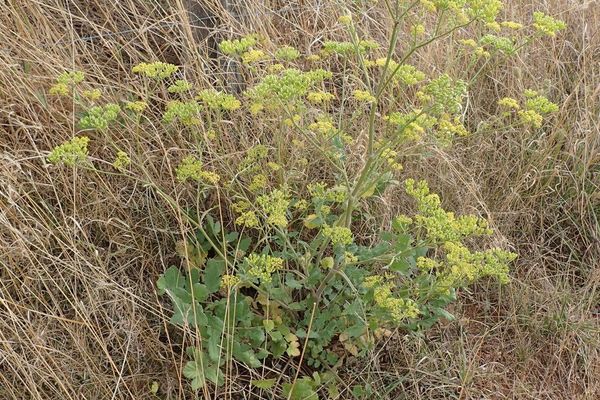
Опис
Succeeds in most ordinary well-drained soils. Requires an open situation. Prefers a deep rich soil that is not too stiff. The parsnip is often cultivated in the temperate zone for its edible root, there are a number of named varieties[46, 183, 200]. Normally cultivated as a winter root crop, some cultivars are faster to mature and can be available in late summer. The roots are very frost hardy and can be left in the ground to be harvested as required, though they can also be lifted in the autumn and stored for a few months. The flowers are very attractive to hover flies and predatory wasps. Plants have very few insect pests, though they are sometimes attacked by carrot root fly. Growing onions with the parsnips can reduce the damage. Roots of the wild form can quite quickly be increased in size by selective breeding and good cultivation, it is possible to obtain good sized roots in only 6 years. In garden design, as well as the above-ground architecture of a plant, root structure considerations help in choosing plants that work together for their optimal soil requirements including nutrients and water. The root pattern is fleshy. Thick or swollen - fibrous or tap root [2-1]. References Carbon Farming Information and Carbon Sequestration Information Temperature Converter Type a value in the Celsius field to convert the value to Fahrenheit: Celsius Fahrenheit: The PFAF Bookshop Plants For A Future have a number of books available in paperback and digital form. Book titles include Edible Plants , Edible Perennials , Edible Trees , Edible Shrubs , Woodland Gardening , and Temperate Food Forest Plants . Our new book is Food Forest Plants For Hotter Conditions (Tropical and Sub-Tropical) . Shop Now
Походження та ареал
TEMPERATE ASIA: Turkey, Russian Federation-Ciscaucasia (Ciscaucasia), Azerbaijan, Georgia, Russian Federation (Dagestan), Russian Federation-Western Siberia (Western Siberia) EUROPE: Denmark, United Kingdom, Sweden, Austria, Belgium, Switzerland, Czech Republic, Germany, Hungary, Netherlands, Poland, Slovakia, Russian Federation (European part), Belarus, Estonia, Lithuania, Latvia, Moldova, Ukraine (Krym), Albania, Bulgaria, Bosnia and Herzegovina, Greece, Croatia, Italy (incl. Sardinia, Sicily)
Корисні властивості
Edible Parts: Leaves Root Seed Shoots Edible Uses: Condiment Root - raw or cooked[2, 4, 5, 9, 27, 183]. When well grown, the cooked root has a very tender texture, though it is rather chewy raw[K]. It is best harvested after there have been some autumn frosts because it will have developed a sweeter flavour. The root is delicious baked, it can also be used in soups etc and can be added to cakes, pies and puddings. Leaves and young shoots - cooked with other greens as a vegetable or added to soups etc[9, 183]. Used in early spring. The seed is used as a condiment. Similar in taste to dill. References More on Edible Uses
Поради
Seed - sow from late winter to late spring in situ. Seed can be slow to germinate, especially from the earlier sowings, it is best to mark the rows by sowing a few radishes with the parsnips. The seed has a short viability, very few will still be viable 15 months after harvesting.