Опис
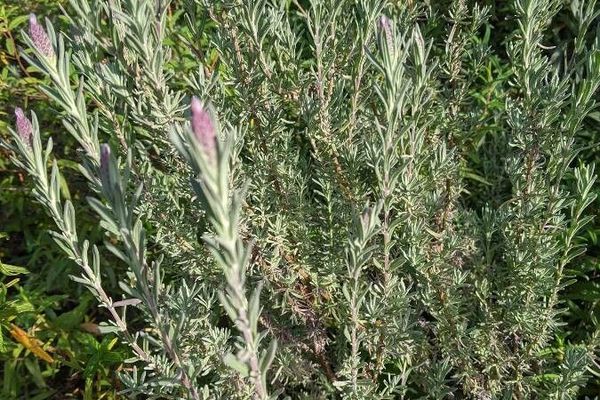
Succeeds in almost any soil so long as it is well-drained and not too acid[1, 200]. Prefers a sunny position in a neutral to alkaline soil[1, 200], growing well on chalk. When grown in rich soils the plants tend to produce more leaves but less essential oils. Grows well in a hot dry position. Established plants are drought tolerant. When growing for maximum essential oil content, the plant must be given a very warm sunny position and will do best in a light sandy soil, the fragrance being especially pronounced in a chalky soil. Hardy to between -5 and -10°c, it is often killed in severe winters in Britain. Plants are not very long-lived and soon become straggly unless pruned. Any trimming of the plant is best done in spring and should not be done in the autumn since this can encourage new growth that will not be very cold-hardy. Polymorphic. A good bee plant, also attracting butterflies and moths. The flowering spike has showy infertile flowers to attract insects at the top of the stem and small fertile flowers beneath. A good companion for most plants, growing well with cabbages. Lavender is typically harvested in mid to late summer when the flowers are in full bloom. Lavender flowers in late spring to summer, depending on the species and growing conditions. Lavender is a moderate grower, typically reaching maturity within 2 to 3 years. Plants usually grow to a height of about 1 to 3 feet (30 to 90 cm), depending on the species and growing conditions. References Carbon Farming Information and Carbon Sequestration Information Temperature Converter Type a value in the Celsius field to convert the value to Fahrenheit: Celsius Fahrenheit: The PFAF Bookshop Plants For A Future have a number of books available in paperback and digital form. Book titles include Edible Plants , Edible Perennials , Edible Trees , Edible Shrubs , Woodland Gardening , and Temperate Food Forest Plants . Our new book is Food Forest Plants For Hotter Conditions (Tropical and Sub-Tropical) . Shop Now
Походження та ареал
TEMPERATE ASIA: Cyprus, Israel, Lebanon, Syria, Turkey EUROPE: Greece (incl. Crete), Italy (incl. Sardinia, Sicily), Spain (incl. Baleares), France (incl. Corsica), Portugal AFRICA: Spain (Canarias), Portugal (Madeira Islands), Algeria, Morocco, Tunisia
Корисні властивості
None known References More on Edible Uses
Поради
Seed - sow spring in a greenhouse and only just cover the seed. It usually germinates in 1 - 3 months at 15°c. When large enough to handle, prick the seedlings out into individual pots and grow them on in the greenhouse or cold frame for their first winter, planting them out in late spring after the last expected frosts. Cuttings of half-ripe wood 7 - 10cm with a heel, July/August in a frame. Usually very east, a high percentage will root within a few weeks. Grow them on in the greenhouse for their first winter and plant them out in late spring after the last expected frosts. Cuttings 7cm with a heel succeed at almost any time of the year. Layering.