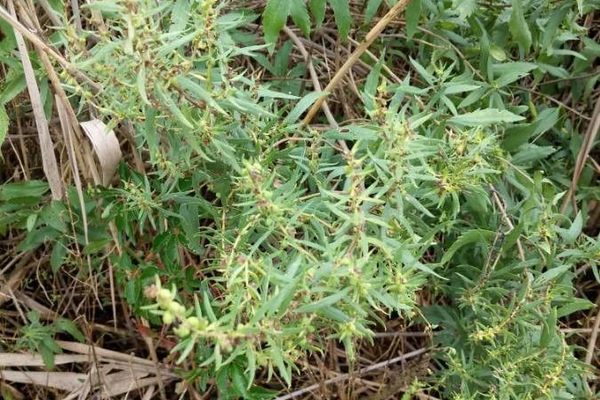
Marsh-elder
Iva frutescens
Родина: Asteraceae • Рід: Iva
БагаторічнаСередньоДекоративна
Marsh elder, also called high-tide bush, is a native deciduous shrub of the Atlantic and Gulf Coast salt marshes, growing precisely at the upper limit of regular tidal flooding — its common name 'high-tide bush' describes its ecological niche as the shrubby fringe that marks the upper boundary of th
Опис
Marsh elder, also called high-tide bush, is a native deciduous shrub of the Atlantic and Gulf Coast salt marshes, growing precisely at the upper limit of regular tidal flooding — its common name 'high-tide bush' describes its ecological niche as the shrubby fringe that marks the upper boundary of the tidal marsh zone on both Atlantic and Gulf shorelines. Despite its unglamorous appearance for most of the year — a stiff, woody shrub with small, succulent leaves and inconspicuous late-summer flowers — marsh elder is ecologically critical: it provides nesting cover for marsh wrens, seaside sparrows, and clapper rails, and its seeds are consumed by dabbling ducks and shorebirds; it stabilizes the marsh-upland ecotone against erosion. In coastal restoration plantings along the Gulf, it is a primary native shrub for establishing the high marsh zone on restored or disturbed shorelines, often planted in combination with black needle rush (Juncus roemerianus) and saltmarsh cordgrass. It also serves as a windbreak and salt spray filter for adjacent upland plantings.
Спосіб посадки: Висадка розсади
Відстань між рослинами: 36–72 дюймів
Висота: 36–120 дюймів
Дні до схожості: 14–30
Температура ґрунту для схожості: 16–21°C
Походження та ареал
Відомий як: bigleaf sumpweed
Поради
Marsh elder, also called high-tide bush, is a native deciduous shrub of the Atlantic and Gulf Coast salt marshes, growing precisely at the upper limit of regular tidal flooding — its common name 'high-tide bush' describes its ecological niche as the shrubby fringe that marks the upper boundary of the tidal marsh zone on both Atlantic and Gulf shorelines. Despite its unglamorous appearance for most of the year — a stiff, woody shrub with small, succulent leaves and inconspicuous late-summer flowers — marsh elder is ecologically critical: it provides nesting cover for marsh wrens, seaside sparrows, and clapper rails, and its seeds are consumed by dabbling ducks and shorebirds; it stabilizes the marsh-upland ecotone against erosion. In coastal restoration plantings along the Gulf, it is a primary native shrub for establishing the high marsh zone on restored or disturbed shorelines, often planted in combination with black needle rush (Juncus roemerianus) and saltmarsh cordgrass. It also serves as a windbreak and salt spray filter for adjacent upland plantings.
Спосіб посадки: Висадка розсади
Відстань між рослинами: 36–72 дюймів
Висота: 36–120 дюймів
Дні до схожості: 14–30
Температура ґрунту для схожості: 16–21°C
---
Час посадки: 0–4 тижнів spring
Plant container-grown specimens in spring in moist to wet, saline or brackish, sandy soil in full sun along the high tide line; marsh elder is a tidal wetland obligate and should not be planted in fresh water or upland sites.