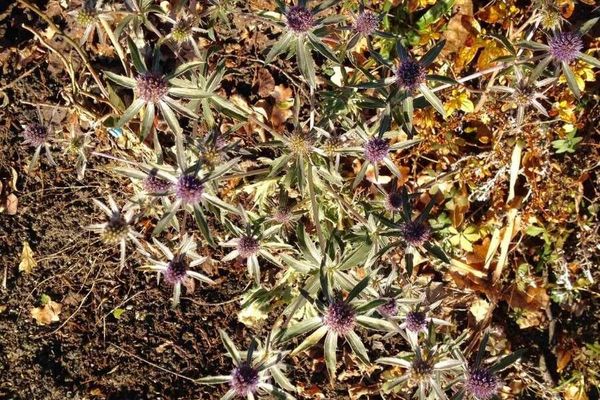
Eryngo
Eryngium campestre
Родина: Apiaceae • Рід: Eryngium
БагаторічнаСередньоДекоративна
вид рослин
Опис
Requires a well-drained soil and a sunny position. Prefers a light sandy soil but tolerates most soil types including lime and poor gravels. The plant has deep and wide-ranging roots, it can spread freely in the garden and become difficult to eradicate. Plants should be put in their final position whilst small since they resent root disturbance. The plant is often used in dried flower arrangements since it retains its colour for a long time. References Carbon Farming Information and Carbon Sequestration Information Temperature Converter Type a value in the Celsius field to convert the value to Fahrenheit: Celsius Fahrenheit: The PFAF Bookshop Plants For A Future have a number of books available in paperback and digital form. Book titles include Edible Plants , Edible Perennials , Edible Trees , Edible Shrubs , Woodland Gardening , and Temperate Food Forest Plants . Our new book is Food Forest Plants For Hotter Conditions (Tropical and Sub-Tropical) . Shop Now
Походження та ареал
TEMPERATE ASIA: Egypt (Sinai), Lebanon, Syria, Turkey, Russian Federation-Ciscaucasia (Ciscaucasia), Armenia, Azerbaijan, Georgia, Russian Federation (Dagestan) EUROPE: Austria, Belgium, Switzerland, Czech Republic, Germany, Hungary, Netherlands, Poland, Slovakia, Belarus, Lithuania, Latvia, Moldova, Ukraine (incl. Krym), Albania, Bulgaria, Bosnia and Herzegovina, Greece (incl. Crete), Croatia, Italy (incl. Sardinia, Sicily), North Macedonia, Montenegro, Romania, Serbia, Slovenia, Spain (incl. B
Корисні властивості
Edible Parts: Leaves Root Shoots Edible Uses: Young shoots - cooked. An asparagus substitute[105, 177, 183]. Root - cooked. Used as a vegetable or candied and used as a sweetmeat[46, 183]. Easily digested[7, 61]. References More on Edible Uses
Поради
Seed - best sown as soon as it is ripe in early autumn on the surface of a well-drained compost in a cold frame. The seed can also be sown in spring. It usually germinates in 5 - 90 days at 20°c. When they are large enough to handle, prick the seedlings out into individual pots and grow them on in the greenhouse for their first winter. Plant them out into their permanent positions in late spring or early summer, after the last expected frosts. Division in early spring or autumn. Take care since the plant resents root disturbance. Root cuttings in autumn or winter.