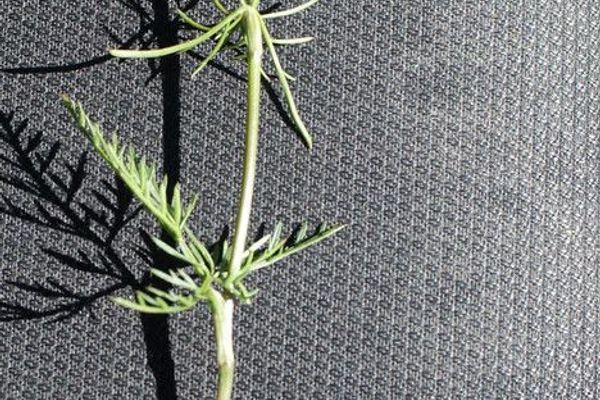
Pignut
Conopodium majus
Родина: Apiaceae • Рід: Conopodium
БагаторічнаСередньоДекоративна
Опис
Never found on alkaline soils in the wild. See the plants native habitat for other ideas on its cultivation needs. This species responds to cultivation by producing larger tubers. With careful selective breeding it is probably possible to produce a much more productive plant[K]. For polyculture design as well as the above-ground architecture (form - tree, shrub etc. and size shown above) information on the habit and root pattern is also useful and given here if available. The plant growth habit is a clumper with limited spread [1-2]. References Carbon Farming Information and Carbon Sequestration Information Temperature Converter Type a value in the Celsius field to convert the value to Fahrenheit: Celsius Fahrenheit: The PFAF Bookshop Plants For A Future have a number of books available in paperback and digital form. Book titles include Edible Plants , Edible Perennials , Edible Trees , Edible Shrubs , Woodland Gardening , and Temperate Food Forest Plants . Our new book is Food Forest Plants For Hotter Conditions (Tropical and Sub-Tropical) . Shop Now
Походження та ареал
EUROPE: United Kingdom (U.K.), Ireland, Norway, Belgium, Italy (incl. Sicily), Spain, France (incl. Corsica), Portugal,
Корисні властивості
Edible Parts: Root Edible Uses: Tubers - raw or cooked[2, 5, 12, 17, 63, 100]. A very pleasant food with a flavour somewhat between a sweet potato and hazelnuts, with a hot aftertaste of radish[115, 183, K]. We have never detected this hot aftertaste, and feel that the flavour is reminiscent of brazil nuts[K]. There is only one tuber on each plant, this is rather small and difficult to harvest, but the size could probably be increased by cultivation[115, K]. References More on Edible Uses
Поради
Seed - sow spring in a cold frame. Germination is usually quick and good[K]. Prick out the seedlings into individual pots as soon as they are large enough to handle and plant them out when in early summer. It is also possible to sow in situ, though this requires a lot more seed to produce the same amount of plants from a protected sowing. Division in late summer as the plant dies down.