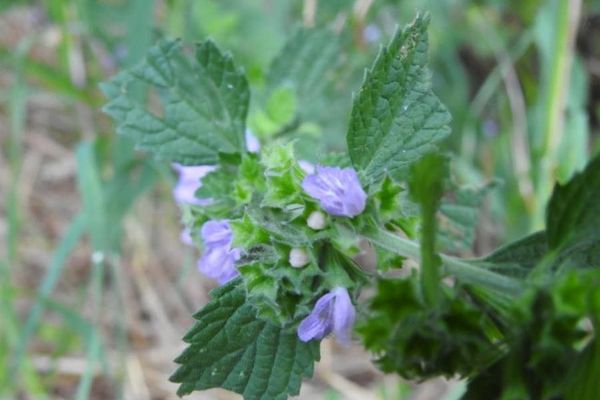
Black horehound
Ballota nigra
Родина: Lamiaceae • Рід: Ballota
БагаторічнаСередньоДекоративна
Опис
Prefers a well-drained soil in full sun or partial shade[134, 238]. Avoids acid soils in the wild but tolerates a pH down to 5 in cultivation. This species is not hardy in the colder areas of the country, it tolerates temperatures down to between -5 and -10°c. This species is widely grown in herb gardens, but little employed because of its strong flavour. Its essential oil is used to adulterate the oil of white horehound (Marrubium vulgare). The leaves emit a most unpleasant smell when bruised, somewhat like stale perspiration. Plants can self-sow freely when well-sited. There is at least one named variety selected for its ornamental value. The whole plant has an offensive odour. References Carbon Farming Information and Carbon Sequestration Information Temperature Converter Type a value in the Celsius field to convert the value to Fahrenheit: Celsius Fahrenheit: The PFAF Bookshop Plants For A Future have a number of books available in paperback and digital form. Book titles include Edible Plants , Edible Perennials , Edible Trees , Edible Shrubs , Woodland Gardening , and Temperate Food Forest Plants . Our new book is Food Forest Plants For Hotter Conditions (Tropical and Sub-Tropical) . Shop Now
Походження та ареал
TEMPERATE ASIA: Cyprus, Iran, Israel, Lebanon, Syria, Turkey, Russian Federation-Ciscaucasia (Ciscaucasia), Armenia, Azerbaijan, Georgia, Russian Federation (Dagestan) EUROPE: Denmark, United Kingdom (England), Ireland, Sweden (south), Czechoslovakia, Austria, Belgium, Switzerland, Germany, Hungary, Netherlands, Poland, Russian Federation-European part (European part (south)), Belarus, Estonia, Lithuania, Latvia, Moldova, Ukraine (incl. Krym), Former Yugoslavia, Albania, Bulgaria, Greece (incl.
Корисні властивості
None known References More on Edible Uses
Поради
Seed - sow spring or autumn in a greenhouse. The seed usually germinates in 3 - 6 weeks at 15°c. Prick out the seedlings into individual pots when they are large enough to handle and plant them out into their permanent positions in the summer or following autumn. Division in spring. Larger divisions can be planted straight into their permanent positions whilst smaller clumps are best potted up and kept in a cold frame until they are growing away well.