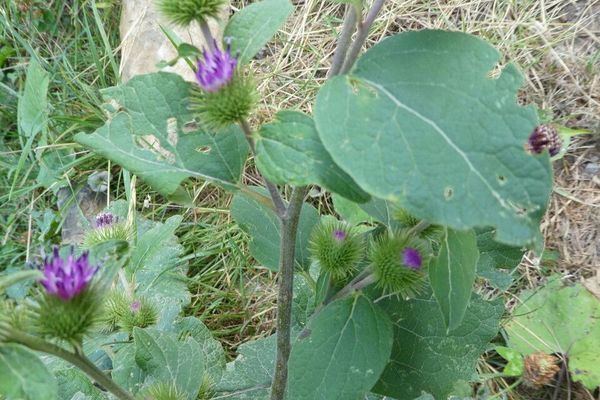
Опис
Succeeds on most soils, preferably moist. Prefers a sunny position. Prefers partial shade according to another report. A polymorphic species. A good butterfly plant. In garden design, as well as the above-ground architecture of a plant, root structure considerations help in choosing plants that work together for their optimal soil requirements including nutrients and water. The root pattern is fleshy. Thick or swollen - fibrous or tap root [2-1]. References Carbon Farming Information and Carbon Sequestration Information Temperature Converter Type a value in the Celsius field to convert the value to Fahrenheit: Celsius Fahrenheit: The PFAF Bookshop Plants For A Future have a number of books available in paperback and digital form. Book titles include Edible Plants , Edible Perennials , Edible Trees , Edible Shrubs , Woodland Gardening , and Temperate Food Forest Plants . Our new book is Food Forest Plants For Hotter Conditions (Tropical and Sub-Tropical) . Shop Now
Походження та ареал
TEMPERATE ASIA: Afghanistan, Cyprus, Iran (northwest), Iraq, Lebanon, Syria (west), Turkey, Russian Federation-Ciscaucasia (Ciscaucasia), Georgia EUROPE: Denmark, Finland, United Kingdom, Ireland, Sweden, Austria, Belgium, Switzerland, Czech Republic, Germany, Hungary, Netherlands, Poland, Slovakia, Russian Federation-European part (European part (west)), Belarus, Estonia, Lithuania, Latvia, Moldova, Ukraine (incl. Krym), Albania, Bulgaria, Bosnia and Herzegovina, Greece, Croatia, Italy (incl. S
Корисні властивості
Edible Parts: Leaves Root Seed Stem Edible Uses: Coffee Burdock is a high-value wild food, though not all parts are equally palatable. The roots are the most important edible portion, ranking among the top ten wild foods. First-year roots are preferred, dug before stems form, and can even be spotted in winter beneath snow by the massive egg-shaped leaves. Fresh roots are dull white with brown skins, tasting earthy and starchy with mild resins. They are tough when raw but soften to carrot-like firmness after boiling 1–2 hours. They are excellent in soups, stews, or stir-fries. The leaf stalks and stems are also edible. Young stalks resemble celery in size and texture, though their flavor leans toward artichoke with a salty-bitter accent. Boiling softens the cobweb-like hairs, and the stalks can be used as vegetables. The pith of young stems is soft and mild, though extracting it is difficult. Older stems become extremely fibrous and woody [2-3]. The leaf blades, though large and visually impressive (up to 30 × 50 cm), are less desirable. They are bitter, salty, and mucilaginous, with boiling only slightly improving flavor. They are not suitable as vegetables, though they can be used in survival contexts [2-3]. Overall, burdock roots are the star food part, while stems and stalks provide a secondary vegetable resource. Leaves are best avoided [2-3]. Root - raw or cooked[62, 85]. The best roots are obtained from young plants. Usually peeled and sliced. The roasted root is a coffee substitute. Young leaves and leaf stems - raw or cooked. Used as a potherb. Mucilaginous. It is best to remove the rind from the stem. Young flowering stem - peeled and eaten raw or cooked like asparagus[177, 183]. Seed sprouts. No further details. Edibility rating: 4/5 – Roots excellent, stalks useful, leaves poor. According to USDA data (for greater burdock, Arctium lappa, but closely comparable): 100 g of raw root provides ~72 kcal, 1.5 g protein, 17 g carbohydrates, and useful amounts of potassium (308 mg), calcium, phosphorus, magnesium, iron, and B vitamins. References More on Edible Uses
Поради
Seed - best sown in situ in autumn.