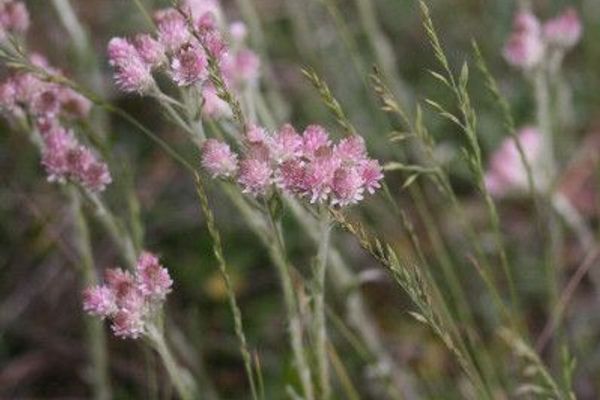
Cat's-foot
Antennaria dioica
Родина: Asteraceae • Рід: Antennaria
БагаторічнаСередньоДекоративна
Опис
Prefers a light well-drained soil in full sun, succeeding in poor soils[1, 133, 200]. Established plants are drought tolerant. This species is very susceptible to slug damage, the young growth in spring is particularly at risk[K]. Tolerates light treading. The flowers are sometimes cut and used as 'everlasting flowers' since they dry well and keep their colour. Plants are usually dioecious, male and female plants must be grown if seed is required. Some male plants have a few hermaphrodite flowers, though these are usually sterile. Apomictic flowers are also produced, these produce seed without sexual fertilization, each seedling being a clone of the parent plant. The plant is heat tolerant in zones 9 through 4. (Plant Hardiness Zones show how well plants withstand cold winter temperatures. Plant Heat Zones show when plants would start suffering from the heat. The Plant Heat Zone map is based on the number of "heat days" experienced in a given area where the temperature climbs to over 86 degrees F (30°C). At this temperature, many plants begin to suffer physiological damage. Heat Zones range from 1 (no heat days) to 12 (210 or more heat days). For example Heat Zone. 11-1 indicates that the plant is heat tolerant in zones 11 through 1.) For polyculture design as well as the above-ground architecture (form - tree, shrub etc. and size shown above) information on the habit and root pattern is also useful and given here if available. An evergreen. The plant growth habit is a clumper with limited spread [1-2]. The root pattern is stoloniferous rooting from creeping stems above the ground [1-2]. References Carbon Farming Information and Carbon Sequestration Information Temperature Converter Type a value in the Celsius field to convert the value to Fahrenheit: Celsius Fahrenheit: The PFAF Bookshop Plants For A Future have a number of books available in paperback and digital form. Book titles include Edible Plants , Edible Perennials , Edible Trees , Edible Shrubs , Woodland Gardening , and Temperate Food Forest Plants . Our new book is Food Forest Plants For Hotter Conditions (Tropical and Sub-Tropical) . Shop Now
Походження та ареал
TEMPERATE ASIA: Armenia, Azerbaijan, China, Ciscaucasia, Eastern Siberia, Far East, Gansu Sheng, Georgia, Heilongjiang Sheng, Hokkaidô, Japan, Kazakhstan, Korea, Kurile Islands, Mongolia, Russian Federation, Russian Federation-Eastern Siberia, Russian Federation-Far East, Russian Federation-Western Siberia, South, Western Siberia, Xinjiang Uygur Zizhiqu,Russian Federation-Ciscaucasia. NORTHERN AMERICA: United States, Alaska (Aleutian Islands), EUROPE: Denmark, Finland, United Kingdom (U.K.), Ire
Корисні властивості
None known References More on Edible Uses
Поради
Seed - sow spring in cold frame and only just cover the seed. Do not allow the soil to dry out. The seed germinates in 1 -2 months at 15°c. Prick out the seedlings into individual pots when they are large enough to handle and plant them out in late spring of the following year[K]. Division in spring or autumn. Fairly easy, the divisions can be planted out direct into their permanent positions if required.