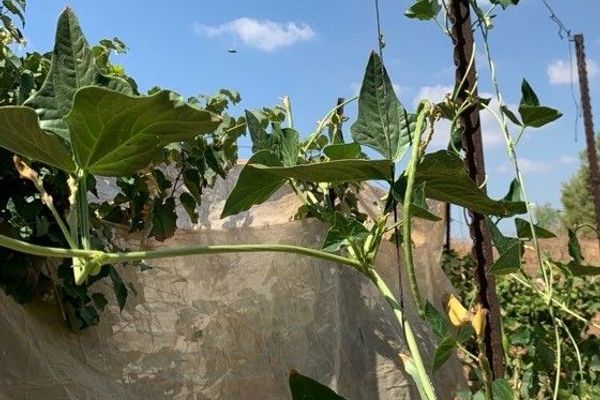
Cowpea
Vigna unguiculata
Родина: Fabaceae • Рід: Vigna
БагаторічнаСередньоДекоративна
Опис
Requires a very warm sunny position in a moist but well drained soil. Often cultivated for its edible seed in warm temperate and tropical zones, it is best started off in a greenhouse in Britain and planted out after the last expected frosts. Plants have given reasonable yields for the past 3 years on our trial grounds in Cornwall (1993)[K]. This species has a symbiotic relationship with certain soil bacteria, these bacteria form nodules on the roots and fix atmospheric nitrogen. Some of this nitrogen is utilized by the growing plant but some can also be used by other plants growing nearby. When removing plant remains at the end of the growing season, it is best to only remove the aerial parts of the plant, leaving the roots in the ground to decay and release their nitrogen. References Carbon Farming Information and Carbon Sequestration Information Temperature Converter Type a value in the Celsius field to convert the value to Fahrenheit: Celsius Fahrenheit: The PFAF Bookshop Plants For A Future have a number of books available in paperback and digital form. Book titles include Edible Plants , Edible Perennials , Edible Trees , Edible Shrubs , Woodland Gardening , and Temperate Food Forest Plants . Our new book is Food Forest Plants For Hotter Conditions (Tropical and Sub-Tropical) . Shop Now
Походження та ареал
Coming Soon
Корисні властивості
Young seedpods - cooked[2, 177]. They are picked whilst the seeds are very immature and then cooked like French beans. Seed - cooked[2, 183]. Rich in protein. References More on Edible Uses
Поради
Pre-soak the seed for 12 hours in warm water and sow in trays in early to mid spring in a greenhouse. Germination should take place within 10 days. Grow the plants on fast and plant them out after the last expected frosts. Consider giving them the protection of a cloche for their first few weeks outdoors to ensure that they do not suffer a check to their growth. An outdoor sowing in situ in late spring may succeed in a warm summer, though it is much more likely to be a disappointment in Britain.