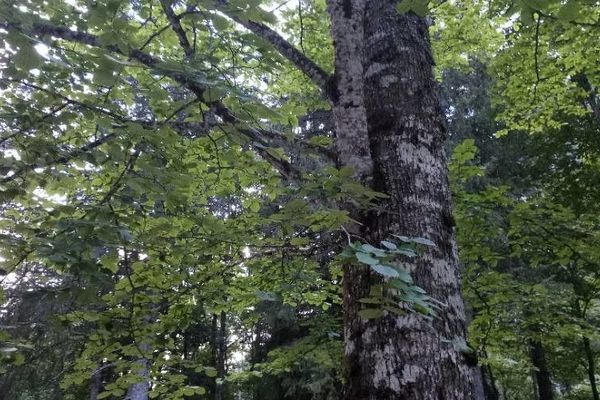
Wych elm
Ulmus glabra
Родина: Ulmaceae • Рід: Ulmus
БагаторічнаСередньоДекоративна
Bloom Color: Green. Main Bloom Time: Early fall, Late fall, Mid fall. Form: Rounded, Weeping.
Опис
Landscape Uses:Specimen. Easily grown in any soil of at least moderate quality so long as it is well drained. Prefers a deep or heavy soil that is moist but not waterlogged and does not thrive if the soil is markedly acid. Moderately shade tolerant. Very wind resistant and tolerant of maritime exposure. Trees cast a dense shade. Rarely produces suckers but responds well to coppicing. The wych elm is subject to 'Dutch elm disease' (though less so than U. procera), a disease that has destroyed the greater part of all the elm trees growing in Britain. Mature trees killed back by the disease will often regrow from suckers, but these too will succumb when they get larger. There is no effective cure (1992) for the problem, but most E. Asian, though not Himalayan, species are resistant to the disease so the potential exists to develop new resistant hybrids with the native species. The various species hybridize freely, the pollen stores well and can be kept for use with species that flower at different times. A very ornamental tree, it is a food plant for the caterpillars of many lepidoptera species. A good tree for growing grapes into. Special Features: Not North American native, Inconspicuous flowers or blooms. References Carbon Farming Information and Carbon Sequestration Information Temperature Converter Type a value in the Celsius field to convert the value to Fahrenheit: Celsius Fahrenheit: The PFAF Bookshop Plants For A Future have a number of books available in paperback and digital form. Book titles include Edible Plants , Edible Perennials , Edible Trees , Edible Shrubs , Woodland Gardening , and Temperate Food Forest Plants . Our new book is Food Forest Plants For Hotter Conditions (Tropical and Sub-Tropical) . Shop Now
Походження та ареал
TEMPERATE ASIA: Iran, Syria, Turkey, Russian Federation-Ciscaucasia (Ciscaucasia), Armenia, Azerbaijan, Georgia, Russian Federation (Dagestan), Russian Federation (Chelyabinsk) EUROPE: Denmark, Finland, United Kingdom, Ireland, Norway, Sweden, Austria, Belgium, Switzerland, Czech Republic, Germany, Hungary, Netherlands, Poland, Slovakia, Russian Federation (European part), Belarus, Estonia, Lithuania, Latvia, Ukraine (incl. Krym), Albania, Bulgaria, Bosnia and Herzegovina, Greece, Croatia, Italy
Корисні властивості
Edible Parts: Fruit Inner bark Leaves Edible Uses: Leaves - raw or cooked[179, K]. They can be a little bit bitter, especially if not very young, and have a mucilaginous texture[K]. They make a nice addition to a mixed salad[K]. Immature fruits, used just after they are formed, can be eaten raw. An aromatic, unusual flavour, leaving the mouth feeling fresh and the breath smelling pleasant. They contain about 34.4% protein, 28.2% fat, 17% carbohydrate, 5% ash. The fruit is about 2.5cm long. Inner bark - mucilaginous. No more details are given but inner bark is often dried, ground into a powder and then used as a thickening in soups etc or mixed with cereals when making bread[K]. References More on Edible Uses
Поради
Seed - if sown in a cold frame as soon as it is ripe, it usually germinates within a few days. Stored seed does not germinate so well and should be sown in early spring. The seed can also be harvested 'green' (when it has fully developed but before it dries on the tree) and sown immediately in a cold frame. It should germinate very quickly and will produce a larger plant by the end of the growing season. When they are large enough to handle, prick the seedlings out into individual pots and grow them on in the greenhouse for their first winter. Plant them out into their permanent positions in late spring or early summer, after the last expected frosts. Plants should not be allowed to grow for more than two years in a nursery bed since they form a tap root and will then move badly. Layering of suckers or coppiced shoots.