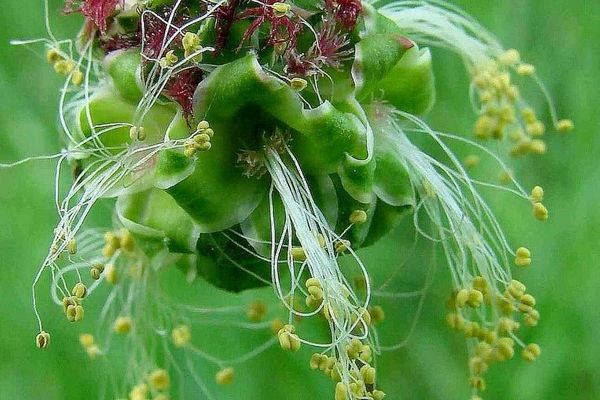
Опис
Prefers a light dry calcareous soil[1, 37, 200] but succeeds in most good soils[1, 37]. Plants also succeed in poor soils. One report says that it grows well in marshy soil but this is possibly a mistake[K]. Dislikes shade. Occasionally cultivated in the herb garden, this is an evergreen herbaceous plant and it supplies fresh edible leaves all the year round, even in quite severe winters[K]. When grown as a salad, the plant should be prevented from flowering. Grows well in the spring meadow. Makes a good edging plant in the border. Plants often self-sow, sometimes to the point of nuisance[K]. The plant is heat tolerant in zones 8 through 1. (Plant Hardiness Zones show how well plants withstand cold winter temperatures. Plant Heat Zones show when plants would start suffering from the heat. The Plant Heat Zone map is based on the number of "heat days" experienced in a given area where the temperature climbs to over 86 degrees F (30°C). At this temperature, many plants begin to suffer physiological damage. Heat Zones range from 1 (no heat days) to 12 (210 or more heat days). For example Heat Zone. 11-1 indicates that the plant is heat tolerant in zones 11 through 1.) For polyculture design as well as the above-ground architecture (form - tree, shrub etc. and size shown above) information on the habit and root pattern is also useful and given here if available. The plant growth habit is a clumper with limited spread [1-2]. The root pattern is rhizomatous with underground stems sending roots and shoots along their length [1-2]. The young leaves and shoots are best harvested from spring to early summer, before flowering. Salad Burnet typically flowers from late spring to early summer, around June to July (Northern Hemisphere). Salad Burnet is a moderately fast-growing perennial herb, establishing itself quickly and providing leaves for multiple harvests throughout the growing season. Salad Burnet is self-fertile. References Carbon Farming Information and Carbon Sequestration Information Temperature Converter Type a value in the Celsius field to convert the value to Fahrenheit: Celsius Fahrenheit: The PFAF Bookshop Plants For A Future have a number of books available in paperback and digital form. Book titles include Edible Plants , Edible Perennials , Edible Trees , Edible Shrubs , Woodland Gardening , and Temperate Food Forest Plants . Our new book is Food Forest Plants For Hotter Conditions (Tropical and Sub-Tropical) . Shop Now
Походження та ареал
TEMPERATE ASIA: Armenia, Azerbaijan, Ciscaucasia, Cyprus, Dagestan, Georgia, Iran, Iraq, Israel, Jordan, Lebanon, Russian Federation, Russian Federation-Ciscaucasia, Russian Federation-Western Siberia, Syria, Turkey, Western Siberia,Afghanistan. EUROPE: Denmark, United Kingdom (U.K.), Ireland, Austria, Belgium, Switzerland, Czech Republic, Germany, Hungary, Netherlands, Poland, Slovakia, Russian Federation-European part, European part, Lithuania, Ukraine (incl. Krym), Albania, Bulgaria, Bosnia a
Корисні властивості
Edible Parts: Leaves Shoots Edible Uses: Tea Young leaves and shoots - raw or cooked[2, 5, 9, 14, 21]. They are best used before the plant comes into flower. Eaten in salads, used as a garnish or added to soups, cooling drinks and claret cups. Young seedlings are boiled and eaten. A bit fiddly to harvest and the leaves sometimes become bitter in hot dry summers, but they are usually fairly mild tasting in the winter and some people detect a cucumber flavour to them[K]. In the acid soil of our Cornish trial grounds, the leaves have a distinctly bitter flavour, though when the same plants were grown on a chalky soil they had a much milder flavour[K]. The leaves contain about 5.65% protein, 1.2% fat, 11% carbohydrate, 1.7% ash, 74.5% water. A herb tea is made from the dried leaves[21, 183]. References More on Edible Uses Composition Figures in grams (g) or miligrams (mg) per 100g of food. Leaves (Dry weight) 0 Calories per 100g Water : 0% Protein: 11.1g; Fat: 2g; Carbohydrate: 80.4g; Fibre: 18g; Ash: 6.5g; Minerals - Calcium: 0mg; Phosphorus: 0mg; Iron: 0mg; Magnesium: 0mg; Sodium: 0mg; Potassium: 0mg; Zinc: 0mg; Vitamins - A: 0mg; Thiamine (B1): 0mg; Riboflavin (B2): 0mg; Niacin: 0mg; B6: 0mg; C: 0mg; Reference: [ 218] Notes:
Поради
Seed - sow March/April or September/October in a cold frame. Germinates in 3 weeks. Prick out the seedlings when they are large enough to handle into individual pots. Plant them out in the spring or early summer. The seed can also be sown in situ in spring or autumn if you have sufficient seed. Division in spring.