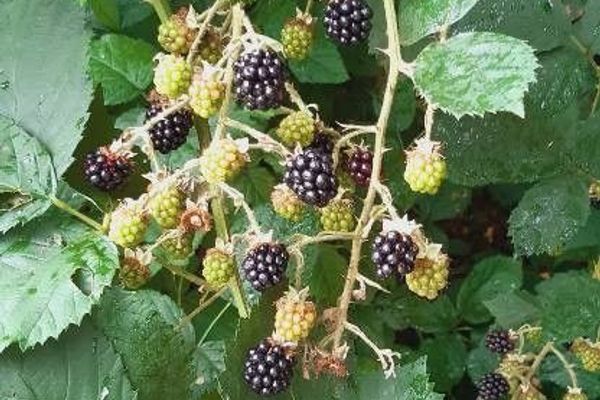
Опис
Easily grown in a good well-drained loamy soil[1, 11, 200]. Succeeds on chalk or clay soils, preferring open habitats in the wild[17, 150]. Tolerates poor soils so long as they are not dry. Succeeds in sun or semi-shade[1, 11, 200] and also in deep shade though growth is more lax in such a position. Hardy to about -18°c. Plants reproduce sexually and not apomictically like many brambles. Individual plants are self-sterile. This species is a blackberry with biennial stems, it produces a number of new stems each year from the perennial rootstock, these stems fruit in their second year and then die. Plants in this genus are notably susceptible to honey fungus. Berries are typically harvested in summer, from late spring to early autumn, depending on the species and local climate. Rubus species generally flower in late spring to early summer, usually from May to June (Northern Hemisphere), depending on the specific species and environmental conditions. Rubus species are known for their vigorous growth and can establish quickly, often spreading through both seeds and vegetative propagation. They can reach maturity in 1 to 2 years, with some species growing rapidly within a single growing season. References Carbon Farming Information and Carbon Sequestration Information Temperature Converter Type a value in the Celsius field to convert the value to Fahrenheit: Celsius Fahrenheit: The PFAF Bookshop Plants For A Future have a number of books available in paperback and digital form. Book titles include Edible Plants , Edible Perennials , Edible Trees , Edible Shrubs , Woodland Gardening , and Temperate Food Forest Plants . Our new book is Food Forest Plants For Hotter Conditions (Tropical and Sub-Tropical) . Shop Now
Походження та ареал
EUROPE: United Kingdom (Scotland), Ireland, Belgium, Switzerland, Germany, Luxembourg, Netherlands, Albania, Bosnia and Herzegovina, Croatia, Italy (incl. Sardinia, Sicily), North Macedonia, Slovenia, Spain (incl. Baleares), France (incl. Corsica), Portugal AFRICA: Algeria, Morocco, Tunisia
Корисні властивості
Edible Parts: Fruit Edible Uses: Fruit - raw or cooked[105, 145]. Aromatic, but with small dryish drupelets. Sweet. References More on Edible Uses
Поради
Seed - requires stratification and is best sown in early autumn in a cold frame. Stored seed requires one month stratification at about 3°c and is best sown as early as possible in the year. Prick out the seedlings when they are large enough to handle and grow on in a cold frame. Plant them out into their permanent positions in late spring of the following year. Cuttings of half-ripe wood, July/August in a frame. Tip layering in July. Plant out in autumn. Division in early spring or just before leaf-fall in the autumn.