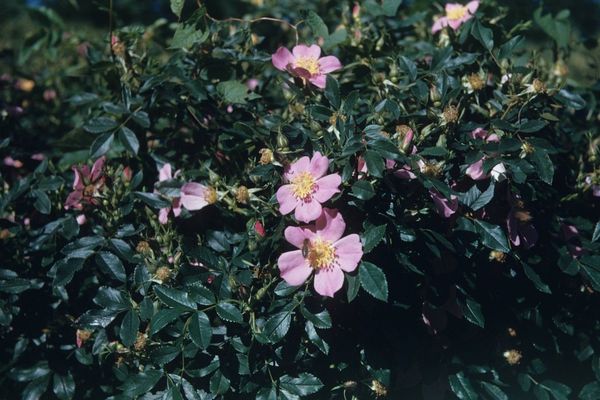
Virginia rose
Rosa virginiana
Родина: Rosaceae • Рід: Rosa
БагаторічнаСередньоДекоративна
Plant in well-drained, slightly acidic to neutral soil in full sun to partial shade — Virginia rose is one of the most ecologically valuable of all native roses, producing simple, five-petaled, clear pink flowers in late spring with a pleasant light fragrance, followed by the best hips of any easter
Опис
Plant in well-drained, slightly acidic to neutral soil in full sun to partial shade — Virginia rose is one of the most ecologically valuable of all native roses, producing simple, five-petaled, clear pink flowers in late spring with a pleasant light fragrance, followed by the best hips of any eastern wild rose: large, bright red, glossy fruits that persist on the canes through winter and provide critical food for catbirds, mockingbirds, robins, and cedar waxwings. The foliage turns brilliant shades of red, orange, and burgundy in autumn — outstanding fall color for a shrub. It spreads by suckers to form dense, wildlife-valuable thickets in naturalistic settings, along fencerows, and at the edges of woodland, and tolerates salt spray, poor sandy soils, and moderate drought. Disease resistance is excellent compared to hybrid roses: no spraying required. Prune out oldest canes after flowering to keep the plant productive; remove suckers to control spread in small spaces.
Спосіб посадки: Розмноження діленням куща
Відстань між рослинами: 36–60 дюймів
Висота: 36–72 дюймів
Дні до схожості: 30–60
Температура ґрунту для схожості: 4–13°C
Поради
Plant in well-drained, slightly acidic to neutral soil in full sun to partial shade — Virginia rose is one of the most ecologically valuable of all native roses, producing simple, five-petaled, clear pink flowers in late spring with a pleasant light fragrance, followed by the best hips of any eastern wild rose: large, bright red, glossy fruits that persist on the canes through winter and provide critical food for catbirds, mockingbirds, robins, and cedar waxwings. The foliage turns brilliant shades of red, orange, and burgundy in autumn — outstanding fall color for a shrub. It spreads by suckers to form dense, wildlife-valuable thickets in naturalistic settings, along fencerows, and at the edges of woodland, and tolerates salt spray, poor sandy soils, and moderate drought. Disease resistance is excellent compared to hybrid roses: no spraying required. Prune out oldest canes after flowering to keep the plant productive; remove suckers to control spread in small spaces.
Спосіб посадки: Розмноження діленням куща
Відстань між рослинами: 36–60 дюймів
Висота: 36–72 дюймів
Дні до схожості: 30–60
Температура ґрунту для схожості: 4–13°C
---
Час посадки: -8–-4 тижнів осіння посадка
Plant bare-root or container divisions in fall or early spring in well-drained, slightly acidic to neutral, moderately fertile soil in full sun to partial shade; Virginia rose is extremely cold hardy and tolerates a wide range of soils, including poor, sandy, and dry conditions once established.