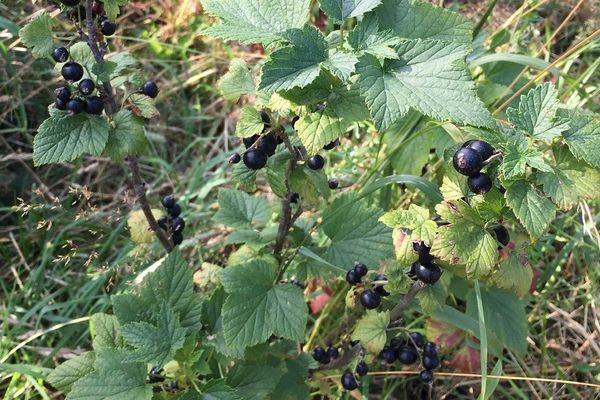
Опис
Easily grown in a moisture retentive but well-drained loamy soil of at least moderate quality[11, 200]. Best grown on a deep sandy loam. Dislikes very heavy clay, chalky soils and thin dry soils, but it can succeed on most soil types if plenty of organic matter is incorporated. Plants require plenty of nitrogen if they are to do well. Prefers a pH in the range 6.7 to 7 and is intolerant of acid soils. Plants are quite tolerant of shade though do not fruit so well in such a position. Plants fruit less freely when grown in windy sites. The plant is hardy to about -20°c, though flowers are damaged at -1°c. Blackcurrants are widely cultivated in temperate areas for their edible fruit, there are many named varieties[183, 200]. Most fruit is produced on one year old wood. Pruning usually consists of removing about a third of all the stems from just above ground level in the autumn. The oldest stems with least new growth are removed since these will be the poorest fruiters. The plant is able to make new growth from the base of the removed stems and, if the plants are well fed, this growth is very vigorous and will fruit heavily the following year. The flowers can self-fertilize but many cultivars fruit better with insect pollination. Plants can harbour a stage of 'white pine blister rust', so they should not be grown in the vicinity of pine trees. Plants in this genus are notably susceptible to honey fungus. For polyculture design as well as the above-ground architecture (form - tree, shrub etc. and size shown above) information on the habit and root pattern is also useful and given here if available. The plant growth habit is multistemmed with multiple stems from the crown [1-2]. In garden design, as well as the above-ground architecture of a plant, root structure considerations help in choosing plants that work together for their optimal soil requirements including nutrients and water. The root pattern is branching: a heart root, dividing from the crown into several primary roots going down and out. The root pattern is suckering with new plants from underground runners away from the plant [2-1]. Currants are usually harvested in mid to late summer, from June to August (Northern Hemisphere), depending on the species and local climate. Ribes species generally flower in spring, around April to June (Northern Hemisphere), with flowering occurring before or as the leaves emerge. Currant plants are relatively fast-growing, reaching maturity in about 2 to 3 years. They typically grow to 1 to 2 meters (3 to 6 feet) and can be quite productive. Most Ribes species, including black, red, and white currants, are self-fertile, meaning they can produce fruit without needing cross-pollination. However, cross-pollination with another Ribes plant can improve fruiting. References Carbon Farming Information and Carbon Sequestration Information Temperature Converter Type a value in the Celsius field to convert the value to Fahrenheit: Celsius Fahrenheit: The PFAF Bookshop Plants For A Future have a number of books available in paperback and digital form. Book titles include Edible Plants , Edible Perennials , Edible Trees , Edible Shrubs , Woodland Gardening , and Temperate Food Forest Plants . Our new book is Food Forest Plants For Hotter Conditions (Tropical and Sub-Tropical) . Shop Now
Походження та ареал
TEMPERATE ASIA: Altay, Eastern Siberia, Kazakhstan, Mongolia (northwest), Russian Federation, Russian Federation-Eastern Siberia,Turkey. EUROPE: Finland, Sweden, Belgium, Germany, Poland, Russian Federation-European part, European part, Belarus, Estonia, Lithuania, Latvia, Ukraine, Bulgaria, Italy, France,
Корисні властивості
Edible Parts: Fruit Leaves Edible Uses: Tea Fruit - raw or cooked. An excellent aromatic flavour[K]. The fully ripe fruit is very acceptable raw, though it is more often cooked and used to make pies, jams etc[1, 2, 5, 9, 34]. Very rich in vitamin C. The fruit is about 10mm in diameter, though selected cultivars have larger fruits[K]. The leaves are used in soups. The dried leaves are a tea substitute[74, 177, 183]. They are sometimes added to blended herb teas. References More on Edible Uses
Поради
Seed - best sown as soon as it is ripe in the autumn in a cold frame. Stored seed requires 3 months cold stratification at between 0 and 5°c and should be sown as early in the year as possible[113, 164]. Under normal storage conditions the seed can remain viable for 17 years or more. Prick out the seedlings into individual pots when they are large enough to handle and grow them on in a cold frame for their first winter, planting them out in late spring of the following year. Cuttings of half-ripe wood, 10 - 15cm with a heel, July/August in a frame[78, 113]. Cuttings of mature wood of the current year's growth, preferably with a heel of the previous year's growth, November to February in a cold frame or sheltered bed outdoors[78, 200].