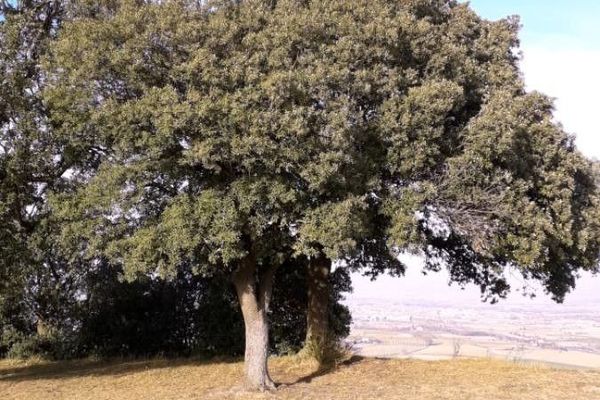
Evergreen oak
Quercus ilex
Родина: Fagaceae • Рід: Quercus
БагаторічнаСередньоДекоративна
Bloom Color: Brown. Main Bloom Time: Early spring, Late spring, Mid spring. Form: Rounded.
Опис
Fodder: Mast Industrial Crop: Tannin Management: Standard Other Systems: Dehesa Regional Crop Staple Crop: Balanced carb Prefers a good deep fertile loam which can be on the stiff side. Thrives on shallow chalky soils. Succeeds in all soils except those that are cold and poorly drained. Grows well in sandy soils. Young plants tolerate reasonable levels of side shade. Very resistant to maritime exposure[11, 49, 75]. A very ornamental tree but it is quite slow-growing. Transplants badly unless moved regularly and this should be done as growth commences in late May or in September. Fruits very freely in Britain[K]. The seed ripens in its first year. The sub-species Q. ilex ballota is cultivated for its sweet-tasting edible seed in Portugal and Spain[K]. Hybridizes freely with other members of the genus. This species is notably resistant to honey fungus[88, 200]. Special Features: Not North American native, Inconspicuous flowers or blooms. The plant is heat tolerant in zones 9 through 2. (Plant Hardiness Zones show how well plants withstand cold winter temperatures. Plant Heat Zones show when plants would start suffering from the heat. The Plant Heat Zone map is based on the number of "heat days" experienced in a given area where the temperature climbs to over 86 degrees F (30°C). At this temperature, many plants begin to suffer physiological damage. Heat Zones range from 1 (no heat days) to 12 (210 or more heat days). For example Heat Zone. 11-1 indicates that the plant is heat tolerant in zones 11 through 1.) For polyculture design as well as the above-ground architecture (form - tree, shrub etc. and size shown above) information on the habit and root pattern is also useful and given here if available. The plant growth habit is a standard with a non-suckering single trunk [1-2]. Carbon Farming Fodder: Mast Fruits and seeds of shrubs, woody vines, trees, cacti, and other non-herbaceous vegetation available for animal consumption. Industrial Crop: Tannin Occur generally in the roots, wood, bark, leaves, and fruit of many plants. Used in tanning leather, dyeing fabric, making ink, and medical applications. Management: Standard Plants grow to their standard height. Harvest fruit, seeds, or other products. Non-Destructive management systems. Other Systems: Dehesa A fodder tree silvopasture system with livestock grazing on tree crops - nuts, fruit, acorns, woody pods, fodder. Regional Crop These crops have been domesticated and cultivated regionally but have not been adopted elsewhere and are typically not traded globally, Examples in this broad category include perennial cottons and many nuts and staple fruits. Staple Crop: Balanced carb (0-15 percent protein, 0-15 percent oil, with at least one over 5 percent). The carbohydrates are from either starch or sugar. Annuals include maize, wheat, rice, and potato. Perennials include chestnuts, carob, perennial fruits, nuts, cereals, pseudocereals, woody pods, and acorns. References Carbon Farming Information and Carbon Sequestration Information Temperature Converter Type a value in the Celsius field to convert the value to Fahrenheit: Celsius Fahrenheit: The PFAF Bookshop Plants For A Future have a number of books available in paperback and digital form. Book titles include Edible Plants , Edible Perennials , Edible Trees , Edible Shrubs , Woodland Gardening , and Temperate Food Forest Plants . Our new book is Food Forest Plants For Hotter Conditions (Tropical and Sub-Tropical) . Shop Now
Походження та ареал
TEMPERATE ASIA: Turkey. EUROPE: Albania, Bosnia and Herzegovina, Greece (incl. Crete), Croatia, Italy (incl. Sardinia, Sicily), Malta, Montenegro, Slovenia, Spain (incl. Baleares), France (incl. Corsica), Portugal, AFRICA: Algeria, Libya, Morocco, Tunisia.
Корисні властивості
Edible Parts: Oil Seed Edible Uses: Coffee Oil Seed - raw or cooked[1, 2, 46, 61]. It can be sweet or bitter[K]. The seed is up to 3cm long, it can be dried, ground into a powder and used as a thickening in stews etc or mixed with cereals for making bread. The seed from some trees contains bitter tannins, these can be leached out by thoroughly washing the seed in running water though many minerals will also be lost. Either the whole seed can be used or the seed can be dried and ground it into a powder. It can take several days or even weeks to properly leach whole seeds, one method was to wrap them in a cloth bag and place them in a stream. Leaching the powder is quicker. A simple taste test can tell when the tannin has been leached. The traditional method of preparing the seed was to bury it in boggy ground overwinter. The germinating seed was dug up in the spring when it would have lost most of its astringency. The roasted seed is a coffee substitute. An edible oil is obtained from the seed. One reader noted the Q. suber population of the Mamora forest in Morocco contains only sweet acorns and can be eaten raw, it has a similar taste to raw chestnuts. The skin removes quite easyl Quercus ilex also exists with tannin-free acorns in the moroccan forests, the locals say around 20 percent are sweet. References More on Edible Uses
Поради
Seed - it quickly loses viability if it is allowed to dry out. It can be stored moist and cool overwinter but is best sown as soon as it is ripe in an outdoor seed bed, though it must be protected from mice, squirrels etc. Small quantities of seed can be sown in deep pots in a cold frame. Plants produce a deep taproot and need to be planted out into their permanent positions as soon as possible, in fact seed sown in situ will produce the best trees. Trees should not be left in a nursery bed for more than 2 growing seasons without being moved or they will transplant very badly.