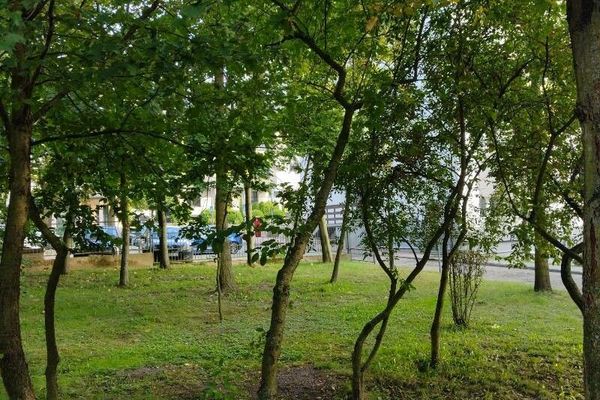
Rum cherry
Prunus serotina
Родина: Rosaceae • Рід: Prunus
БагаторічнаСередньоДекоративна
Bloom Color: White. Main Bloom Time: Early spring, Late spring, Mid spring. Form: Oval.
Опис
Requires a well-drained moisture retentive soil[1, 11]. Requires a warm sunny position[11, 159]. Thrives in a loamy soil, doing well on limestone. Prefers some chalk in the soil but apt to become chlorotic if too much is present. A fast-growing and moderately long-lived tree in the wild, producing a heavy fruit crop about once every 4 years. It is cultivated for its timber in C. Europe. This species produces an abundance of flowers and usually fruits well in Britain. In the wild the tree begins to fruit when about 10 years old and then continues for about 100 years, fruiting well in most years. Most members of this genus are shallow-rooted and will produce suckers if the roots are damaged. Plants in this genus are notably susceptible to honey fungus. Special Features: Attracts birds, North American native, Naturalizing, All or parts of this plant are poisonous, Attracts butterflies, Fragrant flowers, Attractive flowers or blooms. References Carbon Farming Information and Carbon Sequestration Information Temperature Converter Type a value in the Celsius field to convert the value to Fahrenheit: Celsius Fahrenheit: The PFAF Bookshop Plants For A Future have a number of books available in paperback and digital form. Book titles include Edible Plants , Edible Perennials , Edible Trees , Edible Shrubs , Woodland Gardening , and Temperate Food Forest Plants . Our new book is Food Forest Plants For Hotter Conditions (Tropical and Sub-Tropical) . Shop Now
Походження та ареал
NORTHERN AMERICA: Canada (Québec, New Brunswick (southeast)), United States (Indiana, Maine (east & south), Massachusetts, Michigan, New Hampshire, New York, Ohio, Pennsylvania, Vermont, West Virginia, Illinois, Iowa, Missouri, Oklahoma, Wisconsin, Alabama, Arkansas, Delaware, Florida, Georgia, Kentucky, Louisiana, Maryland, Mississippi, North Carolina, South Carolina, Tennessee, Virginia, Texas), Mexico (Chihuahua, Coahuila de Zaragoza, Durango, Sonora, Veracruz de Ignacio de la Llave) SOUTHERN
Корисні властивості
Edible Parts: Fruit Seed Edible Uses: Condiment Drink Fruit - raw or cooked in pies, jellies, stews etc[2, 11, 34, 55, 62, 101, 149, 183]. It must be fully ripe or else it will have a bitter flavour. The fruit can taste sweet or bitter. The better fruits have a thin skin and a juicy flesh with a pleasant vinous flavour. The fruit can also be used as a flavouring. The taste is best when the plant is grown in a sunny position. The fruit is about 9mm in diameter and contains one large seed. Seed - raw or cooked. Do not eat the seed if it is too bitter - see the notes above on toxicity. An infusion of the twigs is used as a beverage[161, 257]. An extract from the bark is used commercially as a flavouring in soft drinks, sweets, syrups and baked goods. References More on Edible Uses
Поради
Seed - requires 2 - 3 months cold stratification and is best sown in a cold frame as soon as it is ripe. Sow stored seed in a cold frame as early in the year as possible. Protect the seed from mice etc. The seed can be rather slow, sometimes taking 18 months to germinate. Prick out the seedlings into individual pots when they are large enough to handle. Grow them on in a greenhouse or cold frame for their first winter and plant them out in late spring or early summer of the following year. Cuttings of half-ripe wood with a heel, July/August in a frame[11, 200]. Softwood cuttings from strongly growing plants in spring to early summer in a frame. Layering in spring.