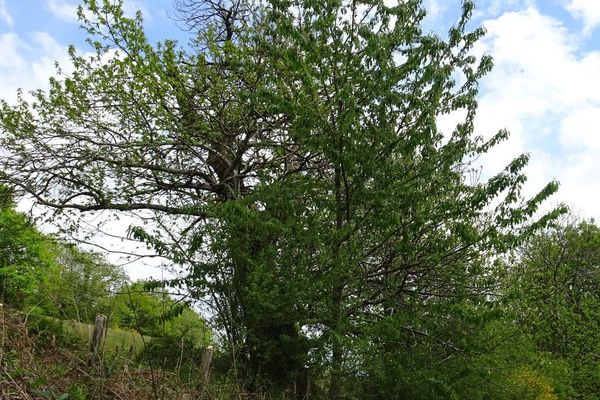
Опис
Requires a well-drained moisture retentive soil[1, 11]. Succeeds in light shade but fruits better in a sunny position[11, 200]. Thrives in a loamy soil, doing well on limestone. Prefers some chalk in the soil but apt to become chlorotic if too much is present. A very ornamental plant, it is fast growing on deep moist soils but is shallow rooting. Trees cast a light shade and are themselves intolerant of heavy shade. They produce quite a lot of suckers and can form thickets, especially if the main trunk is felled. This species is a parent of many cultivated forms of sweet cherries[17, 34], especially the black fruited forms. Where space is at a premium, or at the limits of their climatic range, sweet cherries can be grown against a wall. Most cultivars will grow well against a sunny south or west facing wall though east or north facing walls are not very suitable. The main problems with growing this species against a wall are firstly that it is usually completely self-sterile and so there needs to be space for at least two different cultivars, secondly it is very vigorous and so is difficult to keep within bounds. Most members of this genus are shallow-rooted and will produce suckers if the roots are damaged. An excellent tree for insects and the fruit is a good food source for birds. A bad companion for potatoes, making them more susceptible to potato blight, it also suppresses the growth of wheat. It also grows badly with plum trees, its roots giving out an antagonistic secretion. Plants in this genus are notably susceptible to honey fungus. Special Features:Edible, Not North American native, All or parts of this plant are poisonous, Fragrant flowers, Attractive flowers or blooms. The plant is heat tolerant in zones 8 through 1. (Plant Hardiness Zones show how well plants withstand cold winter temperatures. Plant Heat Zones show when plants would start suffering from the heat. The Plant Heat Zone map is based on the number of "heat days" experienced in a given area where the temperature climbs to over 86 degrees F (30°C). At this temperature, many plants begin to suffer physiological damage. Heat Zones range from 1 (no heat days) to 12 (210 or more heat days). For example Heat Zone. 11-1 indicates that the plant is heat tolerant in zones 11 through 1.) For polyculture design as well as the above-ground architecture (form - tree, shrub etc. and size shown above) information on the habit and root pattern is also useful and given here if available. A sprouting standard sending up shoots from the base [1-2]. In garden design, as well as the above-ground architecture of a plant, root structure considerations help in choosing plants that work together for their optimal soil requirements including nutrients and water. The root pattern is suckering with new plants from underground runners away from the plant [2-1]. Harvesting typically occurs in late summer to early autumn, with specific timing varying by species. For instance, plums and peaches are usually harvested from July to September (Northern Hemisphere), while almonds are harvested in August to September (Northern Hemisphere). Prunus species usually flower in early spring, often between March and April (Northern Hemisphere), depending on the species and local climate. Growth rates vary among species, but generally, Prunus trees can grow moderately fast, often reaching full height in 3 to 5 years. However, they may take several years to bear fruit, depending on the species and growing conditions. Agroforestry uses: Prunus species can be used as windbreaks and in alley cropping systems. They also improve biodiversity by providing habitats for pollinators and other wildlife. Some varieties can fix nitrogen in the soil, contributing to soil health. References Carbon Farming Information and Carbon Sequestration Information Temperature Converter Type a value in the Celsius field to convert the value to Fahrenheit: Celsius Fahrenheit: The PFAF Bookshop Plants For A Future have a number of books available in paperback and digital form. Book titles include Edible Plants , Edible Perennials , Edible Trees , Edible Shrubs , Woodland Gardening , and Temperate Food Forest Plants . Our new book is Food Forest Plants For Hotter Conditions (Tropical and Sub-Tropical) . Shop Now
Походження та ареал
TEMPERATE ASIA: Armenia, Azerbaijan, Ciscaucasia, Dagestan, Georgia, Iran, Russian Federation, Russian Federation-Ciscaucasia, Turkey,Afghanistan. EUROPE: Denmark, United Kingdom (U.K.), Ireland, Norway, Sweden, Austria, Belgium, Switzerland, Czech Republic, Germany, Hungary, Netherlands, Poland, Slovakia, Belarus (south), Moldova, Ukraine (incl. Krym), Albania, Bulgaria, Bosnia and Herzegovina, Greece, Croatia, Italy (incl. Sardinia), North Macedonia, Serbia, Slovenia, Spain, France, Portugal,
Корисні властивості
Edible Parts: Fruit Seed Edible Uses: Gum Fruit - raw or cooked[2, 12, 13]. It can be sweet or bitter but it is not acid. The fruit can be cooked in pies etc or used to make preserves. The fruit contains about 78% water, 8.5 - 14% sugars. The fruit is about 20mm in diameter and contains one large seed. Seed - raw or cooked. Do not eat the seed if it is too bitter - see the notes above on toxicity. An edible gum is obtained by wounding the bark[115, 183]. References More on Edible Uses
Поради
Seed - requires 2 - 3 months cold stratification and is best sown in a cold frame as soon as it is ripe. Sow stored seed in a cold frame as early in the year as possible. Protect the seed from mice etc. The seed can be rather slow, sometimes taking 18 months to germinate. Prick out the seedlings into individual pots when they are large enough to handle. Grow them on in a greenhouse or cold frame for their first winter and plant them out in late spring or early summer of the following year. Cuttings of half-ripe wood with a heel, July/August in a frame[11, 200]. Softwood cuttings from strongly growing plants in spring to early summer in a frame. Division of suckers in the dormant season. They can be planted out direct into their permanent positions. Layering in spring.