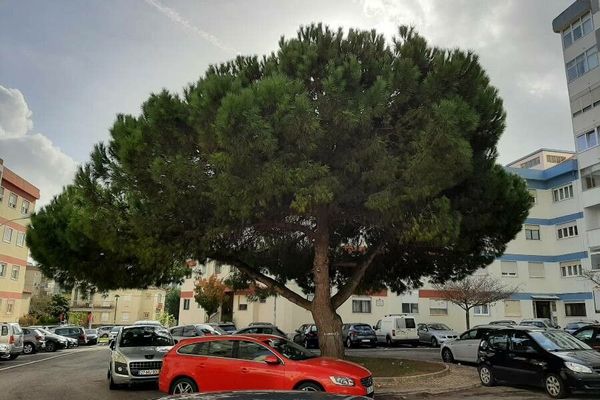
Umbrella pine
Pinus pinea
Родина: Pinaceae • Рід: Pinus
БагаторічнаСередньоДекоративна
Italian Stone Pine (P. pinea) is native to temperate Asia (Lebanon, Turkey) and Europe (including Italy, Spain, France, and Portugal). The seed is rich in oil and has a soft texture. It can be eaten raw or cooked. Italian stone pine seeds make delicious snacks and are used as staple foods. The seeds are added to ice cream, cakes, puddings, etc., or ground into a powder and used as a thickener and flavouring in soups. Bloom Color: Yellow. Main Bloom Time: Early spring, Late spring, Mid spring. Fo
Опис
Management: Standard Minor Global Crop Staple Crop: Protein-oil Thrives in a light well-drained sandy or gravelly loam[1, 11]. Dislikes poorly drained moorland soils and shady positions. Established plants tolerate drought. Succeeds in a chalky soil. This species is hardy to about -18°c. Although sometimes thought to be somewhat tender in this country, it is perfectly hardy as far north as south-east Scotland. The trees transplant very badly if they are allowed to stay in one position for more than 2 years. This is usually a short-lived tree, rarely surviving for much more than 100 years. The Italian stone pine is extensively planted for its edible seeds in Europe[81, 200]. The variety 'Fragilis' has thin shelled seeds and is the form most widely cultivated. Trees take between 10 and 20 years to produce cones from seed. One of our plants produced its first young female cone when 7 years old, though this did not mature because it was not fertilised[K]. A 20 year old plant at Kew was about 4.5 metres tall with a number of trunks and had more than 15 mature cones[K]. A very old specimen at Kew was carrying lots of 1st and 2nd year cones in July 1996[K]. The cones ripen in their third year and can then remain unopened on the tree for several years[1, 81, 200]. Plants are strongly outbreeding, self-fertilized seed usually grows poorly. This species does not hybridize with other members of this genus. Leaf secretions inhibit the germination of seeds, thereby reducing the amount of plants that can grow under the trees. Plants in this genus are notably susceptible to honey fungus. Special Features: Not North American native, Inconspicuous flowers or blooms. Pine species are generally not self-fertile; they require cross-pollination between different trees to produce seeds effectively. Pine seeds are typically harvested in late summer to early autumn, usually from August to October (Northern Hemisphere), when cones begin to open and release seeds. Pine trees usually flower in spring, typically from March to June (Northern Hemisphere), depending on the species and climatic conditions. Growth rates vary significantly among pine species, but many can be considered fast-growing, reaching heights of 10 to 30 feet (3 to 9 meters) within 5 to 10 years, depending on species and environmental conditions. Carbon Farming Management: Standard Plants grow to their standard height. Harvest fruit, seeds, or other products. Non-Destructive management systems. Minor Global Crop These crops are already grown or traded around the world, but on a smaller scale than the global perennial staple and industrial crops, The annual value of a minor global crop is under $1 billion US. Examples include shea, carob, Brazil nuts and fibers such as ramie and sisal. Staple Crop: Protein-oil (16+ percent protein, 16+ percent oil). Annuals include soybeans, peanuts, sunflower seeds. Perennials include seeds, beans, nuts, and fruits such as almond, Brazil nut, pistachio, walnut, hazel, and safou. References Carbon Farming Information and Carbon Sequestration Information Temperature Converter Type a value in the Celsius field to convert the value to Fahrenheit: Celsius Fahrenheit: The PFAF Bookshop Plants For A Future have a number of books available in paperback and digital form. Book titles include Edible Plants , Edible Perennials , Edible Trees , Edible Shrubs , Woodland Gardening , and Temperate Food Forest Plants . Our new book is Food Forest Plants For Hotter Conditions (Tropical and Sub-Tropical) . Shop Now
Походження та ареал
TEMPERATE ASIA: Turkey,Lebanon. EUROPE: Albania, Croatia, Italy (incl. Sardinia, Sicily), Spain (incl. Baleares), France (s. & Corsica), Portugal,
Корисні властивості
Edible Parts: Seed Edible Uses: Condiment Seed - raw or cooked[1, 2, 4, 11, 34, 63]. Rich in oil, the seed has a soft texture with a hint of resin in the flavour. It makes a delicious snack and can also be used as a staple food[K]. The seeds are often added to ice cream, cakes, puddings etc. They can also be ground into a powder and used as a thickener and flavouring in soups etc[K]. The seed is a good size, up to 20mm x 10mm, and is a major source of pine nuts in commerce. A vanillin flavouring is obtained as a by-product of other resins that are released from the pulpwood. Young pine cones can be ground into a powder and used as a flavouring. References More on Edible Uses
Поради
It is best to sow the seed in individual pots in a cold frame as soon as it is ripe if this is possible otherwise in late winter. A short stratification of 6 weeks at 4°c can improve the germination of stored seed. Plant seedlings out into their permanent positions as soon as possible and protect them for their first winter or two. Plants have a very sparse root system and the sooner they are planted into their permanent positions the better they will grow[K]. Trees should be planted into their permanent positions when they are quite small, between 30 and 90cm. We actually plant them out when they are about 5 - 10cm tall. So long as they are given a very good weed-excluding mulch they establish very well[K]. Larger trees will check badly and hardly put on any growth for several years. This also badly affects root development and wind resistance. Cuttings. This method only works when taken from very young trees less than 10 years old. Use single leaf fascicles with the base of the short shoot. Disbudding the shoots some weeks before taking the cuttings can help. Cuttings are normally slow to grow away.