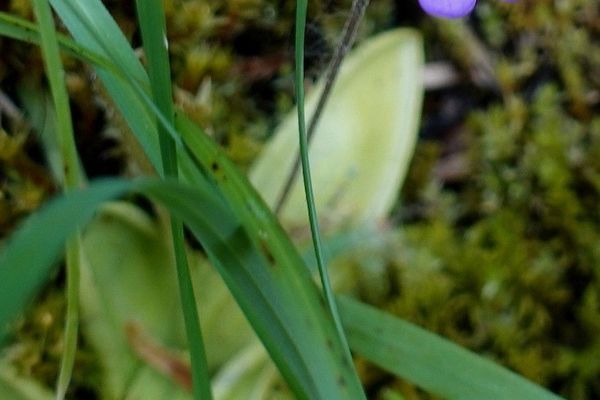
Common butterwort
Pinguicula vulgaris
Родина: Lentibulariaceae • Рід: Pinguicula
БагаторічнаСередньоДекоративна
Опис
Requires a boggy soil. Because of their insectivorous habit, plants are able to succeed on soils very deficient in nitrogen. Butterwort is an insectivorous plant, the leaves are sticky and trap insects which are then digested by the plant. Plants overwinter as a tight winter-resting bud with virtually no roots. References Carbon Farming Information and Carbon Sequestration Information Temperature Converter Type a value in the Celsius field to convert the value to Fahrenheit: Celsius Fahrenheit: The PFAF Bookshop Plants For A Future have a number of books available in paperback and digital form. Book titles include Edible Plants , Edible Perennials , Edible Trees , Edible Shrubs , Woodland Gardening , and Temperate Food Forest Plants . Our new book is Food Forest Plants For Hotter Conditions (Tropical and Sub-Tropical) . Shop Now
Походження та ареал
TEMPERATE ASIA: Russian Federation-Ciscaucasia (Ciscaucasia), Armenia, Russian Federation (Tyva, Respublika, Yakutia-Sakha, Irkutsk, Tyumen), Russian Federation (Kamcatskij kraj, Sakhalin), Japan (Hokkaidô, Honshu, Kyushu, Shikoku) NORTHERN AMERICA: Canada (Northwest Territories, Yukon, Québec, Ontario, Saskatchewan, Alberta (southwest), Manitoba, British Columbia), United States (Alaska, Michigan, New Hampshire, New York, Vermont, Minnesota, Wisconsin, Montana, Oregon, Washington) EUROPE: Denma
Корисні властивості
Edible Parts: Edible Uses: Curdling agent The plant can be used to curdle plant milks[46, 61, 66]. The milk is poured over a strainer on which fresh leaves of butterwort have been laid. The milk is then left for a day or two until it sours when it becomes solid like yoghurt and is considered to be most delicious. A small quantity of the milk can be kept to inoculate further batches. Another report says that the leaves are infused in the milk for some time. References More on Edible Uses
Поради
Seed - we have no information on this species but suggest sowing the seed in a greenhouse as soon as it is ripe in the summer if this is possible otherwise in early spring. Place the pots in shallow water to keep them moist. When they are large enough to handle, prick the seedlings out into individual pots and grow them on in the greenhouse for at least their first two growing seasons. Plant them out into their permanent positions in late spring or early summer, after the last expected frosts. Division of the resting buds in the winter. Leaf cuttings.