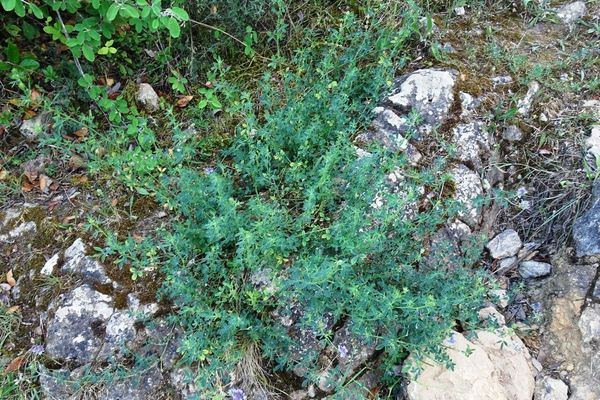
Опис
Global Crop Management: Hay Staple Crop: Protein Alfalfa is a very versatile plant that can adapt to a wide range of climatic conditions from cold temperate to warm sub-tropical.. It succeeds on a wide variety of soils[52, 269], but thrives best on a rich, friable, well-drained loamy soil with loose topsoil supplied with lime. It does not tolerate waterlogging and fails to grow on acid soils. Grows well on light soils. The plant has a deep taproot and, once establishd, tolerates drought and extremely dry conditions[52, 269]. Prefers a neutral fertile soil but succeeds in relatively poor soils so long as the appropriate Rhizobium bacteria is present. A good bee plant and a food plant for many caterpillars. Alfalfa is a very deep rooting plant, bringing up nutrients from deep in the soil and making them available for other plants with shallower root systems. It is a good companion plant for growing near fruit trees and grape vines so long as it is in a reasonably sunny position, but it does not grow well with onions or other members of the Allium genus. Growing alfalfa encourages the growth of dandelions. Alfalfa has long been cultivated for its edible seed, which can be sprouted and eaten in salads. It is also grown as a green manure and soil restorer. There are many named varieties. Botanists divide the species into a number of sub-species - these are briefly described below:- M. sativa caerulea (Less. ex Ledeb.)Schmalh. This sub-species is likely to be of value in breeding programmes for giving cold tolerance, drought resistance and salt tolerance to alfalfa. M. sativa falcata (L.)Arcang. This sub-species is likely to be of value in breeding programmes for giving cold tolerance, drought and disease resistance plus salt and water-logging tolerance to alfalfa. M. sativa sativa. The commonly cultivated form of alfalfa. M. sativa varia (Martyn.)Arcang. This sub-species is likely to be of value in breeding programmes for giving cold tolerance, drought resistance and high yields to alfalfa. This species has a symbiotic relationship with certain soil bacteria, these bacteria form nodules on the roots and fix atmospheric nitrogen. Some of this nitrogen is utilized by the growing plant but some can also be used by other plants growing nearby. The plant is heat tolerant in zones 8 through 5. (Plant Hardiness Zones show how well plants withstand cold winter temperatures. Plant Heat Zones show when plants would start suffering from the heat. The Plant Heat Zone map is based on the number of "heat days" experienced in a given area where the temperature climbs to over 86 degrees F (30°C). At this temperature, many plants begin to suffer physiological damage. Heat Zones range from 1 (no heat days) to 12 (210 or more heat days). For example Heat Zone. 11-1 indicates that the plant is heat tolerant in zones 11 through 1.) For polyculture design as well as the above-ground architecture (form - tree, shrub, etc. and size shown above), information on the habit and root pattern is also useful and given here if available. The plant growth habit is a clumper with limited spread [1-2]. The root pattern is a tap root similar to a carrot going directly down [1-2]. Alfalfa is self-fertile, meaning it can produce seeds without pollen from another plant. Alfalfa is a fast-growing perennial herb, with seedlings typically emerging within 7 to 14 days after planting and reaching maturity for harvest within 60 to 90 days under optimal conditions. Alfalfa is generally harvested multiple times a year, with the first harvest occurring in late spring to early summer and subsequent harvests throughout the summer, depending on growth rates and conditions. Depending on climate and growing conditions, Alfalfa flowers from late spring through summer. Carbon Farming Global Crop These crops are already grown or traded around the world. The annual value of each is more than $1 billion US Examples include coconuts, almonds, and bananas. Management: Hay Cut to the ground and harvested annually. Non-destructive management systems maintaining the soil organic carbon. Staple Crop: Protein (16+ percent protein, 0-15 percent oil). Annuals include beans, chickpeas, lentils, cowpeas, and pigeon peas. Perennials include perennial beans, nuts, leaf protein concentrates, and edible milks. References Carbon Farming Information and Carbon Sequestration Information Temperature Converter Type a value in the Celsius field to convert the value to Fahrenheit: Celsius Fahrenheit: The PFAF Bookshop Plants For A Future have a number of books available in paperback and digital form. Book titles include Edible Plants , Edible Perennials , Edible Trees , Edible Shrubs , Woodland Gardening , and Temperate Food Forest Plants . Our new book is Food Forest Plants For Hotter Conditions (Tropical and Sub-Tropical) . Shop Now
Походження та ареал
TEMPERATE ASIA: Armenia, Azerbaijan, China (north), Cyprus, Eastern Siberia, Far East, Georgia, Iran, Iraq, Israel (rare), Jordan, Kazakhstan, Korea, Kyrgyzstan, Lebanon, Mongolia, Russian Federation-Eastern Siberia, Russian Federation-Far East, Russian Federation-Western Siberia, Syria, Tajikistan, Turkey, Turkmenistan, Uzbekistan, Western Siberia,Afghanistan. TROPICAL ASIA: Pakistan, EUROPE: Denmark, United Kingdom (U.K.), Ireland, Norway, Sweden, Czechoslovakia (Czech Republic and Slovakia),
Корисні властивості
Edible Parts: Leaves Oil Seed Shoots Edible Uses: Oil Tea Leaves and young shoots - raw or cooked[2, 8, 52, 145]. The leaves can also be dried for later use. Very rich in vitamins, especially A, B and C, they are also a good source of protein. The leaves are a rich source of vitamin K. A very nutritious food in moderation, though it can trigger attacks in patients with systemic lupus erythematosus and large quantities can affect liver function and cause photosensitization. A nutritional analysis is available. The seed is commonly used as a sprouted seed which is added to salads[2, 20, 52], used in sandwiches etc or cooked in soups. The seed is soaked in warm water for 12 hours, then kept moist in a container in a warm place to sprout. It is ready in about 4 - 6 days. The seeds can also be ground into a powder and used as a mush, or mixed with cereal flours for making a nutritionally improved bread etc[183, 213, 244]. Seed yields average around 186 - 280 kilos per hectare. An appetite-stimulating tea is made from the leaves[21, 55], it has a flavour somewhat reminiscent of boiled socks and is slightly laxative. References More on Edible Uses Composition Figures in grams (g) or miligrams (mg) per 100g of food. Leaves (Fresh weight) 52 Calories per 100g Water : 82.7% Protein: 6g; Fat: 0.4g; Carbohydrate: 9.5g; Fibre: 3.1g; Ash: 1.4g; Minerals - Calcium: 12mg; Phosphorus: 51mg; Iron: 5.4mg; Magnesium: 0mg; Sodium: 0mg; Potassium: 0mg; Zinc: 0mg; Vitamins - A: 3410mg; Thiamine (B1): 0.13mg; Riboflavin (B2): 0.14mg; Niacin: 0.5mg; B6: 0mg; C: 162mg; Reference: [ 218] Notes:
Поради
Pre-soak the seed for 12 hours in warm water and then sow in spring in situ. The seed can also be sown in situ in autumn. Seed can be obtained that has been inoculated with Rhizobium bacteria, enabling the plant to succeed in soils where the bacteria is not already present.