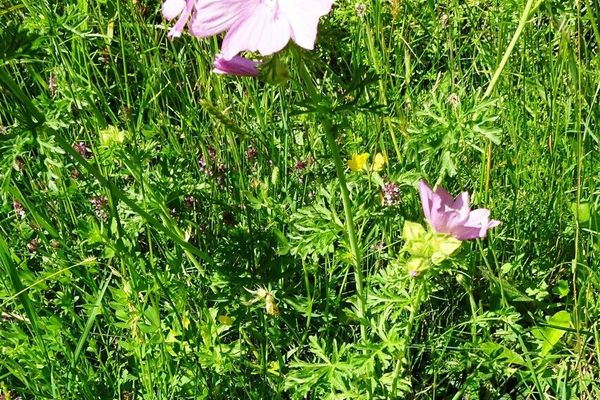
Опис
Landscape Uses:Border A very easily grown plant, succeeding in ordinary garden soil, though it prefers a reasonably well-drained and moderately fertile soil in a sunny position. Hardy to about -25°c. A very ornamental plant. It is very variable in form, especially with regard to the degree of laciniation of the leaves. The crushed leaves have a musk-like smell. Plants are generally quite short-lived though they can self-sow freely when in a suitable position and usually more than maintain themselves[233, K]. If the plant is pruned back to the main branches as it comes into flower, then it will produce a fresh flush of leaves in late summer for salad use[K]. A good plant for the summer meadow. Plants seem to be immune to the predations of rabbits. Prone to infestation by rust fungus. Special Features: Attractive foliage, Edible, Fragrant foliage, Not North American native, Naturalizing. The plant is heat tolerant in zones 8 through 1. (Plant Hardiness Zones show how well plants withstand cold winter temperatures. Plant Heat Zones show when plants would start suffering from the heat. The Plant Heat Zone map is based on the number of "heat days" experienced in a given area where the temperature climbs to over 86 degrees F (30°C). At this temperature, many plants begin to suffer physiological damage. Heat Zones range from 1 (no heat days) to 12 (210 or more heat days). For example, Heat Zone. 11-1 indicates the plant is heat tolerant in zones 11 through 1.) For polyculture design and the above-ground architecture (form - tree, shrub, etc. and size shown above), information on the habit and root pattern is also useful and given here if available. An evergreen. The plant growth habit is a clumper with limited spread [1-2]. Many Malva species are self-fertile, allowing for adequate pollination within the same flower. Leaves and flowers can be harvested in late spring to summer, depending on the species and climate. Mallow typically flowers from late spring to summer. Mallow has a moderate growth rate and can establish itself quickly. It often produces flowers within the first year of growth. References Carbon Farming Information and Carbon Sequestration Information Temperature Converter Type a value in the Celsius field to convert the value to Fahrenheit: Celsius Fahrenheit: The PFAF Bookshop Plants For A Future have a number of books available in paperback and digital form. Book titles include Edible Plants , Edible Perennials , Edible Trees , Edible Shrubs , Woodland Gardening , and Temperate Food Forest Plants . Our new book is Food Forest Plants For Hotter Conditions (Tropical and Sub-Tropical) . Shop Now
Походження та ареал
TEMPERATE ASIA: Turkey. EUROPE: United Kingdom (U.K.), Austria, Belgium, Czech Republic, Germany, Netherlands, Poland, Albania, Bosnia and Herzegovina, Greece, Croatia, Italy (incl. Sicily), North Macedonia, Montenegro, Romania, Serbia, Slovenia, Spain, France,
Корисні властивості
Edible Parts: Flowers Leaves Seed Edible Uses: Leaves - raw or cooked[K]. A mild pleasant flavour[K]. The leaves are mucilaginous and fairly bland, we use them in bulk in summer salads[K]. They make a very good perennial substitute for lettuce in a salad, producing fresh leaves from spring until the middle of summer, or until the autumn from spring germinating plants[K]. Flowers - raw[K]. A very decorative addition to the salad bowl, they have a very mild flavour[K]. Seed - raw. Best used before it is fully mature, the seed has a pleasant nutty taste but it is rather small and fiddly to harvest[K]. References More on Edible Uses
Поради
Seed - best sown in early spring in a cold frame. The seed germinates quickly and easily. Prick out the seedlings into individual pots when they are large enough to handle and plant them out in their permanent positions in the early summer[K]. If you have sufficient seed then it can be sown outdoors in situ in the middle to late spring. Basal cuttings in late spring. Harvest the shoots with plenty of underground stem when they are about 8 - 10cm above the ground. Pot them up into individual pots and keep them in light shade in a cold frame or greenhouse until they are rooting well. Plant them out in the summer. Cuttings of side shoots, July/August in a cold frame.