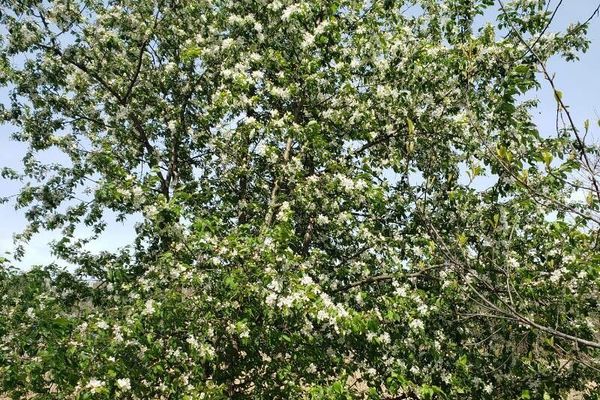
Опис
An easily grown plant, it succeeds in most fertile soils, including heavy ones, preferring a moisture retentive well-drained loamy soil[1, 98, 200]. Prefers a sunny position but succeeds in partial shade though it fruits less well in such a situation[186, 200]. Fairly tolerant of cutting, it succeeds in a mixed hedgerow. A parent of the cultivated apple, it is often used as a rootstock. The fruit is a good wildlife food source, especially for birds. The plant has over 90 associated insect species. Hybridizes freely with other members of this genus. Plants in this genus are notably susceptible to honey fungus. References Carbon Farming Information and Carbon Sequestration Information Temperature Converter Type a value in the Celsius field to convert the value to Fahrenheit: Celsius Fahrenheit: The PFAF Bookshop Plants For A Future have a number of books available in paperback and digital form. Book titles include Edible Plants , Edible Perennials , Edible Trees , Edible Shrubs , Woodland Gardening , and Temperate Food Forest Plants . Our new book is Food Forest Plants For Hotter Conditions (Tropical and Sub-Tropical) . Shop Now
Походження та ареал
EUROPE: Denmark, Finland, United Kingdom, Ireland, Norway, Sweden, Austria, Belgium, Switzerland, Czech Republic, Germany, Hungary, Netherlands, Poland, Slovakia, Russian Federation-European part (European part (west)), Belarus, Estonia, Lithuania, Latvia, Moldova, Ukraine (incl. Krym), Albania, Bulgaria, Bosnia and Herzegovina, Greece, Croatia, Italy (incl. Sicily), North Macedonia, Montenegro, Romania, Serbia, Slovenia, Spain, France (incl. Corsica), Portugal
Корисні властивості
Edible Parts: Fruit Oil Edible Uses: Oil Pectin Pectin Tea Fruit - raw or cooked[9, 15]. Used for jellies, preserves and juices. The flavour improves considerably if the fruit is not harvested until it has been frosted. The fruit is quite variable in size (it is about 2 - 4cm in diameter) and quality. Whilst usually harsh and acid, some forms are quite sweet and can be eaten out of hand[K]. The fruit is rich in pectin and can be used in helping other fruits to set when making jam etc[61, 142]. Pectin is also said to protect the body against radiation. An edible oil can be obtained from the seed. It would only really be viable to use these seeds as an oil source if the fruit was being used for some purpose such as making cider and then the seeds could be extracted from the remaining pulp[K]. A very pleasant tea can be made from the leaves. References More on Edible Uses
Поради
Seed - best sown as soon as it is ripe in the autumn in a cold frame. It usually germinates in late winter. Stored seed requires stratification for 3 months at 1°c and should be sown in a cold frame as soon as it is received. It might not germinate for 12 months or more. Prick out the seedlings into individual pots as soon as they are large enough to handle. If given a rich compost they usually grow away quickly and can be large enough to plant out in late summer, though consider giving them some protection from the cold in their first winter. Otherwise, keep them in pots in a cold frame and plant them out in late spring of the following year. Cuttings of mature wood, November in a frame.