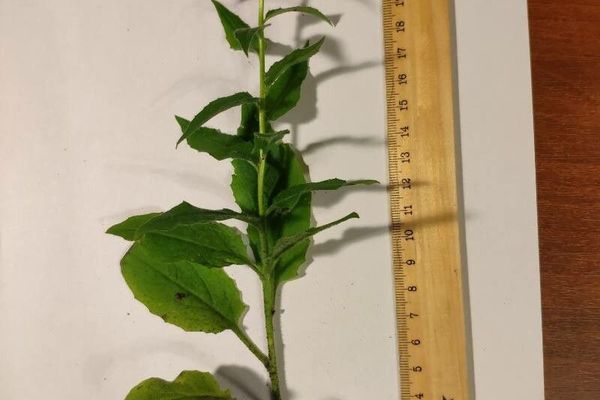
Damask-violet
Lunaria annua
Родина: Brassicaceae • Рід: Lunaria
БагаторічнаСередньоДекоративна
Bloom Color: Pink, Purple. Main Bloom Time: Late spring, Mid spring. Form: Upright or erect.
Опис
Landscape Uses:Border, Container, Massing, Woodland garden. Succeeds in ordinary garden soil. Prefers a light soil. Prefers partial shade but also succeeds in full sun. Established plants tolerate drought. Plants are hardy to about -15°c. A good bee and butterfly plant. Often grown in the flower garden, it is occasionally cultivated for its root. Plants are fast-growing and usually self-sow freely. Special Features:Not North American native, Naturalizing, Attracts butterflies, Suitable for cut flowers, Suitable for dried flowers, Fragrant flowers. References Carbon Farming Information and Carbon Sequestration Information Temperature Converter Type a value in the Celsius field to convert the value to Fahrenheit: Celsius Fahrenheit: The PFAF Bookshop Plants For A Future have a number of books available in paperback and digital form. Book titles include Edible Plants , Edible Perennials , Edible Trees , Edible Shrubs , Woodland Gardening , and Temperate Food Forest Plants . Our new book is Food Forest Plants For Hotter Conditions (Tropical and Sub-Tropical) . Shop Now
Походження та ареал
EUROPE: Albania, Bulgaria, Bosnia and Herzegovina, Greece (incl. Crete), Croatia, Italy, North Macedonia, Montenegro, Romania (southwest), Serbia
Корисні властивості
Edible Parts: Root Seed Edible Uses: Condiment Seed - cooked. A pungent flavour, they are used as a mustard substitute. The pungency of mustard develops when cold water is added to the ground-up seed - an enzyme (myrosin) acts on a glycoside (sinigrin) to produce a sulphur compound. The reaction takes 10 - 15 minutes. Mixing with hot water or vinegar, or adding salt, inhibits the enzyme and produces a mild bitter mustard. Root - raw[2, 61, 177]. Used before the plant produces flowers[46, 183]. References More on Edible Uses
Поради
Seed - sow early spring or early autumn in situ. The plant will often self-sow.