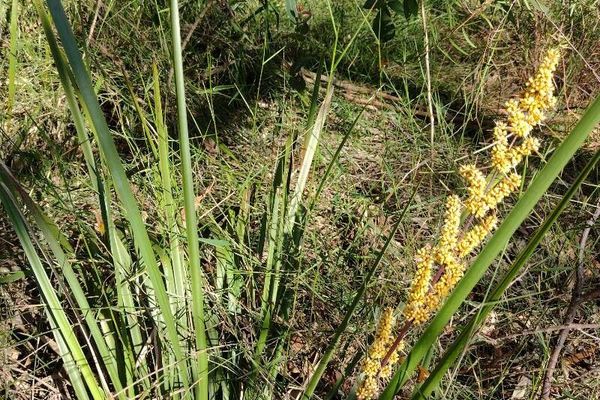
Longleaf mat-rush
Lomandra longifolia
Родина: Asparagaceae • Рід: Lomandra
БагаторічнаСередньоДекоративна
Опис
We have very little information on this species and do not know if it will be hardy in Britain. It succeeds in most soils and aspects in Australian gardens, also tolerating occasional flooding, and it also withstands temperatures down to at least -7°c in that country. However, this cannot be translated directly to British gardens due to our cooler summers and longer colder and wetter winters. Other members of this genus are also said to have edible flowers[144, 193]. The flowers are rich in a heavy-smelling nectar and this attracts pollinating beetles. Dioecious, male and female plants must be grown if seed is required. References Carbon Farming Information and Carbon Sequestration Information Temperature Converter Type a value in the Celsius field to convert the value to Fahrenheit: Celsius Fahrenheit: The PFAF Bookshop Plants For A Future have a number of books available in paperback and digital form. Book titles include Edible Plants , Edible Perennials , Edible Trees , Edible Shrubs , Woodland Gardening , and Temperate Food Forest Plants . Our new book is Food Forest Plants For Hotter Conditions (Tropical and Sub-Tropical) . Shop Now
Походження та ареал
AUSTRALASIA: Australia (Tasmania, New South Wales (east), Queensland (east), South Australia (southeast), Victoria)
Корисні властивості
Edible Parts: Flowers Leaves Edible Uses: Flowers - raw. A flavour of fresh peas. Both sexes are used though the male flowers are easier to harvest. White leaf bases - raw. A flavour of green peas, they are refreshing and enjoyable. References More on Edible Uses
Поради
Seed - we have no information for this species but suggest sowing the seed in late winter or early spring in a greenhouse. When they are large enough to handle, prick the seedlings out into individual pots and grow them on in the greenhouse for at least their first winter. Plant them out into their permanent positions in late spring or early summer, after the last expected frosts. Give the plants some protection from the cold for their first winter outdoors. Division might also be possible.