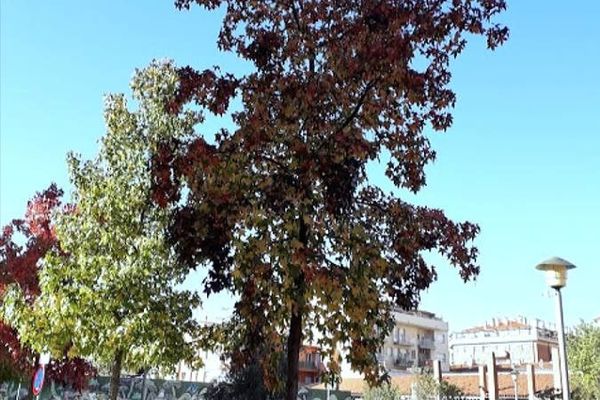
Alligator-wood
Liquidambar styraciflua
Родина: Altingiaceae • Рід: Liquidambar
БагаторічнаСередньоДекоративна
Bloom Color: Green, Yellow. Main Bloom Time: Early spring, Late spring, Mid spring. Form: Oval, Pyramidal.
Опис
Landscape Uses:Aggressive surface roots possible, Specimen, Street tree. Prefers a moist but not swampy loam in a sunny sheltered position[11, 200]. Succeeds in light shade. Prefers a neutral to acid soil. Plants grow poorly in shallow soils overlying chalk. Young plants are susceptible to damage from late frosts. A highly ornamental plant, especially in its autumn foliage[1, 227], it grows well in Cornwall and S. England but does not do well in the north. A fast-growing and long lived tree, it is fairly free from pests and diseases and has the potential to be a re-afforestation tree in cutover lands. Trees commence flowering when about 20 - 25 years old. The leaves emit a balsam-like fragrance when they fall in the autumn, this is retained until the leaves are quite withered. Plants in the north of their range do not produce much resin. Resists honey fungus. This species resents root disturbance, young plants should be pot-grown and be placed in their permanent positions as soon as possible. Special Features:Attractive foliage, North American native, Invasive, Naturalizing, Inconspicuous flowers or blooms. In garden design, as well as the above-ground architecture of a plant, root structure considerations help in choosing plants that work together for their optimal soil requirements including nutrients and water. The root pattern is flat with shallow roots spreading near the soil surface [2-1]. References Carbon Farming Information and Carbon Sequestration Information Temperature Converter Type a value in the Celsius field to convert the value to Fahrenheit: Celsius Fahrenheit: The PFAF Bookshop Plants For A Future have a number of books available in paperback and digital form. Book titles include Edible Plants , Edible Perennials , Edible Trees , Edible Shrubs , Woodland Gardening , and Temperate Food Forest Plants . Our new book is Food Forest Plants For Hotter Conditions (Tropical and Sub-Tropical) . Shop Now
Походження та ареал
NORTHERN AMERICA: Canada (Québec, Nova Scotia, Prince Edward Island, New Brunswick, Newfoundland and Labrador), United States (Connecticut, Maine, Massachusetts, New Hampshire, New Jersey, New York, Rhode Island, Alabama, Delaware, Florida, Georgia, Louisiana, Maryland, Mississippi, North Carolina, South Carolina, Virginia, Texas), Mexico (Tamaulipas). SOUTHERN AMERICA: Belize, Guatemala, Honduras, Nicaragua, El Salvador
Корисні властивості
Edible Parts: Edible Uses: Gum A chewing gum and a stabilizer for cakes etc is obtained from the resin[102, 105, 149, 159]. It can also be chewed to sweeten the breath. References More on Edible Uses
Поради
Seed - best sown as soon as it is ripe in the autumn in a cold frame. Harvest the seed capsules at the end of October or November, dry in a warm place and extract the seed by shaking the capsule. Stored seed requires 1 - 3 months stratification and sometimes takes 2 years to germinate. Sow it as early in the year as possible. Germination rates are often poor. Prick out the seedlings into individual pots when they are large enough to handle and grow them on in a cold frame or greenhouse for their first winter. Since they resent root disturbance, it is best to plant them out into their permanent positions in early summer of their second year and give them some protection from cold for their first winter outdoors[K]. Cuttings of half-ripe wood, July/August in a frame. Suckers in early spring. Layering in October/November. Takes 12 months.