Опис
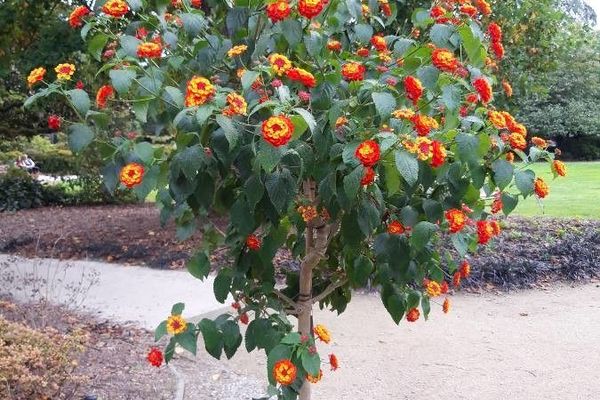
Grows in a wide variety of habitats in the tropical and subtropical zones[413 ]. Under temperate climes, it has been, and still is, widely used as a glasshouse ornamental and a pot plant. It has succeeded in areas where the annual rainfall is around 750mm, though is then usually found along creek lines[413 ]. It is also found in tropical areas receiving 3,000mm of rainfall per year, provided that the soils are sufficiently well drained[413 ]. The plant is tolerant of high temperatures, but seldom occurs where temperatures frequently fall below 5°c[413 ]. Some varieties can withstand minor frosts, provided these are infrequent; prolonged freezing temperatures kill aerial woody branches and cause defoliation[413 ]. Succeeds in a wide range of soils[413 ], preferably well-drained[352 ]. Succeeds in poor soils[352 ]. Grows well in dry areas but also present in wetter habitats[305 ]. Grows best in open, unshaded situations, but tolerates moderate shade[305 , 413 ]. Locally becoming an aggressive and pernicious weed[305 , 317 ]. This thorny shrub forms dense understorey vegetation that crowds out and inhibits establishment of other species[305 ]. Allelopathic substances are produced by shoots and roots which inhibit germination and growth of other plants[305 , 360 ]. The plant is apt to form dense thickets, spreads very quickly, with one plant producing as many as 12,000 seeds a year[360 ]. At some sites, infestations have been so persistent that they have completely stalled the regeneration of rainforest for three decades[413 ]. Plants respond well to cutting back, able to resprout even from severe and repeated cutting back[413 ]. The plants can tolerate all but the hottest forest fires, quickly resprouting from the base[305 ]. Stems and leaves emit an unpleasant aroma when crushed[372 ]. The scent is similar to blackcurrants[413 ]. Flowering Time: Early summer, Early fall, Early spring, Early winter, Late summer, Late fall, Late spring, Late winter, Mid summer, Mid fall, Mid spring, Mid winter (Blooms repeatedly). Bloom Color: Orange, Pink, Red, Salmon, White, Yellow (Pink Magenta (Pink-Purple) Red Orange Bright Yellow Purple ) (red, orange, yellow). Spacing: 36-48 in. (90-120 cm). References Carbon Farming Information and Carbon Sequestration Information Temperature Converter Type a value in the Celsius field to convert the value to Fahrenheit: Celsius Fahrenheit: The PFAF Bookshop Plants For A Future have a number of books available in paperback and digital form. Book titles include Edible Plants , Edible Perennials , Edible Trees , Edible Shrubs , Woodland Gardening , and Temperate Food Forest Plants . Our new book is Food Forest Plants For Hotter Conditions (Tropical and Sub-Tropical) . Shop Now
Походження та ареал
NORTHERN AMERICA: Mexico (Baja California (Norte), Baja California Sur, Chihuahua, Coahuila de Zaragoza, Durango, Nuevo León, San Luis Potosí, Sinaloa, Sonora, Tamaulipas, Zacatecas, Aguascalientes, Campeche, Chiapas, Ciudad de México, Colima, Guanajuato, Guerrero, Hidalgo, Jalisco, México, Michoacán de Ocampo, Morelos, Nayarit, Oaxaca, Puebla, Querétaro, Quintana Roo, Tabasco, Tlaxcala, Veracruz de Ignacio de la Llave, Yucatán) SOUTHERN AMERICA: Hispaniola, Bahamas, Cuba, Jamaica, United States
Корисні властивості
Edible Parts: Fruit Leaves Edible Uses: Tea The aromatic leaves are used to make a tea[407 ]. The ripe black fruits are eaten in handfuls, especially by children as a snack[398 ]. The sweet tasting drupaceous, fleshy, ovoid fruits are purple or black when fully ripe and about 5 mm long[360 ]. Some reports mention the toxicity of the unripe fruits[K ]. References More on Edible Uses