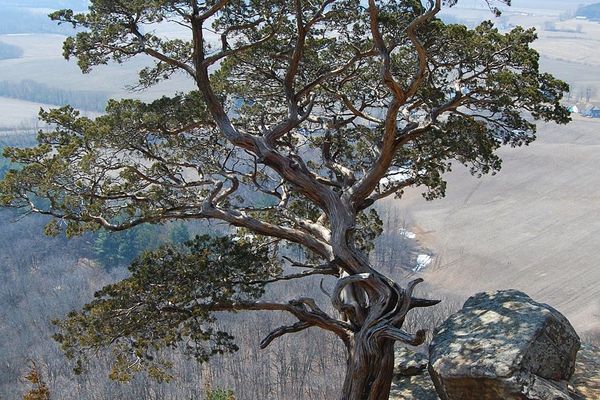
Red juniper
Juniperus virginiana
Родина: Cupressaceae • Рід: Juniperus
БагаторічнаСередньоДекоративна
Eastern Red Cedar is the most widely distributed conifer in eastern North America, native from Nova Scotia to Florida and west to the Great Plains, colonizing abandoned fields, roadsides, fence lines, and rocky glades with a tenacity matched by few other native trees — it is the quintessential first
Опис
Eastern Red Cedar is the most widely distributed conifer in eastern North America, native from Nova Scotia to Florida and west to the Great Plains, colonizing abandoned fields, roadsides, fence lines, and rocky glades with a tenacity matched by few other native trees — it is the quintessential first colonizer of open, disturbed ground in eastern North America and has expanded its range dramatically following suppression of natural fire and the abandonment of agricultural fields. The aromatic, reddish-brown wood was historically prized for cedar chests, pencils, and fence posts due to its rot-resistance and insect-repelling properties; the fleshy, glaucous-blue, seed-bearing 'cones' (botanically berries) are an essential winter food for cedar waxwings, bluebirds, mockingbirds, and dozens of other birds, and the dense, scale-like foliage provides critical winter nesting cover. Eastern Red Cedar is a host for the alternate life stage of cedar-apple rust (Gymnosporangium juniperi-virginianae), which can infect nearby apple trees — avoid planting within 1,000 feet of apple orchards. An extremely tough, drought-tolerant, adaptable native tree for landscapes from zone 2–9.
Спосіб посадки: Висадка розсади
Відстань між рослинами: 120–300 дюймів
Висота: 240–600 дюймів
Дні до схожості: 30–90
Температура ґрунту для схожості: 4–13°C
Походження та ареал
Відомий як: eastern redcedar
Поради
Eastern Red Cedar is the most widely distributed conifer in eastern North America, native from Nova Scotia to Florida and west to the Great Plains, colonizing abandoned fields, roadsides, fence lines, and rocky glades with a tenacity matched by few other native trees — it is the quintessential first colonizer of open, disturbed ground in eastern North America and has expanded its range dramatically following suppression of natural fire and the abandonment of agricultural fields. The aromatic, reddish-brown wood was historically prized for cedar chests, pencils, and fence posts due to its rot-resistance and insect-repelling properties; the fleshy, glaucous-blue, seed-bearing 'cones' (botanically berries) are an essential winter food for cedar waxwings, bluebirds, mockingbirds, and dozens of other birds, and the dense, scale-like foliage provides critical winter nesting cover. Eastern Red Cedar is a host for the alternate life stage of cedar-apple rust (Gymnosporangium juniperi-virginianae), which can infect nearby apple trees — avoid planting within 1,000 feet of apple orchards. An extremely tough, drought-tolerant, adaptable native tree for landscapes from zone 2–9.
Спосіб посадки: Висадка розсади
Відстань між рослинами: 120–300 дюймів
Висота: 240–600 дюймів
Дні до схожості: 30–90
Температура ґрунту для схожості: 4–13°C
---
Час посадки: -4–0 тижнів осіння посадка
Plant nursery transplants in fall or early spring in any well-drained soil in full sun; Eastern Red Cedar is extremely adaptable and tolerates poor, thin, rocky, dry, alkaline, and compacted soils where few other trees will grow. Female plants produce berries only when male plants are nearby.