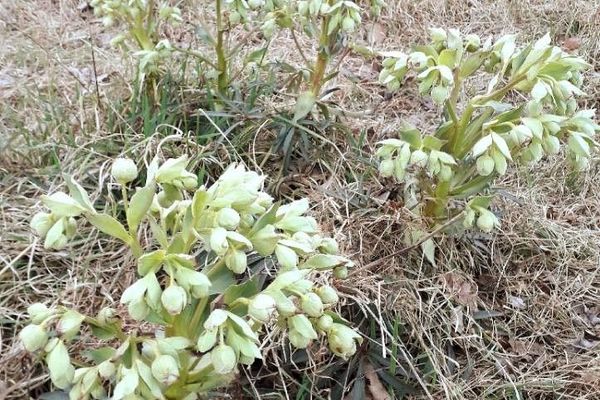
Bear's-foot
Helleborus foetidus
Родина: Ranunculaceae • Рід: Helleborus
БагаторічнаСередньоДекоративна
Bloom Color: Green. Main Bloom Time: Early spring, Late winter, Mid winter. Form: Upright or erect.
Опис
Landscape Uses:Container, Massing, Rock garden, Woodland garden. Succeeds in any good garden soil, preferring a moist well-drained rich loam in a sheltered position in partial shade[1, 4, 31, 111]. Plants are suitable for naturalizing in a woodland garden and also succeed in the shade of a north-facing wall. They do not object to lime. Grow well in heavy clay soils. Dislikes drought. The stems live for one or two years, dying after flowering. Slugs are very fond of this plant and it will probably require some protection from them. The various species in this genus hybridize freely. There are some named forms, selected for their ornamental value. The whole plant, especially when bruised, gives off an unpleasant smell that is similar to decaying meat. Plants resent root disturbance and should be placed in their permanent positions whilst still small. A greedy plant, inhibiting the growth of nearby plants, especially legumes. Special Features: Attractive foliage, Not North American native, Naturalizing, All or parts of this plant are poisonous, Suitable for cut flowers, Flowers have an unpleasant odor. References Carbon Farming Information and Carbon Sequestration Information Temperature Converter Type a value in the Celsius field to convert the value to Fahrenheit: Celsius Fahrenheit: The PFAF Bookshop Plants For A Future have a number of books available in paperback and digital form. Book titles include Edible Plants , Edible Perennials , Edible Trees , Edible Shrubs , Woodland Gardening , and Temperate Food Forest Plants . Our new book is Food Forest Plants For Hotter Conditions (Tropical and Sub-Tropical) . Shop Now
Походження та ареал
EUROPE: United Kingdom, Belgium, Switzerland, Germany, Italy (incl. Sicily), Spain (incl. Baleares), France (incl. Corsica), Portugal AFRICA: Morocco (north)
Корисні властивості
None known References More on Edible Uses
Поради
Seed - best sown as soon as it is ripe in a cold frame[1, 134]. Sow stored seed as early in the year as possible, it usually germinates in the autumn to spring. Seed can take 18 months to germinate. When they are large enough to handle, prick the seedlings out into individual pots and grow them on in a lightly shaded position in the greenhouse for their first winter. Plant them out into their permanent positions in late spring or early summer, after the last expected frosts. This species produces flowering plants in 2 - 3 years from seed. It is not possible to divide this species, but it is possible to take basal cuttings of young vegetative shoots. Harvest the shoots when they are about 10cm long with plenty of underground stem. Pot them up into individual pots and keep them in light shade in a cold frame or greenhouse until they are rooting well. Plant them out in the summer.