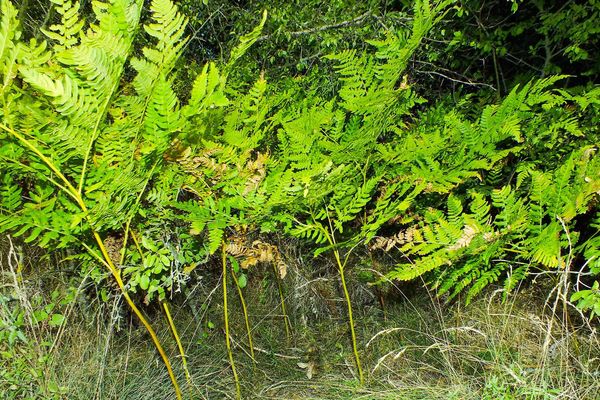
Common oak fern
Gymnocarpium dryopteris
Родина: Aspleniaceae • Рід: Gymnocarpium
БагаторічнаСередньоДекоративна
Опис
A small deciduous Mat forming fern with a slender creeping rhizome, and much-divided, triangular to ovate fronds. USDA Hardiness Zones: 2 - 7. Soil pH: 4.5 - 6.4. Growth Rate: Slow to moderate. Life Span: Long. Texture: Fine. Sun: Partial Shade, Shade. Prefers a neutral to acid, leafy, moist soil, enriched with garden compost, in deep shade. Soil Type: Loamy. Soil Moisture: Moderate. Minimum Root Depth: 12 inches (30cm). Root Type: Long Rhizome. Seasonal Interest: Spring-Fall. The broadly triangular leaves are divided into 3 approximately equal primary divisions, each turned to a heavily horizontal position. Sprawling, it often shows slightly twisted leaves and leaflets. Requires cool, moist, acidic soil. Good ground cover. Drought: Intolerant. Flood: Moderate. Salt: Sensitive. Soil Compaction: Intolerant. Mowing: Intolerant. Fire Damage: Intolerant. Cold Injury: Infrequent. Disease Issues: Minor. Insect/Pest Damage: Minor. Plant Concerns: Oak fern can interfere with the growth of Engelmann spruce (Picea engelmannii) seedlings. For polyculture design as well as the above-ground architecture (form - tree, shrub etc. and size shown above) information on the habit and root pattern is also useful and given here if available. The plant growth habit is a runner spreading indefinitely by rhizomes or stolons [1-2]. The root pattern is rhizomatous with underground stems sending roots and shoots along their length [1-2]. References Carbon Farming Information and Carbon Sequestration Information Temperature Converter Type a value in the Celsius field to convert the value to Fahrenheit: Celsius Fahrenheit: The PFAF Bookshop Plants For A Future have a number of books available in paperback and digital form. Book titles include Edible Plants , Edible Perennials , Edible Trees , Edible Shrubs , Woodland Gardening , and Temperate Food Forest Plants . Our new book is Food Forest Plants For Hotter Conditions (Tropical and Sub-Tropical) . Shop Now
Походження та ареал
TEMPERATE ASIA: China, Eastern Siberia, Georgia, Japan, Russian Federation-Eastern Siberia,Turkey. NORTHERN AMERICA: Canada, Northwest Territories, Yukon, Québec, Nova Scotia, Ontario, Prince Edward Island, New Brunswick, Newfoundland and Labrador, Saskatchewan, Alberta, Manitoba, British Columbia, United States, Alaska, Connecticut, Maine, Massachusetts, Michigan, New Hampshire, New Jersey, New York, Ohio, Pennsylvania, Rhode Island, Vermont, West Virginia, Iowa, Minnesota, South Dakota, Wiscon
Корисні властивості
None Known References More on Edible Uses
Поради
Sow spores at 15°C (59°F) when ripe or divide in spring