Опис
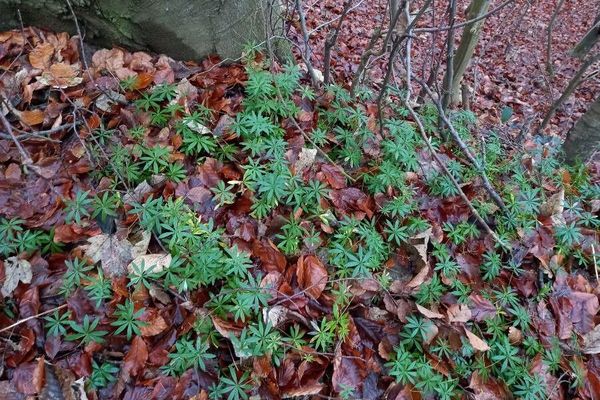
Landscape Uses:Ground cover, Massing, Rock garden, Woodland garden. Prefers a loose moist leafy soil in some shade. Tolerates dry soils but the leaves quickly become scorched when growing in full sun. This species does not thrive in a hot climate. Prefers a moist calcareous soil[9, 13, 14]. Dislikes very acid soils. Tolerates a pH in the range 4.3 to 8.3. This species is very tolerant of atmospheric pollution and grows well in towns. A very cold-hardy plant, tolerating temperatures down to about -25°c. Sweet woodruff is occasionally cultivated in the herb garden for its medicinal and other uses. The dried foliage has the sweet scent of newly mown hay. A very ornamental plant but it spreads rapidly and can be invasive. However, this is rarely to the detriment of other plants since these are normally able to grow through it. It does no harm to any plants more than 60cm tall. Special Features: Attractive foliage, Edible, Fragrant foliage, Not North American native, Naturalizing, Suitable for dried flowers, Fragrant flowers. The plant is heat tolerant in zones 8 through 5. (Plant Hardiness Zones show how well plants withstand cold winter temperatures. Plant Heat Zones show when plants would start suffering from the heat. The Plant Heat Zone map is based on the number of "heat days" experienced in a given area where the temperature climbs to over 86 degrees F (30°C). At this temperature, many plants begin to suffer physiological damage. Heat Zones range from 1 (no heat days) to 12 (210 or more heat days). For example Heat Zone. 11-1 indicates that the plant is heat tolerant in zones 11 through 1.) For polyculture design as well as the above-ground architecture (form - tree, shrub etc. and size shown above) information on the habit and root pattern is also useful and given here if available. In garden design, as well as the above-ground architecture of a plant, root structure considerations help in choosing plants that work together for their optimal soil requirements including nutrients and water. The root pattern is rhizomatous with underground stems sending roots and shoots along their length [2-1]. Sweet Woodruff is generally self-fertile. The leaves and flowers are typically harvested in spring to early summer when they are fresh and aromatic. Sweet Woodruff flowers from late spring to early summer. Sweet Woodruff is a slow to moderate grower, forming dense mats over time in suitable shaded conditions. References Carbon Farming Information and Carbon Sequestration Information Temperature Converter Type a value in the Celsius field to convert the value to Fahrenheit: Celsius Fahrenheit: The PFAF Bookshop Plants For A Future have a number of books available in paperback and digital form. Book titles include Edible Plants , Edible Perennials , Edible Trees , Edible Shrubs , Woodland Gardening , and Temperate Food Forest Plants . Our new book is Food Forest Plants For Hotter Conditions (Tropical and Sub-Tropical) . Shop Now
Походження та ареал
TEMPERATE ASIA: Altay, Armenia, Azerbaijan, Ciscaucasia, Dagestan, Georgia, Kazakhstan, Russian Federation, Russian Federation, Russian Federation-Ciscaucasia,Turkey. EUROPE: Denmark, Finland, United Kingdom (U.K.), Norway, Sweden, Austria, Belgium, Switzerland, Czech Republic, Germany, Hungary, Poland, Slovakia, Russian Federation-European part, European part, Belarus, Estonia, Lithuania, Latvia, Moldova, Ukraine (incl. Krym), Albania, Bulgaria, Greece, Croatia, Italy (incl. Sicily), Romania, S
Корисні властивості
Edible Parts: Flowers Leaves Edible Uses: Condiment Drink Tea Leaves - raw or cooked. The leaves are coumarin-scented (like freshly mown hay), they are used as a flavouring in cooling drinks[2, 9, 27] and are also added to fruit salads etc[183, 200]. The leaves are soaked in white wine to make 'Maitrank', an aromatic tonic drink that is made in Alsace. A fragrant and delicious tea is made from the green-dried leaves and flowers[2, 183, 268]. Slightly wilted leaves are used, the tea has a fresh, grassy flavour. The sweet-scented flowers are eaten or used as a garnish. References More on Edible Uses
Поради
Seed - best sown in situ as soon as it is ripe in late summer. The seed can also be sown in spring though it may be very slow to germinate. A period of cold stratification helps reduce the germination time. Lots of leafmold in the soil and the shade of trees also improves germination rates. Division in spring. The plant can also be successfully divided throughout the growing season if the divisions are kept moist until they are established. Very easy, larger clumps can be replanted direct into their permanent positions, though it is best to pot up smaller clumps and grow them on in a cold frame until they are rooting well. Plant them out in the spring. Cuttings of soft wood, after flowering, in a frame.