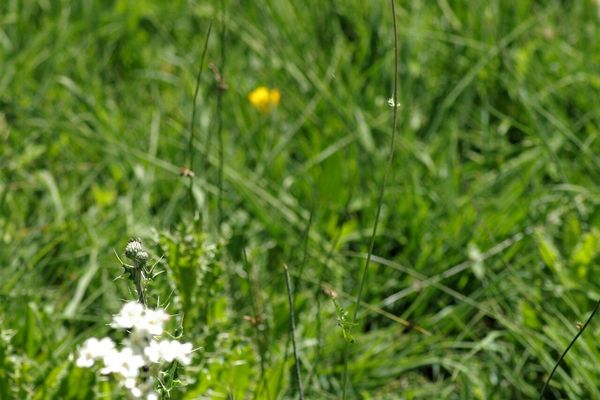
Dropwort
Filipendula vulgaris
Родина: Rosaceae • Рід: Filipendula
БагаторічнаСередньоДекоративна
Bloom Color: White. Main Bloom Time: Mid summer. Form: Upright or erect.
Опис
Landscape Uses:Massing, Rock garden. Prefers a well-drained moisture retentive soil. Dislikes shade. Tolerates dry soils. Grows well on calcareous soils. The flowers are sweetly scented and are very attractive to bees. Members of this genus are rarely if ever troubled by browsing deer. Special Features: Attractive foliage, Naturalizing, Suitable for cut flowers. References Carbon Farming Information and Carbon Sequestration Information Temperature Converter Type a value in the Celsius field to convert the value to Fahrenheit: Celsius Fahrenheit: The PFAF Bookshop Plants For A Future have a number of books available in paperback and digital form. Book titles include Edible Plants , Edible Perennials , Edible Trees , Edible Shrubs , Woodland Gardening , and Temperate Food Forest Plants . Our new book is Food Forest Plants For Hotter Conditions (Tropical and Sub-Tropical) . Shop Now
Походження та ареал
TEMPERATE ASIA: Iran, Turkey, Armenia, Azerbaijan, Georgia, Russian Federation (Altay, Sverdlovsk) EUROPE: Denmark, United Kingdom, Norway, Sweden, Czech Republic, Germany, Hungary, Netherlands, Poland, Slovakia, Belarus, Estonia, Lithuania, Latvia, Moldova, Russian Federation (Orenburg), Ukraine, Albania, Bulgaria, Greece, Italy, North Macedonia, Montenegro, Romania, Serbia, Slovenia, Spain (Baleares), France, Portugal AFRICA: Morocco
Корисні властивості
Edible Parts: Leaves Root Edible Uses: Young leaves - raw or cooked[61, 177, 200]. They can be added to salads and soups. Root - raw or cooked[61, 115, 177, 200]. Rather bitter. Astringent. Best if roasted. A famine food, it is only used in times of scarcity. References More on Edible Uses
Поради
Seed - best sown in the autumn in a cold frame. The seed can also be sown in a cold frame in spring, germinating best at a temperature of 10 - 13°c. When they are large enough to handle, prick the seedlings out into individual pots and plant them out in the summer if they have grown enough. If not, keep them in a cold frame for the winter and plant them out in late spring. Division in autumn or winter. Very easy, larger clumps can be replanted direct into their permanent positions, though it is best to pot up smaller clumps and grow them on in a cold frame until they are rooting well. Plant them out in the spring.