Опис
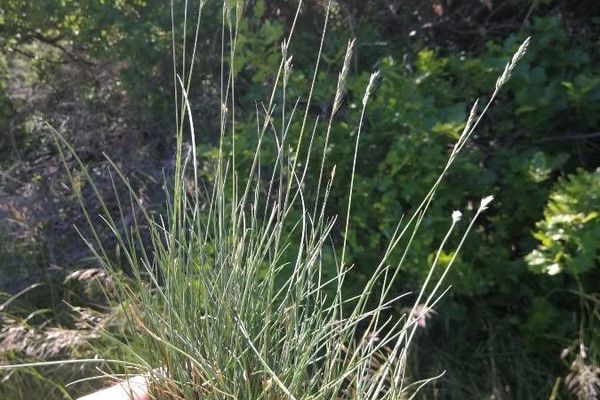
Alpine fescue is a hardy alpine bunchgrass with edible grains but limited practical food yield. Its real importance is ecological: it stabilizes high-elevation soils, feeds wildlife, and survives in places where few plants can grow well. Growing Conditions: It prefers full sun, cool climates, and open rocky or gravelly soils. It is well adapted to alpine and subalpine sites, including scree, rocky slopes, open tundra-like meadows, stream edges, and dry gravel. Habitat & Range: Alpine fescue is a circumpolar and alpine species native to Eurasia, North America, and Arctic regions. In North America, it occurs through Canada and the Rocky Mountains, extending south to New Mexico and California. It regularly inhabits open, rocky alpine places. Size & Landscape Performance: It forms small, dense tufts rather than lush meadows. In gardens, it is best suited to rock gardens, alpine collections, and restoration-style plantings in cool climates. It is not a warm-climate lawn grass. Cultivation (Horticulture): Grow in lean, sharply drained soil with cool conditions and full sun. It is best for alpine gardens, high-elevation restoration, or native grass collections. It is unlikely to thrive in hot, humid lowland gardens. Pests & Problems: Few pest problems are likely in suitable alpine conditions. Heat, humidity, rich wet soils, and competition from taller plants are the main problems in cultivation. Identification & Habit: Alpine fescue is a small tufted perennial grass with narrow leaves and slender flowering stems. Spikelets may be reddish or purplish from anthocyanin pigments, which may help protect tissues from alpine cold, ultraviolet exposure, and desiccation. Pollinators: Like most grasses, alpine fescue is wind-pollinated and does not depend on insect pollinators. References Carbon Farming Information and Carbon Sequestration Information Temperature Converter Type a value in the Celsius field to convert the value to Fahrenheit: Celsius Fahrenheit: The PFAF Bookshop Plants For A Future have a number of books available in paperback and digital form. Book titles include Edible Plants , Edible Perennials , Edible Trees , Edible Shrubs , Woodland Gardening , and Temperate Food Forest Plants . Our new book is Food Forest Plants For Hotter Conditions (Tropical and Sub-Tropical) . Shop Now
Походження та ареал
US. USA. Alaska, Alberta, Aleutian Is., Altay, Arizona, British Columbia, California, China North-Central, Chita, Colorado, Greenland, Idaho, Irkutsk, Kamchatka, Kazakhstan, Khabarovsk, Kirgizstan, Krasnoyarsk, Labrador, Magadan, Maine, Manitoba, Minnesota, Mongolia, Montana, Nevada, New Hampshire, New Mexico, New York, Newfoundland, North European Russia, Northwest Territories, Nova Scotia, Nunavut, Ontario, Oregon, Qinghai, Québec, Saskatchewan, Svalbard, Sweden, Tadzhikistan, Tibet, Tuva, Uta
Корисні властивості
Edible Parts: Seed Edible Uses: The grains are edible. This is the main food use. Like many wild grasses, the grains can be gathered when mature, dried, threshed, winnowed, and cooked as a small cereal grain. The leaves are not normally treated as a human food, although the plant is eaten by mountain wildlife [2-3]. Edible Uses & Rating: Alpine fescue ranks as a low-to-moderate wild grain. It is edible and historically useful, but its small size means it is rarely a practical staple unless dense stands are present. It is better understood as a supplementary wild grain than as a major food plant [2-3]. Taste, Processing & Kitchen Notes: The grains can be treated like other small wild grass seeds. They are best harvested fully mature, dried, rubbed from the seed heads, winnowed, and then toasted, boiled into porridge, or ground into meal. Toasting would likely improve flavor and reduce raw grassy notes. Because the seeds are small, they are most practical when mixed with other wild grains. Seasonality (Phenology): Alpine fescue blooms in midsummer, usually July to August in the Rocky Mountains. Grains can be expected from August to October, depending on elevation, snowmelt timing, and weather. In alpine habitats, the harvest season may be brief because frost, wind, and storms arrive early. Safety & Cautions (Food Use): There are no major food-toxicity concerns with the grains. The main cautions are practical: harvest only mature, clean grain; avoid moldy seed heads; and gather conservatively in fragile alpine habitats. Alpine plant communities recover slowly from trampling and disturbance [2-3]. Harvest & Processing Workflow: Harvest seed heads when dry and mature, but before shattering or heavy weather removes the seed. Dry the seed heads further if needed. Rub or thresh the heads, winnow away chaff, and store the grain dry. Toasting before use improves flavor and storage quality. In alpine settings, avoid pulling up the whole plant. Cultivar/Selection Notes: No food cultivars are in common use. Some fescues are selected for turf, forage, or restoration, but alpine fescue is mainly valued as a native alpine grass, not a crop. For restoration or cultivation, local ecotypes are preferable. Look-Alikes & Confusion Risks: Alpine fescue can resemble other fine-leaved fescues and small alpine grasses. Species-level identification in Festuca can be difficult and often depends on spikelet, awn, leaf, and anther characters. From a foraging perspective, confusion with related grasses is usually not dangerous, but it can affect expected habitat, abundance, and seed yield. Traditional/Indigenous Use Summary: The grains of alpine fescue were gathered by the Goshiute people of Utah and Nevada. This places the plant among the many small-seeded grasses that contributed to traditional dryland and mountain seed-gathering systems [2-3]. References More on Edible Uses
Поради
Propagation is by seed. Small clumps may also be divided in cultivation, but seed is the normal ecological method.