Опис
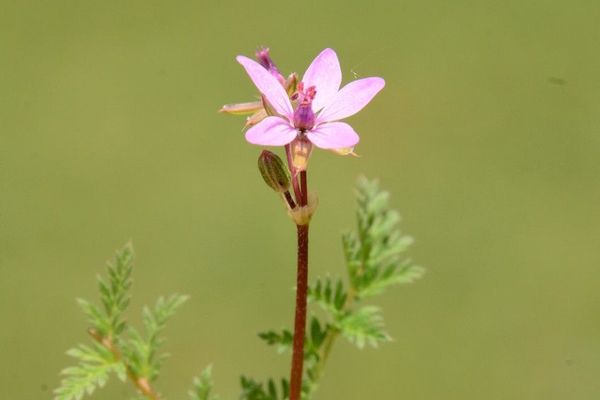
Redstem filaree is a highly practical edible weed. It is not luxurious, but it is dependable, widely available, and nutritionally valuable. Cooked leaves, roots, and lower stems make it one of the better small wild vegetables of the arid West. Growing Conditions: It grows in full sun to partial shade and tolerates drought, trampling, fire, compacted soil, sand, gravel, low fertility, and disturbance. It performs best after seasonal moisture but survives in some very harsh settings. Habitat & Range: Redstem filaree is widespread across western North America and beyond. In the Southwest it grows from desert creosote flats to grasslands, roadsides, fields, disturbed ground, and open pine zones up to about 2,500 meters. Size & Landscape Performance: It forms low mats or carpets rather than upright ornamental clumps. In naturalistic settings it can provide early green cover, but in gardens it is usually treated as a weed. Cultivation (Horticulture): It is rarely cultivated intentionally because it self-seeds readily and appears without help in suitable climates. If desired as a forage or wild edible, it requires only open soil and seasonal moisture. Pests & Problems: Few pests seriously limit it. Its main “problem” is its weedy abundance and ability to colonize disturbed ground. The fruits can also irritate socks, fur, and clothing. Identification & Habit: Redstem filaree is a small hairy annual with a taproot, pinnately divided leaves, pink-purple flowers, and distinctive long-beaked fruits. The fruits split into five one-seeded segments, each with a spirally twisting style. Pollinators: The small purple flowers attract small bees, flies, and other generalist insects, though the plant is more important as forage and seed than as a major nectar source. Prefers a sunny well-drained position and a limy soil or at least one that is not acid. Plants are likely to be resistant to maritime exposure[K]. References Carbon Farming Information and Carbon Sequestration Information Temperature Converter Type a value in the Celsius field to convert the value to Fahrenheit: Celsius Fahrenheit: The PFAF Bookshop Plants For A Future have a number of books available in paperback and digital form. Book titles include Edible Plants , Edible Perennials , Edible Trees , Edible Shrubs , Woodland Gardening , and Temperate Food Forest Plants . Our new book is Food Forest Plants For Hotter Conditions (Tropical and Sub-Tropical) . Shop Now
Походження та ареал
TEMPERATE ASIA: Kuwait, Afghanistan, Cyprus, Egypt (Sinai), Iran, Iraq, Israel, Jordan, Lebanon, Syria, Turkey, Russian Federation-Ciscaucasia (Ciscaucasia), Armenia, Azerbaijan, Georgia, Russian Federation (Dagestan), Russian Federation-Western Siberia (Western Siberia), Russian Federation-Eastern Siberia (Eastern Siberia (west)), Kazakhstan, Kyrgyzstan, Tajikistan, Turkmenistan, Uzbekistan, China (Anhui Sheng, Fujian Sheng, Gansu Sheng, Hebei Sheng, Heilongjiang Sheng, Henan Sheng, Jiangsu She
Корисні властивості
Edible Parts: Leaves Stem Edible Uses: The roots, stems, leaves, flowers, flower buds, and young fruits are edible. Mature fruits are not suitable for eating because they become tough and sharply pointed. Leaves are nutritious but tannic and are best cooked when used in quantity. Roots and lower stems are the most pleasant vegetable parts [2-3]. Edible Uses & Rating: Redstem filaree ranks as a good wild vegetable, especially in regions where it forms dense seasonal carpets. The roots and fleshy lower stems can be excellent, while the leaves are best considered useful potherbs. As a raw green it is less appealing because of bitterness, hairiness, grit, and astringency. As a cooked green and soup ingredient, it is far more valuable [2-3]. Taste, Processing & Kitchen Notes: The roots are white, earthy, salty, and somewhat potato-like, especially when grown in loose, fertile, moist soils. Hard or compacted soils produce wirier, lower-quality roots. The outer parts soften when baked or boiled, but the cores often remain stringy. The lower stems are mild, tender, and fleshy, more similar to the roots than to the leaves. Leaves taste like dark lettuce mixed with wild clover, with a geranium-family bitterness and tannic edge. Boiling reduces astringency and makes them much more palatable. Flowers and buds offer a brief sweetness but remain small and slightly raspy. Young green fruits can be cooked with other parts, but older fruits must be removed. Seasonality (Phenology); Redstem filaree is mainly a cool-season plant in the Southwest. It often germinates after autumn or winter rains, grows through winter and spring, and blooms from about February to July, depending on elevation and moisture. At low elevations it may mature early, while higher elevations extend the season. Safety & Cautions (Food Use): Meal-size portions of leaves should be cooked to reduce bitterness and tannins. Mature fruits are hazardous because the pointed beaks become tough and sharp. Plants growing along roadsides, heavily grazed ground, or sprayed areas should be avoided. Thorough washing is important because the hairy leaves often trap sand, grit, and soil [2-3]. Harvest & Processing Workflow: Harvest young to mature leafy plants before the fruits harden. Pull whole plants from clean soil if roots are desired, then separate roots, lower stems, leaves, flowers, and young fruits. Wash thoroughly. Boil leaves for potherbs, bake or simmer roots and lower stems, and discard mature fruits. For soups and stews, roots and lower stems are the best parts. Cultivar/Selection Notes: There are no food cultivars. The best wild harvests come from lush plants growing in loose, moist, fertile soils, where roots and stems are thickest and least wiry. Look-Alikes & Confusion Risks: Young redstem filaree can superficially resemble other finely divided small herbs, including young carrot-family plants. Older plants are much easier to identify by their pink-purple flowers and long beaked fruits. Conf
Поради
Propagation is by seed. The coiling fruit segments help drive seeds into the soil as humidity changes, making the plant highly effective at self-sowing. It is rarely cultivated intentionally because it self-seeds readily and appears without help in suitable climates. If desired as a forage or wild edible, it requires only open soil and seasonal moisture. Seed - sow in situ as soon as the seed is ripe in the late summer. The seed can also be sown in situ in late spring. Germination usually takes place within 3 weeks.