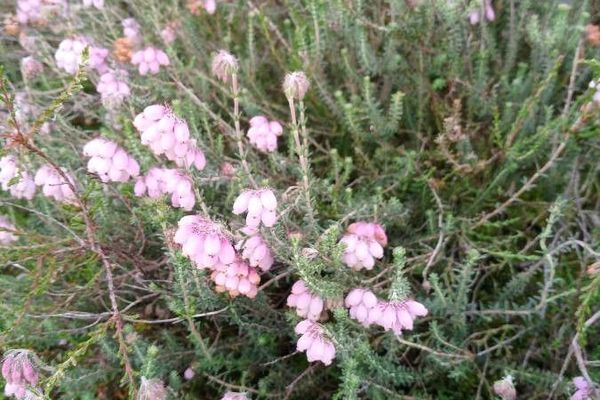
Bog-heather
Erica tetralix
Родина: Ericaceae • Рід: Erica
БагаторічнаСередньоДекоративна
Опис
Requires a light lime-free loam. A calcifuge plant, requiring a pH below 6. Grows best in a poor soil. Resents dry soils, doing well in boggy areas. Prefers an open situation. A good bee plant. There are many named forms, selected for their ornamental value. Plants in this genus are notably resistant to honey fungus. In garden design, as well as the above-ground architecture of a plant, root structure considerations help in choosing plants that work together for their optimal soil requirements including nutrients and water. The root pattern is branching: a heart root, dividing from the crown into several primary roots going down and out [2-1]. References Carbon Farming Information and Carbon Sequestration Information Temperature Converter Type a value in the Celsius field to convert the value to Fahrenheit: Celsius Fahrenheit: The PFAF Bookshop Plants For A Future have a number of books available in paperback and digital form. Book titles include Edible Plants , Edible Perennials , Edible Trees , Edible Shrubs , Woodland Gardening , and Temperate Food Forest Plants . Our new book is Food Forest Plants For Hotter Conditions (Tropical and Sub-Tropical) . Shop Now
Походження та ареал
EUROPE: Denmark, Finland, United Kingdom, Ireland, Norway, Sweden, Belgium, Germany, Netherlands, Poland, Estonia, Lithuania, Latvia, Spain, France, Portugal
Корисні властивості
None known References More on Edible Uses
Поради
Seed - surface sow in a sandy compost in a cold frame in spring. Keep moist. Prick out the plants as soon as they are large enough to handle and plant them in their permanent positions when they are 5 - 8cm tall. Cuttings of half-ripe wood, 3cm long taken from twiggy lateral growths near the base of the plant, July/August in a frame. Remove the leaves from the bottom part of the stem without causing any damage to the bark. The cuttings root in a few weeks if they are given some bottom heat. Plant out in spring. Layering in spring or autumn. Plants can be 'dropped' and then dug up and divided about 6 - 12 months later. Dropping involves digging up the plant and then replanting it about 15 - 20cm deeper in the soil to encourage roots to form along the stems.