AgroWiki
Marsh horsetail

Marsh horsetail

Equisetum palustre

Родина: EquisetaceaeРід: Equisetum

БагаторічнаСередньоДекоративна

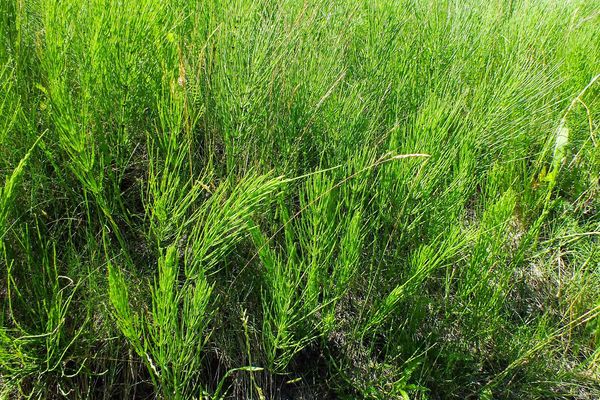
Equisetum species - horsetail family are Creeping, perenial, Branching rootstocks, rooted at the nodes. The Arial stems may be annual or Perennial, are cylindrical, fluted, simple or with whorled branches at the jointed nodes. The internodes are usually hollow. The Surfaces of the stems are covered with Silica. The Cones are terminal.

Опис

We have no information on the needs of this species but, judging by the plant's native habitat, it is likely to require a moist to wet soil in a sunny position. A very cold-hardy species tolerating temperatures down to about -30°c. Plants have a deep and penetrating root system and can be invasive. If grown in the garden they are best kept in bounds by planting them in a large container which can be sunk into the ground. References Carbon Farming Information and Carbon Sequestration Information Temperature Converter Type a value in the Celsius field to convert the value to Fahrenheit: Celsius Fahrenheit: The PFAF Bookshop Plants For A Future have a number of books available in paperback and digital form. Book titles include Edible Plants , Edible Perennials , Edible Trees , Edible Shrubs , Woodland Gardening , and Temperate Food Forest Plants . Our new book is Food Forest Plants For Hotter Conditions (Tropical and Sub-Tropical) . Shop Now

Походження та ареал

TEMPERATE ASIA: Lebanon, Turkey, Russian Federation-Ciscaucasia (Ciscaucasia), Armenia, Azerbaijan, Georgia, Russian Federation (Dagestan), Russian Federation-Western Siberia (Western Siberia), Russian Federation-Eastern Siberia (Eastern Siberia), Kazakhstan, Mongolia, Russian Federation-Far East (Far East), Russian Federation (Primorye, Kamcatskij kraj, Sakhalin), China (Hebei Sheng, Hubei Sheng, Jilin Sheng, Liaoning Sheng, Nei Mongol Zizhiqu, Shaanxi Sheng), Japan (Hokkaidô, Honshu) NORTHERN

Корисні властивості

None known References More on Edible Uses

Поради

Spores - best collected as soon as they are ripe in the spring and surface-sown immediately on a sterile compost. Keep moist and pot up as soon as the plants are large enough to handle. Very difficult. Division. The plants usually spread very freely when well sited and should not really need any assistance.