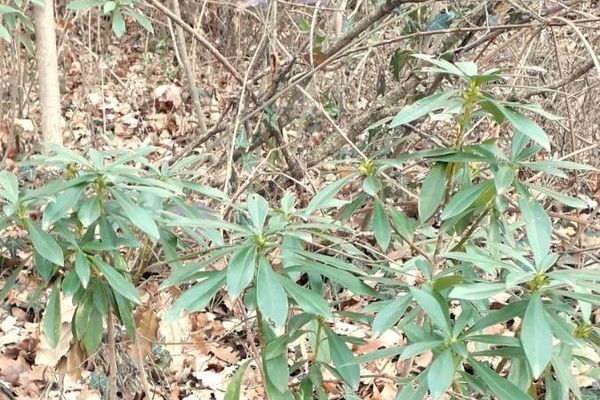
Spurge-laurel
Daphne laureola
Родина: Thymelaeaceae • Рід: Daphne
БагаторічнаСередньоДекоративна
Опис
Prefers a moist soil and a position in semi-shade, growing well in woodlands. Plants are often found growing in dense shade in the wild. A good sandy loam suits most members of this genus. Flowers are produced towards the ends of the previous year's growth. They are sweetly scented. Plants are resentful of root disturbance and should be planted into their permanent positions as soon as possible. References Carbon Farming Information and Carbon Sequestration Information Temperature Converter Type a value in the Celsius field to convert the value to Fahrenheit: Celsius Fahrenheit: The PFAF Bookshop Plants For A Future have a number of books available in paperback and digital form. Book titles include Edible Plants , Edible Perennials , Edible Trees , Edible Shrubs , Woodland Gardening , and Temperate Food Forest Plants . Our new book is Food Forest Plants For Hotter Conditions (Tropical and Sub-Tropical) . Shop Now
Походження та ареал
EUROPE: United Kingdom, Austria, Belgium, Switzerland, Germany, Hungary, Albania, Bulgaria, Greece, Italy (incl. Sardinia, Sicily), Spain, France (incl. Corsica) AFRICA: Portugal (Azores), Algeria, Morocco
Корисні властивості
None known References More on Edible Uses
Поради
Seed - best sown in a greenhouse as soon as it is ripe with the pot sealed in a polythene bag to hold in the moisture. Remove this bag as soon as germination takes place. The seed usually germinates better if it is harvested 'green' (when it has fully developed but before it dries on the plant) and sown immediately. Germination should normally take place by spring, though it sometimes takes a further year. Stored seed is more problematic. It should be warm stratified for 8 - 12 weeks at 20°c followed by 12 - 14 weeks at 3°c. Germination may still take another 12 months or more at 15°c. Prick out the seedlings into individual pots as soon as they are large enough to handle. Grow the plants on in the greenhouse for their first winter and then plant out in spring after the last expected frosts. Cuttings of half-ripe wood, July/August in a frame.