Опис
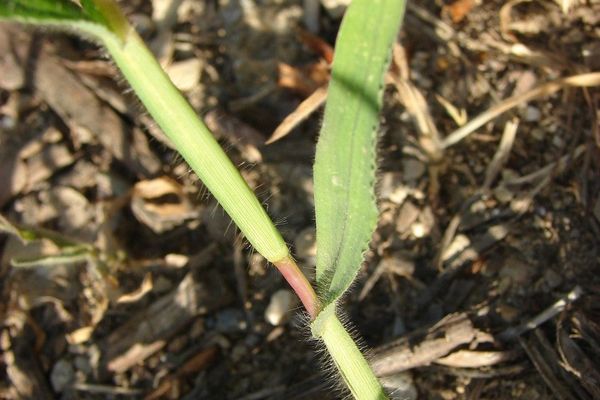
Bermuda grass is a classic “survivor plant”: resilient, opportunistic, and often hard to get rid of once established. As food, it is a niche option—best understood as a way to turn abundant underground runners into a roasted infusion or emergency dry product when you can harvest from a truly clean site and you are willing to do meticulous washing and drying. Growing Conditions. It thrives in full sun, heat, and open ground, and it tolerates drought once established while responding aggressively to water and nitrogen. It also tolerates trampling and frequent cutting, which is why it dominates sports fields and compacted urban soils. Habitat & Range. It is now widespread far beyond its native range, occurring in warm-temperate to tropical regions globally and commonly in disturbed habitats such as lawns, road verges, field edges, irrigated ditches, and compacted lots. It is widely recognised as both a useful lawn/pasture species and a serious weed in many settings. Size & Landscape Performance. As a turf, it stays low under mowing; as a plant, it forms dense mats with flowering stems rising above the leaf canopy. Its “performance” is defined by speed and coverage: it knits soil, resists wear, and outcompetes many low-growing plants through rapid lateral spread. Cultivation (Horticulture). Cultivation is straightforward in warm seasons: establish plugs, sprigs, or sod in sun, keep moist until rooted, then reduce irrigation to harden it off. Expect it to run; edging and barriers matter. In mixed plantings, it behaves like a groundcover that does not respect boundaries. Pests & Problems. In managed turf it can host or attract a suite of pests and diseases (region-dependent), but the most universal “problem” is invasiveness: it will invade beds, orchards, and irrigated fields, and it is difficult to eradicate because fragments of rhizomes and stolons readily regenerate. ? Identification & Habit. It is a stoloniferous and rhizomatous perennial grass that forms creeping mats and sends up upright flowering culms. The species is commonly described as having culms around 10–40 cm and a strongly creeping habit via runners. Pollinators. Bermuda grass is wind-pollinated rather than insect-pollinated, producing pollen that can contribute to seasonal allergies in susceptible people. Prefers a warm sunny position in a well-drained soil. The plant can grow in very diverse conditions of soil and moisture, withstanding drought well and also tending to eliminate other plants. It spreads quite rapidly, rooting at the nodes, becoming difficult to eradicate and can be a serious weed in cultivated land. Bermudagrass is reported to tolerate an annual precipitation of 9 to 429cm, an annual temperature range of 5.9 to 27.8°C, and a pH in the range of 4.3 to 8.4. Reported from the Hindustani Centre of Diversity, Bermudagrass, or cvs thereof, is reported to tolerate alkali soil conditions, disease, drought, frost, grazing, herbicide, heavy metal, heavy soil, insects, laterite, nematodes, peat, poor soil, salt, sand, atmospheric pollution, ultraviolet, virus, water-logging and weeds. It is unproductive in poor dry soils and is best adapted to relatively fertile, well-drained soils with a pH of 6.0-7.0, in humid areas. Plants withstand long periods of drought, as they produce little growth in dry weather. This species is hardy to about -10°c. Plants vary greatly in habit according to soil and climate, and occur in several natural strains which differ widely in size, colour (bright, yellow-green to dull blue-green), texture of stars and leaves, size of spikes, and grazing value. Most varieties are poor seeders and are propagated by their creeping stem. Bermudagrass can form dense cover in almost pure stands, practically anywhere. Abundant as a weed along roadsides, in lawns, on sandy wastes, along sand dunes, and readily takes possession of any uncultivated area. Bermuda grass (Cynodon dactylon (L.) Pers.) is in the grass family (Poaceae), genus Cynodon. Common names include Bermuda grass, couch grass, and wiregrass. It is a warm-season perennial that is widely grown and naturalised; it is most reliably perennial in USDA Hardiness Zones about 7–10, but it can persist beyond that range in protected sites or as a summer annual where winters are colder. ? Unmown flowering culms are commonly around 10–40 cm tall, while the plant’s functional “spread” is effectively unlimited because it creeps aggressively by stolons and rhizomes and can form broad mats. Introduced into: Alabama, Altay, Amsterdam-St.Paul Is., Argentina Northeast, Argentina Northwest, Argentina South, Arizona, Arkansas, Aruba, Ascension, Bahamas, Belgium, Belize, Bermuda, Bolivia, Brazil North, Brazil South, Brazil Southeast, Brazil West-Central, British Columbia, California, Caroline Is., Cayman Is., Chagos Archipelago, Chile Central, Chile North, Christmas I., Cocos (Keeling) Is., Colombia, Colorado, Connecticut, Cook Is., Costa Rica, Cuba, Delaware, Desventurados Is., Distric
Походження та ареал
Native to: Afghanistan, Albania, Aldabra, Algeria, Andaman Is., Angola, Assam, Austria, Azores, Baleares, Bangladesh, Benin, Bismarck Archipelago, Borneo, Botswana, Bulgaria, Burkina, Burundi, Cambodia, Cameroon, Canary Is., Cape Provinces, Cape Verde, Caprivi Strip, Central African Republic, Central European Russia, Chad, China North-Central, China South-Central, China Southeast, Congo, Corse, Cyprus, Czechia-Slovakia, Djibouti, DR Congo, East Aegean Is., East Himalaya, Egypt, Equatorial Guinea
Корисні властивості
The edible focus is the rhizome system rather than the leaves or seedheads. The rhizomes can be harvested, thoroughly cleaned, dried, and then roasted and infused as a tea/coffee-like drink, or ground after drying for a starchy, cereal-adjacent use in emergency-style preparations. In practice, the “edibility” is less about flavour excellence and more about availability, abundance, and storability when you can collect clean material from uncontaminated ground [2-3]. Edible Uses & Rating. Edible use is primarily the underground rhizomes used as a roasted infusion (“tea/coffee”) and, secondarily, as a dried, ground ingredient. As a wild food, it rates as a low-to-moderate value resource: it is extremely available in many regions, but labour-heavy to clean, low-yield per unit effort compared with many true root crops, and often compromised by soil grit, turf chemicals, or roadside contamination [2-3]. Taste, Processing & Kitchen Notes. The rhizomes are the point of interest because they can contain sugars and develop a toasted, cereal-like character when roasted. The practical “kitchen” challenge is grit and fibre: rhizomes run through soil, that soil clings, and any remaining sand can ruin the result. Think of the workflow more like cleaning burdock or yams than like harvesting a tidy garden root. Roasting level matters: a light roast tends to read as grain-like, while a deeper roast pushes the flavour toward a coffee-adjacent bitterness, but it will never become true coffee [2-3]. Seasonality (Phenology). Bermuda grass is most active in warm weather, typically producing flowering structures in the warm season. In many parts of the southern U.S. it flowers roughly from late spring through summer into early autumn, while growth timing shifts with irrigation, mowing, and local climate. Your usable rhizomes can be gathered essentially year-round wherever the ground is not frozen, with the best collecting often when soils are moist enough to release runners without snapping. Safety & Cautions (Food Use). Because you are harvesting from soil and from places people manage turf, the main risks are not “natural plant toxins” but contamination and context. Avoid collecting from lawns, sports fields, roadsides, industrial edges, or any place that may receive herbicides, insecticides, fertilisers, dog traffic, or runoff. Also avoid areas with heavy-metal or fuel contamination. Cleanliness is everything: wash repeatedly, discard bruised or mouldy material, and treat any off smells or odd discolouration as a reason to stop. If you have grass pollen allergies, be cautious around flowering stands [2-3]. Harvest & Processing Workflow. Harvest rhizomes by loosening a patch of soil and pulling the pale, cord-like runners that creep horizontally; select thicker, healthier rhizomes and skip very fine, hairlike runners when time is limited. Rinse immediately to remove loose soil, then soak and scrub repeatedly until the wash water stays clear and there is no grit betwee
Поради
Seed - sow spring in a greenhouse and only just cover the seed. Germination should take place within 2 weeks. Prick out the seedlings into individual pots when they are large enough to handle, and grow them on in the greenhouse for their first winter. Plant out into their permanent positions in late spring. There are almost 4,000,000 seeds per kilo. Division in late spring. Very simple, plants can be propagated easily from rooted sideshoots, establishing quickly when planted straight into the soil.