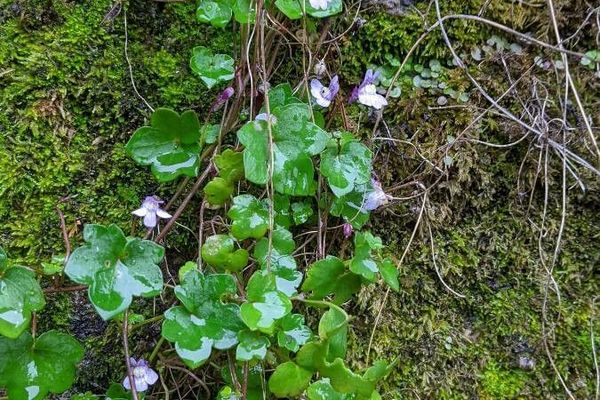
Kenilworth ivy
Cymbalaria muralis
Родина: Plantaginaceae • Рід: Cymbalaria
БагаторічнаСередньоДекоративна
вид рослин
Опис
Prefers a moderately good soil and some shade. Plants usually self-sow freely and can be invasive, especially when grown on old walls. They succeed both on dry-stone walls and on old mortared walls. References Carbon Farming Information and Carbon Sequestration Information Temperature Converter Type a value in the Celsius field to convert the value to Fahrenheit: Celsius Fahrenheit: The PFAF Bookshop Plants For A Future have a number of books available in paperback and digital form. Book titles include Edible Plants , Edible Perennials , Edible Trees , Edible Shrubs , Woodland Gardening , and Temperate Food Forest Plants . Our new book is Food Forest Plants For Hotter Conditions (Tropical and Sub-Tropical) . Shop Now
Походження та ареал
EUROPE: Switzerland, Bosnia and Herzegovina, Croatia, Italy (incl. Sicily), Montenegro, Slovenia
Корисні властивості
Edible Parts: Leaves Edible Uses: Leaves - raw[4, 115, 177]. The leaves have been used in salads, being acrid and pungent like cress. We find them rather bitter and not very pleasant, though they are available all year round and so might be useful in the winter[K]. Some caution is advised, see the notes above on toxicity. References More on Edible Uses
Поради
Seed - surface sow March to June in a cold frame and do not exclude light. The seed usually germinates in 2 - 4 weeks at 18°c. When they are large enough to handle, prick the seedlings out into individual pots and plant them out into their permanent positions in the summer. Division in late spring. Very easy, larger clumps can be replanted direct into their permanent positions, though it is best to pot up smaller clumps and grow them on in a cold frame until they are rooting well. Plant them out in the spring.