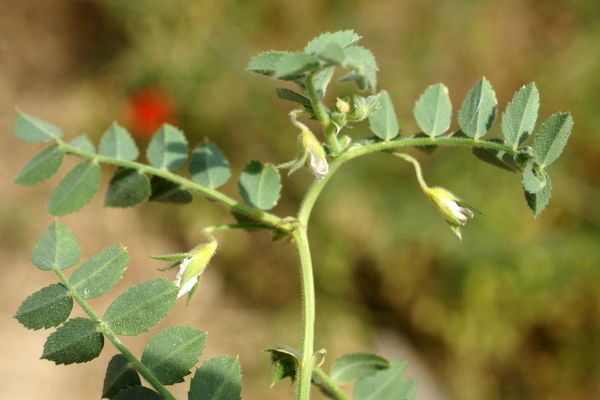
Bengal gram
Cicer arietinum
Родина: Fabaceae • Рід: Cicer
БагаторічнаСередньоДекоративна
Sow chickpeas 2 in deep in light, well-drained soil with a neutral to slightly alkaline pH; they perform poorly in heavy, waterlogged ground. The plants produce distinctive sticky, glandular hairs on stems and pods that can cause a mild skin reaction in sensitive individuals, so harvest with gloves.
Опис
Requires a hot sunny position[33, 37, 200], tolerating drought once established[27, 57]. Prefers a light well-drained fertile soil[33, 200]. Tolerates a pH in the range 5.5 to 8.6. Plants are hardy to about -25°c when covered by snow. This suggests that plants can be autumn sown - some trials are called for, especially of some of the hardier cultivars[K]. The chickpea is widely cultivated in warm temperate and tropical areas for its edible seed[46, 50]. There are many named varieties, some of which should be suitable for cultivation in Britain. Plants only succeed outdoors in Britain in hot summers[33, 37]. Plants are about as hardy as broad beans but they often do not succeed in mild moist maritime climates because the seedpods are hairy and this holds moisture. The moisture then encourages fungal growth and the seed usually rots before it is fully mature[K]. Plants require 4 - 6 months with moderately warm dry conditions if they are to crop well. This species has a symbiotic relationship with certain soil bacteria, these bacteria form nodules on the roots and fix atmospheric nitrogen. Some of this nitrogen is utilized by the growing plant but some can also be used by other plants growing nearby. When removing plant remains at the end of the growing season, it is best to only remove the aerial parts of the plant, leaving the roots in the ground to decay and release their nitrogen. In cooler zones (e.g. Zones 6–7), chickpeas can still be grown as a spring-sown annual once the risk of frost has passed, but yields may be lower or the crop may mature late in the season. References Carbon Farming Information and Carbon Sequestration Information Temperature Converter Type a value in the Celsius field to convert the value to Fahrenheit: Celsius Fahrenheit: The PFAF Bookshop Plants For A Future have a number of books available in paperback and digital form. Book titles include Edible Plants , Edible Perennials , Edible Trees , Edible Shrubs , Woodland Gardening , and Temperate Food Forest Plants . Our new book is Food Forest Plants For Hotter Conditions (Tropical and Sub-Tropical) . Shop Now
Походження та ареал
Iran, Iraq, Turkey
Корисні властивості
Edible Parts: Leaves Seed Seedpod Shoots Edible Uses: Coffee Drink Seed - raw or cooked. The fresh or dried seed is cooked in soups, stews etc[2, 37, 100, 142, 171, 183]. It has a somewhat sweet flavour and a floury texture somewhat reminiscent of sweet chestnuts[K]. The mature seed can also be sprouted and eaten raw[K]. Parched seeds can be eaten as a snack. The seed can also be ground into a meal and used with cereal flours for making bread, cakes etc[46, 105, 183]. The seed is a good source of carbohydrates and protein. The roasted seed is a coffee substitute[27, 46, 61, 105, 183]. The roasted root can also be used. Both the young seedpods and the young shoots are said to be edible[57, 61, 142, 171, 177, 183] but some caution is advised. See the notes above on toxicity. A refreshing drink can be made from the acid dew that collects on the hairy seedpods overnight. References More on Edible Uses
Поради
Seed - sow April/May in situ under cloches. Chick peas can germinate at lower temperatures than broad beans. Could an early spring or even autumn sowing outdoors be successful?