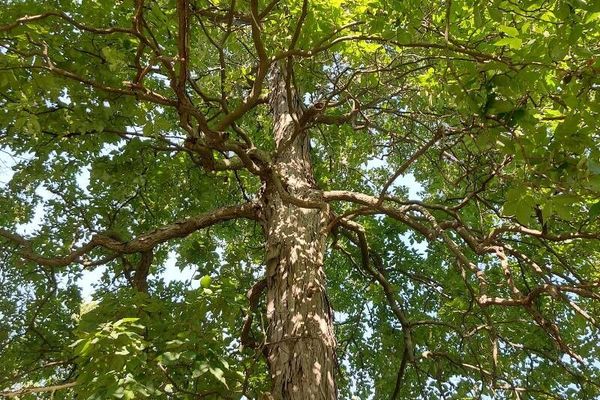
Pignut hickory
Carya glabra
Родина: Juglandaceae • Рід: Carya
БагаторічнаСередньоДекоративна
Pignut Hickory is a stately, long-lived native nut tree, native to the dry to mesic upland forests and ridges of eastern North America from Ontario and New England south to Florida and west to Kansas, where it is a dominant component of the oak-hickory forest communities of the eastern United States
Опис
Pignut Hickory is a stately, long-lived native nut tree, native to the dry to mesic upland forests and ridges of eastern North America from Ontario and New England south to Florida and west to Kansas, where it is a dominant component of the oak-hickory forest communities of the eastern United States. The small, pear-shaped nuts — borne in thin, pear-shaped husks that split into four sections at maturity — are intensely bitter to humans but form a critical fall and winter food source for white-tailed deer, wild turkeys, squirrels, blue jays, and wood ducks, making Pignut Hickory one of the most ecologically important native nut trees in the eastern forest. Rich, golden-yellow fall foliage and deeply furrowed gray bark provide ornamental interest in all seasons; the hard, dense wood is among the toughest and most shock-resistant of any North American tree. Direct sow fresh nuts in fall in deep, well-drained, slightly acidic soil in full sun; the deep taproot that forms in the first year makes mature trees virtually impossible to transplant.
Спосіб посадки: Посів у відкритий ґрунт
Відстань між рослинами: 360–720 дюймів
Висота: 480–900 дюймів
Дні до схожості: 30–90
Температура ґрунту для схожості: 4–13°C
Походження та ареал
Відомий як: pignut hickory
Поради
Pignut Hickory is a stately, long-lived native nut tree, native to the dry to mesic upland forests and ridges of eastern North America from Ontario and New England south to Florida and west to Kansas, where it is a dominant component of the oak-hickory forest communities of the eastern United States. The small, pear-shaped nuts — borne in thin, pear-shaped husks that split into four sections at maturity — are intensely bitter to humans but form a critical fall and winter food source for white-tailed deer, wild turkeys, squirrels, blue jays, and wood ducks, making Pignut Hickory one of the most ecologically important native nut trees in the eastern forest. Rich, golden-yellow fall foliage and deeply furrowed gray bark provide ornamental interest in all seasons; the hard, dense wood is among the toughest and most shock-resistant of any North American tree. Direct sow fresh nuts in fall in deep, well-drained, slightly acidic soil in full sun; the deep taproot that forms in the first year makes mature trees virtually impossible to transplant.
Спосіб посадки: Посів у відкритий ґрунт
Відстань між рослинами: 360–720 дюймів
Висота: 480–900 дюймів
Дні до схожості: 30–90
Температура ґрунту для схожості: 4–13°C
---
Час посадки: -6–-2 тижнів осіння посадка
Direct sow fresh nuts at 2–3 inch depth in fall in well-drained, slightly acidic, deep, loamy to sandy soil in full sun to light shade. Pignut Hickory develops a deep taproot early in life and is difficult to transplant once established — direct sowing or transplanting very young container-grown seedlings is strongly preferred.