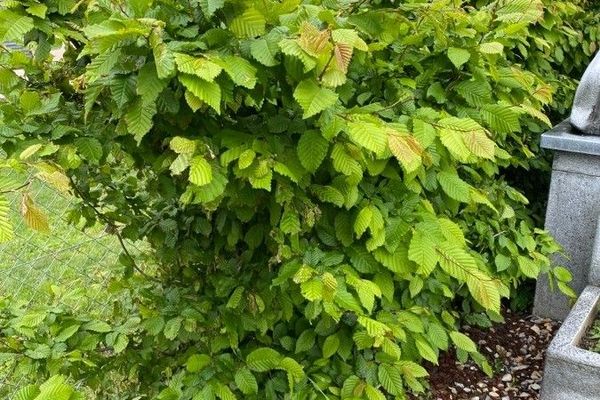
European hornbeam
Carpinus betulus
Родина: Betulaceae • Рід: Carpinus
БагаторічнаСередньоДекоративна
Bloom Color: White. Main Bloom Time: Early spring, Late spring, Mid spring. Form: Oval, Vase.
Опис
Landscape Uses:Espalier, Pest tolerant, Hedge, Superior hedge, Specimen, Street tree. Thrives in any good loam, including chalk[1, 11], it does not demand much light. Prefers a deep open loam and does well on damp clays. Succeeds in all but the most acid soils. Dormant trees are very cold tolerant, the young growth is not usually damaged by late spring frosts. The trees cast a deep shade[98, 186]. A very ornamental plant. Trees are shallow-rooted. The hornbeam has 28 species of associated insects. Trees take 10 - 20 years from seed before they produce seed and about 100 years to reach maturity. At one time this tree was commonly pollarded or coppiced for its wood and for fuel[11, 13, 186]. Special Features: Not North American native, Inconspicuous flowers or blooms. References Carbon Farming Information and Carbon Sequestration Information Temperature Converter Type a value in the Celsius field to convert the value to Fahrenheit: Celsius Fahrenheit: The PFAF Bookshop Plants For A Future have a number of books available in paperback and digital form. Book titles include Edible Plants , Edible Perennials , Edible Trees , Edible Shrubs , Woodland Gardening , and Temperate Food Forest Plants . Our new book is Food Forest Plants For Hotter Conditions (Tropical and Sub-Tropical) . Shop Now
Походження та ареал
TEMPERATE ASIA: Iran (southwest), Turkey, Russian Federation-Ciscaucasia (Ciscaucasia), Armenia, Azerbaijan, Georgia, Russian Federation (Dagestan) EUROPE: Denmark, United Kingdom, Norway, Sweden, Austria, Belgium, Switzerland, Czech Republic, Germany, Hungary, Netherlands, Poland, Slovakia, Belarus, Estonia, Lithuania, Latvia, Moldova, Ukraine (incl. Krym), Albania, Bulgaria, Bosnia and Herzegovina, Greece, Croatia, Italy, Montenegro, Romania, Serbia, Slovenia, Spain, France
Корисні властивості
None known References More on Edible Uses
Поради
Seed - best sown in an outdoors seedbed as soon as it is ripe. Germination is usually good, though it may take 18 months. If collected whilst still 'green' (after the seed is ripe but before it has dried fully on the plant) and sown immediately it should germinate in the following spring. Grow the plants on for two years in the seedbed and then plant them out into their permanent positions in the winter. The average seed viability is around 65%. Pre-treat stored seed with 4 weeks warm and 12 weeks cold stratification and sow in a cold frame. When they are large enough to handle, prick the seedlings out into individual pots and grow them on in a cold frame until they are at least 15cm tall before planting them into their permanent positions.