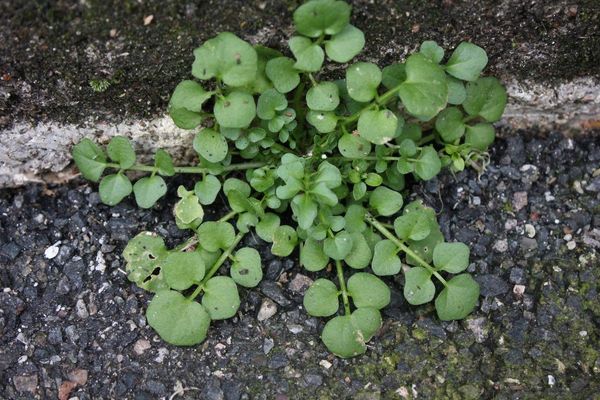
Common bittercress
Cardamine hirsuta
Родина: Brassicaceae • Рід: Cardamine
БагаторічнаСередньоДекоративна
Опис
Prefers a moist humus rich soil in shade or semi-shade but it succeeds in most soils and positions. A common garden weed, it can be in flower all year round if the weather is mild. It will usually self-sow very freely in cultivated soil and is found especially in pot-grown plants[K]. References Carbon Farming Information and Carbon Sequestration Information Temperature Converter Type a value in the Celsius field to convert the value to Fahrenheit: Celsius Fahrenheit: The PFAF Bookshop Plants For A Future have a number of books available in paperback and digital form. Book titles include Edible Plants , Edible Perennials , Edible Trees , Edible Shrubs , Woodland Gardening , and Temperate Food Forest Plants . Our new book is Food Forest Plants For Hotter Conditions (Tropical and Sub-Tropical) . Shop Now
Походження та ареал
TEMPERATE ASIA: Iran, Iraq, Israel, Jordan, Lebanon, Syria, Turkey, Azerbaijan, Georgia, Russian Federation (Dagestan), Turkmenistan, China TROPICAL ASIA: India (Arunachal Pradesh, Meghalaya, Nagaland, Sikkim, Tamil Nadu, Uttar Pradesh, West Bengal), Sri Lanka, Pakistan, Papua New Guinea, Myanmar, Thailand, Vietnam, Indonesia, Malaysia, Philippines EUROPE: Denmark, Finland (south), United Kingdom, Ireland, Iceland, Norway (south), Sweden (south), Austria, Belgium, Switzerland, Czech Republic, Ge
Корисні властивості
Edible Parts: Flowers Leaves Edible Uses: Leaves and flowers - raw or cooked[2, 5, 52, 53, 105]. A hot cress-like flavour, they are mainly used as a garnish or flavouring in salads etc but are also sometimes used as a potherb. The plant germinates most freely in the autumn and so leaves are usually available all winter. References More on Edible Uses
Поради
Seed - sow spring or autumn in situ. This species needs very little encouragement and is quite capable of sowing itself, often too freely.