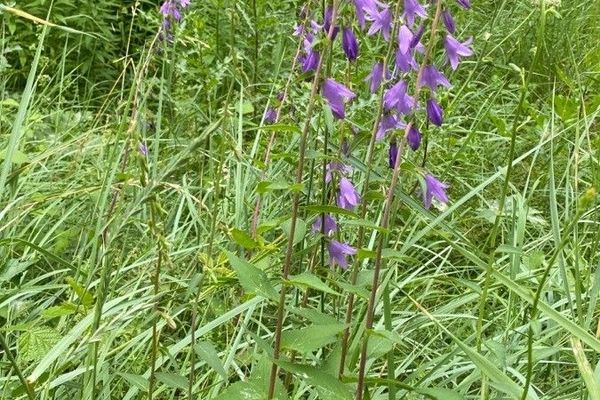
Опис
An easily grown plant succeeding in almost any soil, though it prefers a moist but well-drained rich sandy loam and a neutral or alkaline soil in sun or partial shade[1, 200]. It is slower growing and less spreading when grown in heavier soils. Plants are hardy to at least -15°c. The species in this genus do not often hybridize and so seed can generally be relied upon to come true. The plants are self-fertile. A beautiful plant, it was at one time cultivated as a culinary plant but has fallen into disuse. The plant produces a mass of thick white roots which can spread at an alarming rate, especially in light soils. It can often fill an entire bed with its tenaceous roots, killing off less vigorous plants. It is best grown in the wild garden where it can be allowed to romp without harm[221, 271]. Plants can also succeed when growing in thin grass. Plants produce seed freely and often self-sow. Slugs are very attracted to this plant, we have had great problems growing it on our Cornish trial grounds because the slugs eat out all the new shoots in spring and can kill even well-established specimens[K]. Members of this genus are rarely if ever troubled by browsing deer. Rampion prefers temperate climates with mild to cool summers. It thrives in loams, clays, or disturbed soils, tolerates drought moderately, and prefers USDA Zones 3–8. It can be invasive in gardens. Habitat & Range: Now widespread across northern United States and southern Canada, extending into Colorado and Utah. Occurs in disturbed habitats, roadside margins, gardens, and fields. Size & Landscape Performance: Plants grow 30–110 cm tall and spread rapidly. As an ornamental, it is problematic due to invasiveness. Cultivation (Horticulture): Easy to grow but difficult to eradicate. Once valued as a vegetable (roots), though rarely grown intentionally in modern times. References Carbon Farming Information and Carbon Sequestration Information Temperature Converter Type a value in the Celsius field to convert the value to Fahrenheit: Celsius Fahrenheit: The PFAF Bookshop Plants For A Future have a number of books available in paperback and digital form. Book titles include Edible Plants , Edible Perennials , Edible Trees , Edible Shrubs , Woodland Gardening , and Temperate Food Forest Plants . Our new book is Food Forest Plants For Hotter Conditions (Tropical and Sub-Tropical) . Shop Now
Походження та ареал
TEMPERATE ASIA: Iran (north), Turkey (n. Anatolia), Russian Federation-Ciscaucasia (Ciscaucasia), Azerbaijan, Georgia, Russian Federation-Western Siberia (Western Siberia), Russian Federation-Eastern Siberia (Eastern Siberia), Kazakhstan (north) EUROPE: Denmark, Finland, Norway, Sweden, Austria, Belgium, Switzerland, Czech Republic, Germany, Hungary, Netherlands, Poland, Slovakia, Russian Federation (European part), Belarus, Estonia, Lithuania, Latvia, Moldova, Ukraine (incl. Krym), Albania, Bul
Корисні властивості
Edible Parts: Leaves Root Shoots Edible Uses: Leaves are excellent, tasting like a mild combination of lettuce and nettles, with a deep vegetal flavour. Surface hairs create a raspy texture but do not irritate. Flowers are mild and sweet. Roots, once deliberately grown in Europe, are crisp, juicy, mild, and excellent cooked or raw, similar to white radish or a mild turnip. Edibility rating is high for roots and moderate for foliage [2-3]. Leaves and young shoots - raw or cooked[85, 177]. Rich in vitamin C. A pleasant mild flavour[K]. Root - raw or cooked[2, 105, 177]. A nut-like flavour, very palatable. The young roots are best. Somewhat sweet, they are a pleasant addition to the salad bowl. Taste, Processing & Kitchen Notes: Leaves work well in soups, salads, and sautés. Cooking does little to reduce hairiness but enhances sweetness. Roots can be roasted, boiled, or eaten fresh. Flowers make visually appealing and mild-tasting garnishes. Seasonality (Phenology): Flowers appear from June through October. Leaves are available from spring until frost. Roots can be harvested year-round. Safety & Cautions (Food Use): Safe to eat. No toxicity concerns beyond normal caution with raw leaves if digestive sensitivity is present. Harvest & Processing Workflow: Roots are dug in fall or early spring. Leaves are clipped young; older leaves toughen slightly. Flowers can be collected fresh. Look-Alikes & Confusion Risks: Easily confused with ornamental Campanulas; however, the one-sided raceme and invasive rhizomes help confirm identity. Traditional / Indigenous Use Summary: Historically cultivated as a root vegetable in Europe; limited Indigenous use in North America due to its late arrival. References More on Edible Uses
Поради
Seed - surface sow spring in a cold frame. The seed usually germinates in 2 - 4 weeks at 18°c. Easy. When they are large enough to handle, prick the seedlings out into individual pots and grow them on in a cold frame for at least their first winter. Plant them out into their permanent positions in late spring or early summer, after the last expected frosts. Basal cuttings in spring. Harvest the shoots when they are about 10 - 15cm long with plenty of underground stem. Pot them up into individual pots and keep them in light shade in a cold frame or greenhouse until they are rooting well. Plant them out in the summer. Division in spring or autumn. Very easy, any part of the root will produce a new plant.