Опис
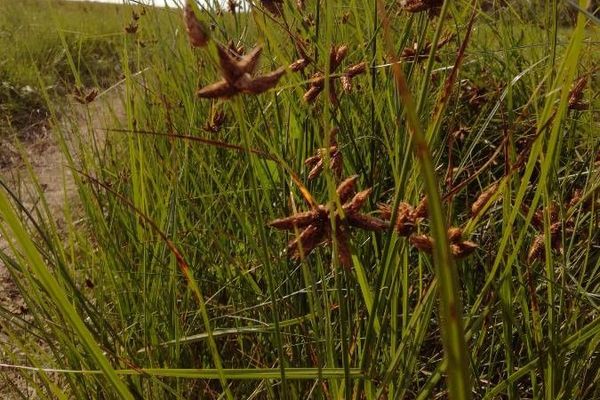
Identification & Habit: Perennial with triangular stems and conspicuous underground corms resembling small tubers. Inflorescences are compact and reddish-brown. Thrives in moist, sunny wetlands; tolerates moderate salinity. Average height: 0.45 to 1.75 meters (1.5 to 5.8 feet). Saltmarsh Club-rush or Alkali Bulrush is a rhizomatous perennial. This species commonly grows on the margins of permanent or semi-permanent waters, brackish and salt water lagoons, back mangroves, and margins of salt marshes [2-6]. The grass-like leaves have reddish-purple bases. Small, brown, terminal spikes occur in a rounded, compact, terminal cluster. This cluster may be surpassed by additional clusters on short pecuncles. Leafy bracts extend beyond the clusters. Sedge/bulrush architecture: small, clustered florets; no showy traits. Mainly wind-pollinated, with possible limited insect transfer but not required. References Carbon Farming Information and Carbon Sequestration Information Temperature Converter Type a value in the Celsius field to convert the value to Fahrenheit: Celsius Fahrenheit: The PFAF Bookshop Plants For A Future have a number of books available in paperback and digital form. Book titles include Edible Plants , Edible Perennials , Edible Trees , Edible Shrubs , Woodland Gardening , and Temperate Food Forest Plants . Our new book is Food Forest Plants For Hotter Conditions (Tropical and Sub-Tropical) . Shop Now
Походження та ареал
US. USA. Afghanistan, Alaska, Albania, Alberta, Altay, Amur, Argentina Northeast, Argentina Northwest, Argentina South, Arizona, Assam, Austria, Azores, Baleares, Baltic States, Bangladesh, Belarus, Belgium, Brazil South, British Columbia, Bulgaria, California, Cambodia, Cape Provinces, Cape Verde, Central European Russia, Chad, Chile Central, China North-Central, Chita, Colombia, Colorado, Connecticut, Corse, Cuba, Cyprus, Czechia-Slovakia, Denmark, East Aegean Is., East European Russia, Finlan
Корисні властивості
Edible Uses & Rating: Corms, seeds, and pollen are all edible. Rating: 5/5—among the best sedges for human food. Taste & Kitchen Notes: Corms are mild, earthy, and potato-like; easily roasted or ground for flour. Seeds nutty when toasted. Seasonality: Corms harvestable in autumn–winter; seeds in late summer. The tubers are dried and powdered and used as baby feed in Kerala, India [2-6]. Traditional/Indigenous Use Summary: Corms and seeds were major prehistoric staples in Eurasia and North America. Used as a famine and staple food. References More on Edible Uses