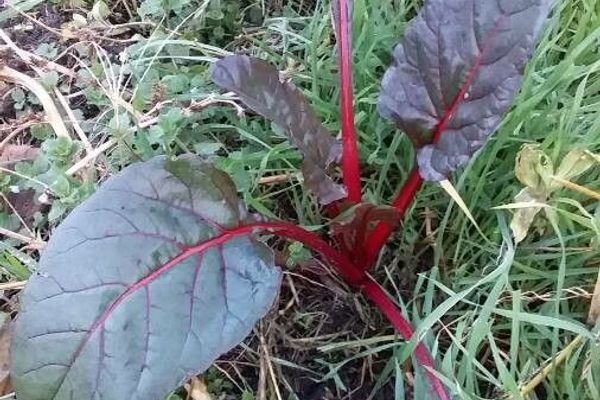
Beet
Beta vulgaris
Родина: Amaranthaceae • Рід: Beta
БагаторічнаСередньоДекоративна
Taxonomic Note: This genus was formerly classified in the family Chenopodiaceae. Modern classifications include it within the Amaranthaceae.
Опис
Beets grow well in a variety of soils, growing best in a deep, friable well-drained soil abundant with organic matter, but doing poorly on clay. They prefer an open position and a light well-drained soil. The optimum pH is 6.0 - 6.8, but neutral and alkaline soils are tolerated in some areas. Some salinity may be tolerated after the seedling stage. Beets are notable for their tolerance to manganese toxicity. Beet is reported to tolerate an annual precipitation of 23 to 315cm, an average annual temperature range of 5.0 to 26.6°C and a pH of 4.2 to 8.2. Sugar beet is widely cultivated as a commercial sugar crop in temperate climates. About one third of all sugar production in the world is derived from this plant. It is not usually grown on a garden scale. There are several named varieties. References Carbon Farming Information and Carbon Sequestration Information Temperature Converter Type a value in the Celsius field to convert the value to Fahrenheit: Celsius Fahrenheit: The PFAF Bookshop Plants For A Future have a number of books available in paperback and digital form. Book titles include Edible Plants , Edible Perennials , Edible Trees , Edible Shrubs , Woodland Gardening , and Temperate Food Forest Plants . Our new book is Food Forest Plants For Hotter Conditions (Tropical and Sub-Tropical) . Shop Now
Походження та ареал
(Beta vulgaris) Albania, Algeria, Azores, Baleares, Belgium, Bulgaria, Canary Is., Corse, Cyprus, East Aegean Is., Egypt, France, Germany, Great Britain, Greece, Gulf States, India, Iran, Iraq, Ireland, Italy, Kriti, Krym, Kuwait, Lebanon-Syria, Libya, Morocco, Netherlands, North Caucasus, Oman, Pakistan, Palestine, Portugal, Sardegna, Saudi Arabia, Sicilia, Sinai, Spain, Transcaucasus, Tunisia, Turkey, Yemen, Yugoslavia.
Корисні властивості
Root - raw or cooked. The root contains 16 - 20% sugar and this is often extracted and used as a sweetener. This plant is a major source of sugar in many temperate areas. The root can also be used as a vegetable. When cooked it is quite tender, but with some fibrous strands. It has a very sweet flavour that some people find too sweet[K]. The raw root is rather tough, but makes a pleasant addition to salads when grated finely[K]. Leaves - raw or cooked. A very acceptable spinach substitute[K]. Some people dislike the raw leaves since they can leave an unpleasant taste in the mouth[K]. References More on Edible Uses Composition Figures in grams (g) or miligrams (mg) per 100g of food. Leaves (Fresh weight) 45 Calories per 100g Water : 86.4% Protein: 3.2g; Fat: 0.4g; Carbohydrate: 8.1g; Fibre: 3.8g; Ash: 1.9g; Minerals - Calcium: 114mg; Phosphorus: 34mg; Iron: 3.1mg; Magnesium: 0mg; Sodium: 0mg; Potassium: 0mg; Zinc: 0mg; Vitamins - A: 3152mg; Thiamine (B1): 0.07mg; Riboflavin (B2): 0.22mg; Niacin: 0.6mg; B6: 0mg; C: 50mg; Reference: [ 218] Notes: The figures for Vitamin a are said to be milligrammes.
Поради
Seed - sow April in situ.