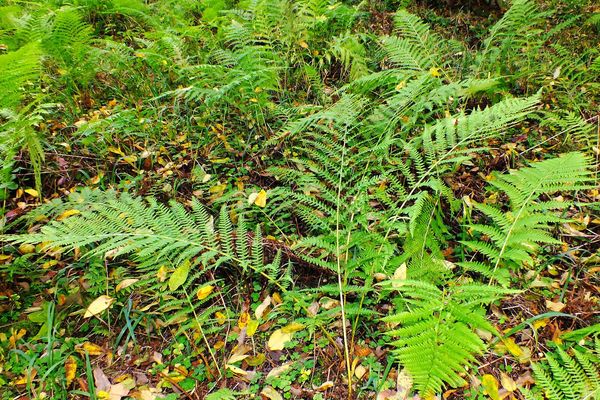
Опис
Landscape Uses:Border, Container, Foundation, Ground cover, Massing, Woodland garden. An easily grown plant, it is calcifuge and prefers an acid soil with a pH from 4.5 to 6.5, but it tolerates alkaline soils if plenty of leaf mould is added. Grows well in heavy clay soils. Prefers a moist sheltered site with moderately high atmospheric humidity. A very ornamental and polymorphic species, there are many named varieties selected for their ornamental value. Members of this genus are rarely if ever troubled by browsing deer. Special Features: Attractive foliage, Naturalizing, Wetlands plant. The plant is heat tolerant in zones 9 through 1. (Plant Hardiness Zones show how well plants withstand cold winter temperatures. Plant Heat Zones show when plants would start suffering from the heat. The Plant Heat Zone map is based on the number of "heat days" experienced in a given area where the temperature climbs to over 86 degrees F (30°C). At this temperature, many plants begin to suffer physiological damage. Heat Zones range from 1 (no heat days) to 12 (210 or more heat days). For example Heat Zone. 11-1 indicates that the plant is heat tolerant in zones 11 through 1.) For polyculture design as well as the above-ground architecture (form - tree, shrub etc. and size shown above) information on the habit and root pattern is also useful and given here if available. The plant growth habit is a clumper with limited spread [1-2]. The root pattern is rhizomatous with underground stems sending roots and shoots along their length [1-2]. References Carbon Farming Information and Carbon Sequestration Information Temperature Converter Type a value in the Celsius field to convert the value to Fahrenheit: Celsius Fahrenheit: The PFAF Bookshop Plants For A Future have a number of books available in paperback and digital form. Book titles include Edible Plants , Edible Perennials , Edible Trees , Edible Shrubs , Woodland Gardening , and Temperate Food Forest Plants . Our new book is Food Forest Plants For Hotter Conditions (Tropical and Sub-Tropical) . Shop Now
Походження та ареал
TEMPERATE ASIA: Armenia, Azerbaijan, Ciscaucasia, Dagestan, Eastern Siberia, Far East, Georgia, Russian Federation, Russian Federation-Ciscaucasia, Russian Federation-Eastern Siberia, Russian Federation-Far East, Russian Federation-Western Siberia, Syria, Turkey, Western Siberia, Lebanon. NORTHERN AMERICA: Canada, Northwest Territories (southwest), Yukon (south), Greenland, United States, Alaska, Québec, Nova Scotia, Ontario, Prince Edward Island, New Brunswick, Newfoundland and Labrador, Saskat
Корисні властивості
Edible Parts: Leaves Root Shoots Edible Uses: Young shoots, harvested before they have fully unfolded, can be eaten cooked. They must not be eaten raw - see the notes above on toxicity. Used in spring, they are a bitter emergency food. Rhizome - peeled and slow-baked[118, 257]. Reports that the root of this plant were eaten by native North American Indians are likely to be mistaken, it was probably Dryopteris expansa that was used. References More on Edible Uses
Поради
Spores - surface sow in a pot of sterile compost in a shady part of the greenhouse and keep moist, this is most easily done by putting the pot in a plastic bag. Pot up small clumps of the plants when they are large enough to handle and keep them moist until they are established. Plant out in late spring of the following year. Division in spring as plants come into growth. Larger divisions can be planted straight into their permanent positions whilst smaller clumps are best potted up and kept in a cold frame until they are growing away well.