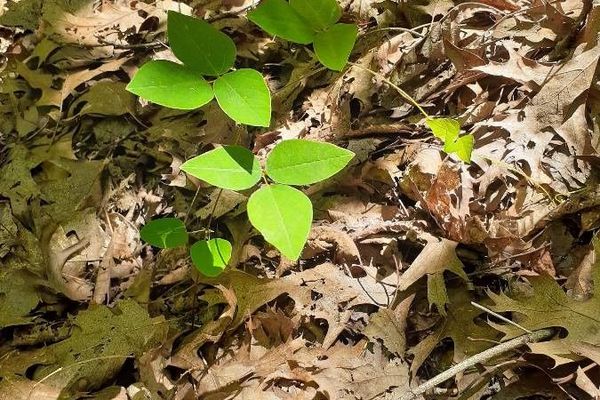
Hog-peanut
Amphicarpaea bracteata
Родина: Fabaceae • Рід: Amphicarpaea
БагаторічнаСередньоДекоративна
Hog Peanut is a delicate, twining native legume vine of moist forest floors and shaded stream banks across eastern North America, producing two types of flowers: small lavender blossoms on climbing aerial stems that rarely set fruit, and inconspicuous cleistogamous flowers near the soil surface that
Опис
Hog Peanut is a delicate, twining native legume vine of moist forest floors and shaded stream banks across eastern North America, producing two types of flowers: small lavender blossoms on climbing aerial stems that rarely set fruit, and inconspicuous cleistogamous flowers near the soil surface that produce fleshy, one-seeded pods underground — a remarkable adaptation for seed burial and dispersal. The underground fleshy seeds are rich, sweet, and bean-like in flavor, and were a significant food source for many Native American peoples including the Meskwaki, Cherokee, and Iroquois, who harvested them in fall; settlers called them hog peanuts because pigs eagerly rooted them from the soil. A nitrogen-fixing perennial that returns from taproots each spring in zones 5–9, Hog Peanut adds valuable biodiversity and soil health to shaded native plant gardens and woodland edges while providing food and cover for small wildlife. Direct sow after frost in moist, humus-rich, slightly acidic soil in partial to full shade; established plants self-seed freely and colonize gradually.
Спосіб посадки: Посів у відкритий ґрунт
Відстань між рослинами: 12–24 дюймів
Висота: 24–60 дюймів
Дні до схожості: 7–21
Температура ґрунту для схожості: 16–24°C
Походження та ареал
Відомий як: American hogpeanut
Поради
Hog Peanut is a delicate, twining native legume vine of moist forest floors and shaded stream banks across eastern North America, producing two types of flowers: small lavender blossoms on climbing aerial stems that rarely set fruit, and inconspicuous cleistogamous flowers near the soil surface that produce fleshy, one-seeded pods underground — a remarkable adaptation for seed burial and dispersal. The underground fleshy seeds are rich, sweet, and bean-like in flavor, and were a significant food source for many Native American peoples including the Meskwaki, Cherokee, and Iroquois, who harvested them in fall; settlers called them hog peanuts because pigs eagerly rooted them from the soil. A nitrogen-fixing perennial that returns from taproots each spring in zones 5–9, Hog Peanut adds valuable biodiversity and soil health to shaded native plant gardens and woodland edges while providing food and cover for small wildlife. Direct sow after frost in moist, humus-rich, slightly acidic soil in partial to full shade; established plants self-seed freely and colonize gradually.
Спосіб посадки: Посів у відкритий ґрунт
Відстань між рослинами: 12–24 дюймів
Висота: 24–60 дюймів
Дні до схожості: 7–21
Температура ґрунту для схожості: 16–24°C
---
Час посадки: 2–6 тижнів spring
Direct sow seeds in spring after danger of frost passes in moist, humus-rich, well-drained, slightly acidic soil in partial to full shade. Scarify hard seed coats lightly with sandpaper or soak overnight before planting to speed germination. Hog Peanut grows best in light shade and will not thrive in exposed, dry, or heavily fertilized soil.