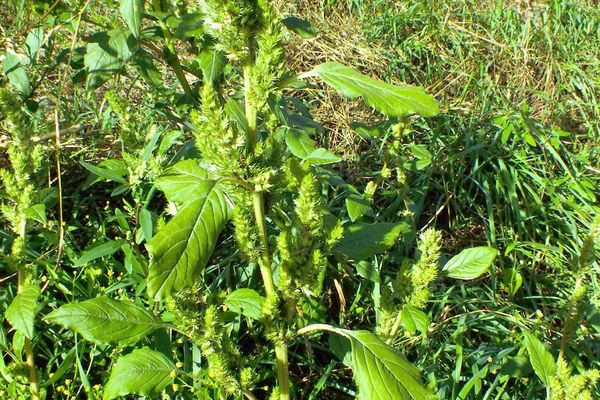
Опис
Prefers a well-drained fertile soil in a sunny position. Requires a hot sheltered position if it is to do well[K]. Plants should not be given inorganic fertilizers, see notes above on toxicity. A good companion for potatoes, onions, corn, tomatoes, peppers and aubergines[20, 201]. A deep rooted plant, bringing up minerals from lower levels of the soil. Formerly cultivated as a food crop by the N. American Indians. Most if not all members of this genus photosynthesize by a more efficient method than most plants. Called the 'C4 carbon-fixation pathway', this process is particularly efficient at high temperatures, in bright sunlight and under dry conditions. In garden design, as well as the above-ground architecture of a plant, root structure considerations help in choosing plants that work together for their optimal soil requirements including nutrients and water. The root pattern is clumping, giving the plant a clumping habit. The predictable growth behaviour makes it easier to maintain without having to apply containment methods[2-1]. Annual, frost-tender. Best suited to zones 5–9, though it will self-seed and reappear wherever summers are warm. Growing Conditions: Sun: Thrives in full sun. Soil: Extremely adaptable, tolerating a wide range of soils including poor or disturbed ground. Moisture: Grows well with summer rainfall but is drought-tolerant once established. Growth Habit: Upright annual, usually 0.5–2 m tall, with coarse, reddish stems and dense, greenish flower spikes that turn brown when seeds mature. References Carbon Farming Information and Carbon Sequestration Information Temperature Converter Type a value in the Celsius field to convert the value to Fahrenheit: Celsius Fahrenheit: The PFAF Bookshop Plants For A Future have a number of books available in paperback and digital form. Book titles include Edible Plants , Edible Perennials , Edible Trees , Edible Shrubs , Woodland Gardening , and Temperate Food Forest Plants . Our new book is Food Forest Plants For Hotter Conditions (Tropical and Sub-Tropical) . Shop Now
Походження та ареал
NORTHERN AMERICA: Canada (Québec, Nova Scotia, Ontario (southeast), Manitoba, British Columbia), United States (Connecticut, Indiana, Maine, Massachusetts, Michigan, New Hampshire, New Jersey, New York, Ohio, Pennsylvania, Rhode Island, Vermont, West Virginia, Illinois, Iowa, Kansas, Minnesota, Missouri, Nebraska, North Dakota, Oklahoma, South Dakota, Wisconsin, Colorado, Idaho, Montana, Washington, Alabama, Arkansas, Delaware, Florida, Georgia, Kentucky, Louisiana, Maryland, Mississippi, North
Корисні властивості
Edible Parts: Leaves Seed Edible Uses: Common amaranth provides both edible leaves and seeds. The young leaves are highly nutritious and tender, suitable for eating raw in salads or more commonly cooked as a leafy vegetable. Their flavor is mild, spinach-like, with nettle-like undertones. Cooked, the leaves maintain a soft texture without sliminess, and even the young stalks remain tender. Like other amaranths, the leaves may contain nitrates and oxalates, but levels are generally too low to pose a problem in a normal diet. Brief boiling can reduce nitrates further [2-3]. The seeds are small, rounded, and usually reddish-brown to black. They are prolific, easily harvested, and versatile. Seeds can be eaten raw, toasted, or boiled. Toasting gives them a nutty, popcorn-like quality, while boiling produces a hearty grain-like porridge. Seeds can also be ground into flour or incorporated into seed bars. They store well when dry, providing an excellent wild grain substitute [2-3]. Edibility Rating: 5/5 – An outstanding edible, with both leaves and seeds widely used [2-3]. Young leaves - raw or cooked as a spinach[2, 5, 62, 85, 159]. A mild flavour, it is often mixed with stronger flavoured leaves. Very rich in iron, it is also a good source of vitamins A and C. Seed - raw or cooked[2, 46, 61, 85]. Ground into a powder and used as a cereal substitute, it can also be sprouted and added to salads. The seed is very small, about 1mm in diameter, but easy to harvest and very nutritious. The flavour is greatly improved by roasting the seed before grinding it. It is often added to maize meal. The seed can be cooked whole, and becomes very gelatinous like this, but it is rather difficult to crush all of the small seeds in the mouth and thus some of the seed will pass right through the digestive system without being assimilated[K]. References More on Edible Uses
Поради
Seed - sow late spring in situ. An earlier sowing can be made in a greenhouse and the plants put out after the last expected frosts. Germination is usually rapid and good if the soil is warm. A drop in temperature overnight aids germination. Cuttings of growing plants root easily.