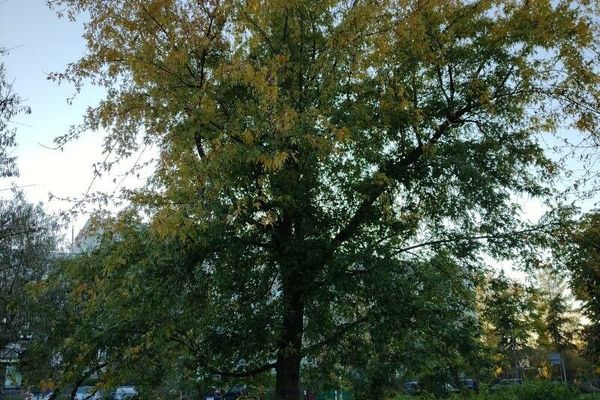
Soft maple
Acer saccharinum
Родина: Sapindaceae • Рід: Acer
БагаторічнаСередньоДекоративна
Taxonomic Note: This genus was formerly classified in the family Aceraceae. Modern classifications include it within the Sapindaceae. Sometimes misspelt as Acer saccharinium. Bloom Color: Red. Main Bloom Time: Early spring, Late spring, Mid spring. Form: Vase.
Опис
Agroforestry Services: Crop shade Fodder: Bank Industrial Crop: Biomass Management: Coppice Management: Standard Staple Crop: Sugar Landscape Uses:Erosion control, Firewood, Aggressive surface roots possible, Woodland garden. Of easy cultivation, it prefers a good moist well-drained soil[1, 11] but does well in much wetter soils than most member of the genus. Succeeds in most soils including chalk. Another report says that this species is liable to become chlorotic as a result of iron deficiency when it is grown on alkaline soils. Grows well in heavy clay soils. Prefers a moderately sunny position[11, 200]. Tolerates atmospheric pollution. Fairly wind-tolerant. The wood is brittle and branches are liable to break off the tree in high winds[11, 200]. Trees can tolerate short periods of flooding, but are very susceptible to fire. A very ornamental and fast growing tree[11, 98], but it is short-lived, seldom surviving longer than 125 - 140 years. The tree has invasive roots and these often interfere with sewer pipes and drainage tiles around houses. The silver maple is a bad companion plant, inhibiting the growth of nearby plants[18, 20]. Special Features:Attracts birds, North American native, Naturalizing. Carbon farming - Cultivation: experimental. Management: standard, coppice. The plant is heat tolerant in zones 8 through 1. (Plant Hardiness Zones show how well plants withstand cold winter temperatures. Plant Heat Zones show when plants would start suffering from the heat. The Plant Heat Zone map is based on the number of "heat days" experienced in a given area where the temperature climbs to over 86 degrees F (30°C). At this temperature, many plants begin to suffer physiological damage. Heat Zones range from 1 (no heat days) to 12 (210 or more heat days). For example Heat Zone. 11-1 indicates that the plant is heat tolerant in zones 11 through 1.) For polyculture design as well as the above-ground architecture (form - tree, shrub etc. and size shown above) information on the habit and root pattern is also useful and given here if available. The plant growth habit is a standard with a non-suckering single trunk [1-2]. The root pattern is flat with shallow roots forming a plate near the soil surface [1-2]. Carbon Farming Agroforestry Services: Crop shade Plants providing crop shade especially trees. Fodder: Bank Fodder banks are plantings of high-quality fodder species. Their goal is to maintain healthy productive animals. They can be utilized all year, but are designed to bridge the forage scarcity of annual dry seasons. Fodder bank plants are usually trees or shrubs, and often legumes. The relatively deep roots of these woody perennials allow them to reach soil nutrients and moisture not available to grasses and herbaceous plants. Industrial Crop: Biomass Three broad categories: bamboos, resprouting woody plants, and giant grasses. uses include: protein, materials (paper, building materials, fibers, biochar etc.), chemicals (biobased chemicals), energy - biofuels Management: Coppice Cut to the ground repeatedly - resprouting vigorously. Non-destructive management systems maintaining the soil organic carbon. Management: Standard Plants grow to their standard height. Harvest fruit, seeds, or other products. Non-Destructive management systems. Staple Crop: Sugar Perennial sugar crops include sugarcane and compare favorably to annuals. References Carbon Farming Information and Carbon Sequestration Information Temperature Converter Type a value in the Celsius field to convert the value to Fahrenheit: Celsius Fahrenheit: The PFAF Bookshop Plants For A Future have a number of books available in paperback and digital form. Book titles include Edible Plants , Edible Perennials , Edible Trees , Edible Shrubs , Woodland Gardening , and Temperate Food Forest Plants . Our new book is Food Forest Plants For Hotter Conditions (Tropical and Sub-Tropical) . Shop Now
Походження та ареал
NORTHERN AMERICA: Canada, Québec, Ontario, New Brunswick, United States, Indiana, Maine, Michigan, New Hampshire, New Jersey, New York, Ohio, Pennsylvania, West Virginia, Illinois, Iowa, Kansas, Minnesota, Missouri, Nebraska, Oklahoma, South Dakota, Wisconsin, Alabama, Arkansas, Delaware, Florida, Georgia, Kentucky, Louisiana, Maryland, Mississippi, North Carolina, South Carolina, Tennessee, Virginia,
Корисні властивості
Edible Parts: Inner bark Leaves Sap Seed Edible Uses: Sweetener The sap contains sugar and can be used as a drink or be concentrated into a syrup by boiling off the water[4, 61, 82, 159]. The syrup is used as a sweetener on many foods. The yield is only half that of A. saccharum. It is said to be sweeter and whiter than A. saccharum. The sap can be harvested in the late winter, the flow is best on warm sunny days following a frost. The best sap production comes from cold-winter areas with continental climates. Self-sown seedlings, gathered in early spring, are eaten fresh or dried for later use[177, 213]. Seeds - cooked. The wings are removed and the seeds boiled then eaten hot. Good crops are produced nearly every year in the wild. The seed is about 12mm long and is produced in small clusters. Inner bark - cooked. It is dried, ground into a powder and then used as a thickening in soups etc or mixed with cereals when making bread[105, 161, 177, 257]. The related Oregon Maple (Acer macrophyllum) has yellow flower clusters, sweet with nectar, eaten raw. No information was found for this species. Carbon farming - Staple Crop: sugar. References More on Edible Uses
Поради
Seed - best sown as soon as it is ripe in the spring in a cold frame. It usually germinates immediately and by the end of summer has formed a small tree with several pairs of leaves. Stored seed quickly loses its viability. Pre-soak stored seed for 24 hours and then stratify for 2 - 4 months at 1 - 8°c. It can be slow to germinate. When large enough to handle, prick the seedlings out into individual pots and grow them on until they are 20cm or more tall before planting them out in their permanent positions. Layering, which takes about 12 months, is successful with most species in this genus. Cuttings of young shoots in June or July. The cuttings should have 2 - 3 pairs of leaves, plus one pair of buds at the base. Remove a very thin slice of bark at the base of the cutting, rooting is improved if a rooting hormone is used. The rooted cuttings must show new growth during the summer before being potted up otherwise they are unlikely to survive the winter.